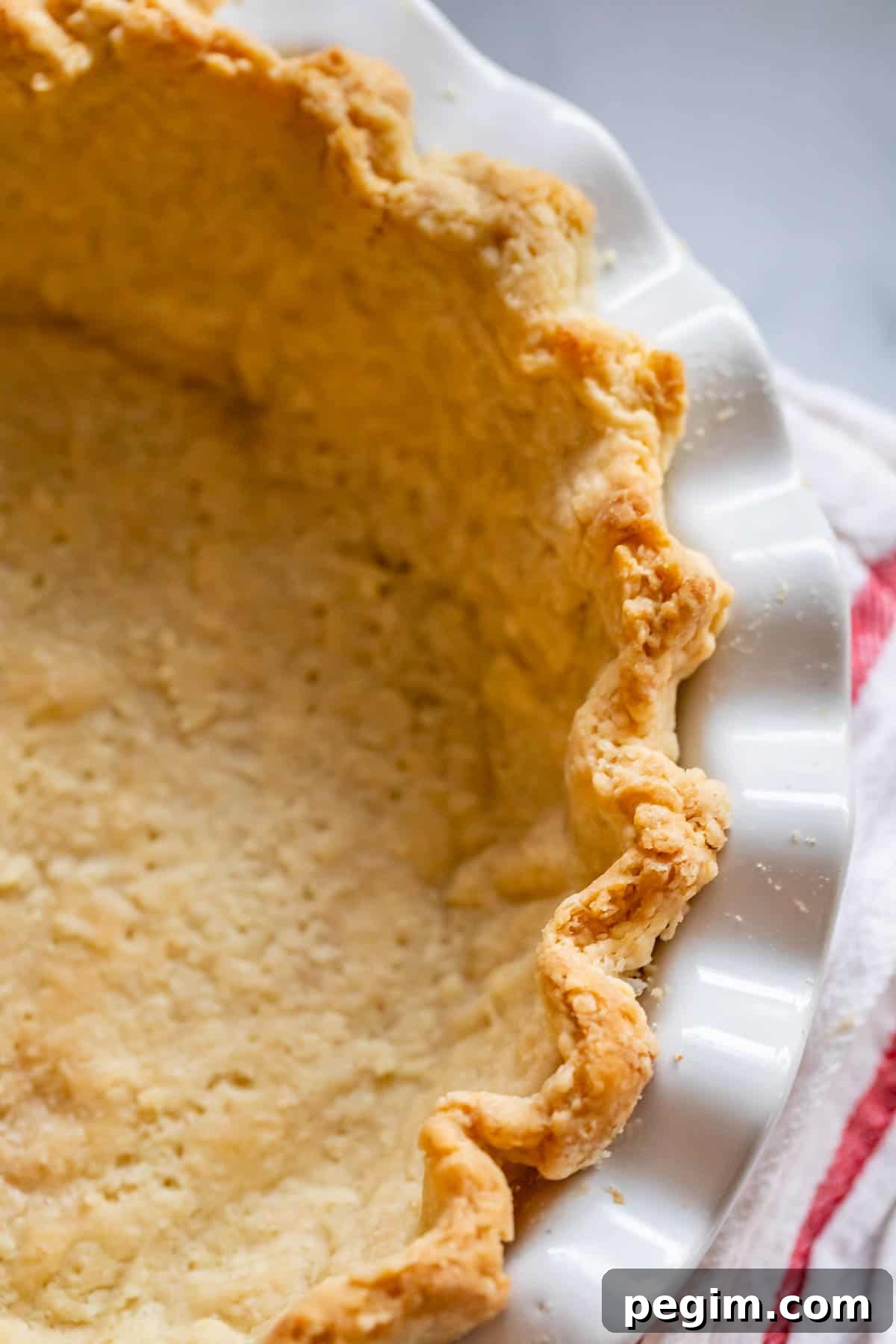
I will show you just how easy it is to blind bake a pie crust! This means pre-baking the empty crust to fill later with cream or fresh fruit fillings. There are a few important details to avoid a bottom crust that bubbles up and edges that slump. Chilling the crust and using pie weights are essential.
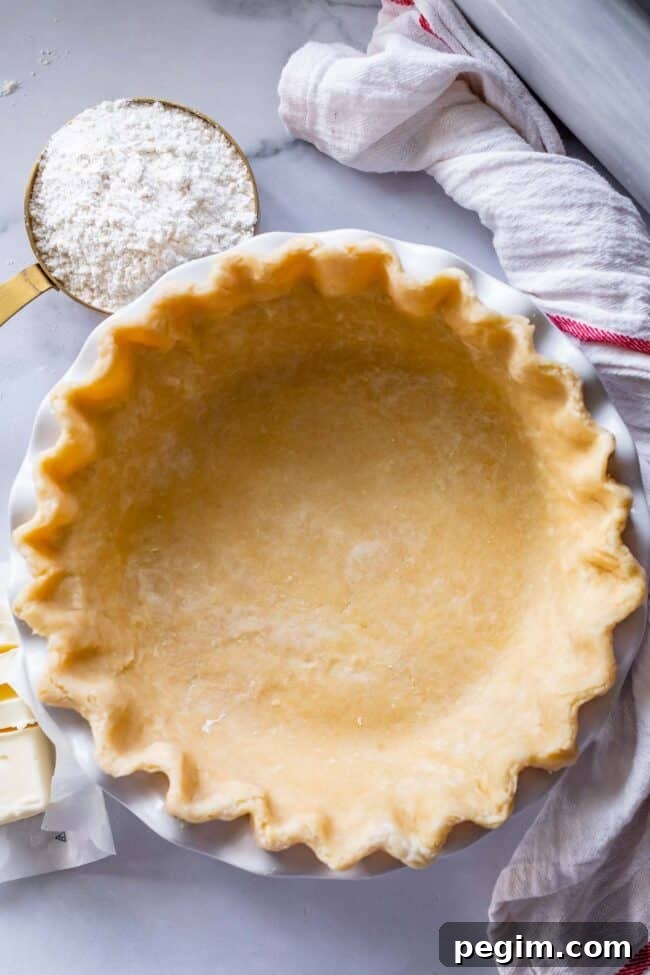
Table of Contents
- What is a blind baked pie crust?
- What is a par-baked pie crust?
- How to blind bake pie crust – step-by-step
- Chill the crust
- How to keep pie crust from shrinking
- What to use instead of pie weights
- Best pie weights
- What temperature to bake
- How long to blind bake
- Double bake your crust
- Blind bake without weights?
- How to par-bake
- Pies that use a blind-baked crust
Blind baking a pie crust without ending up with saggy edges or bubbles can be frustrating. After testing methods and baking many pies, these reliable tips will help you get a crisp, evenly baked shell every time.
What is a blind baked pie crust?
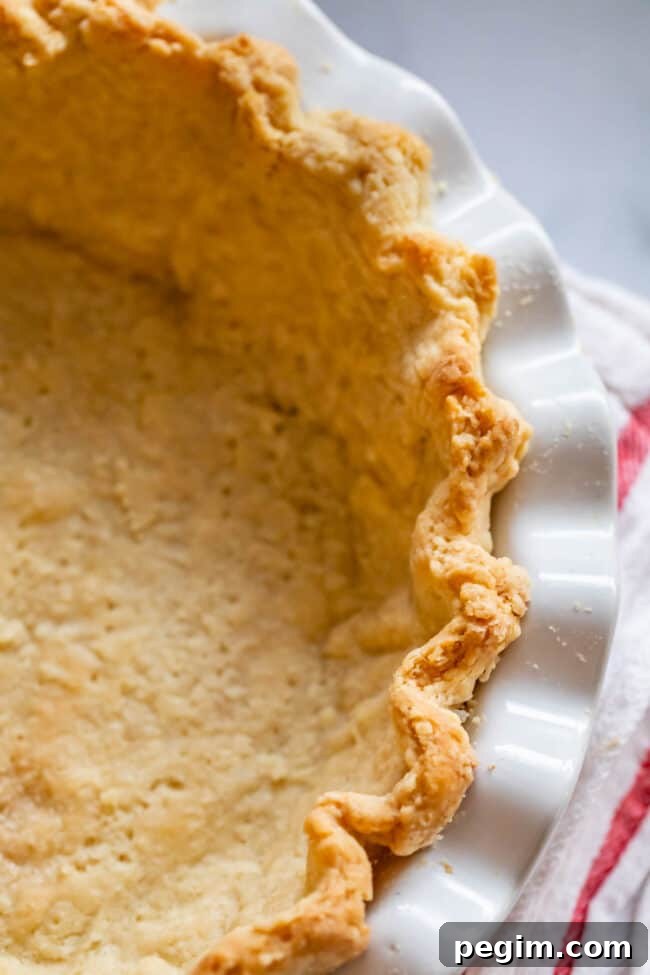
A blind-baked pie crust is baked empty, without filling, until fully cooked and golden. This method is ideal for cream pies and fresh fruit (glacé) pies that won’t return to the oven after being filled. Because the filling won’t be baked inside the crust, the pastry must be completely cooked through.
What is a par-baked pie crust?
Par-baking (partial baking) sets the crust enough that it can be filled and returned to the oven to finish baking with a wet filling, like pumpkin or sweet potato pies. Par-baking prevents soggy bottoms while letting the filling finish cooking in the oven.
How to blind bake pie crust – step-by-step instructions
Follow these essential steps for a perfect blind-baked crust:
- Double bake: bake once with weights, remove weights, then finish baking.
- Chill the dough thoroughly before baking.
- Use enough pie weight to prevent bubbling and to support the edges.
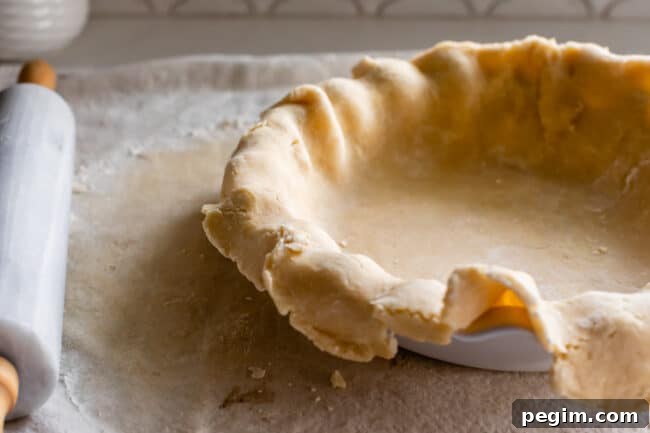
Roll out your pie dough and transfer it to a 9-inch pie pan. You can use homemade flaky pie crust or store-bought dough. Tuck any excess dough under itself to create a neat edge instead of trimming it away—this preserves flavor and gives a thicker rim for crimping. If the dough cracks, smooth it with cold fingers or dip your fingertips in ice water to help it come together.
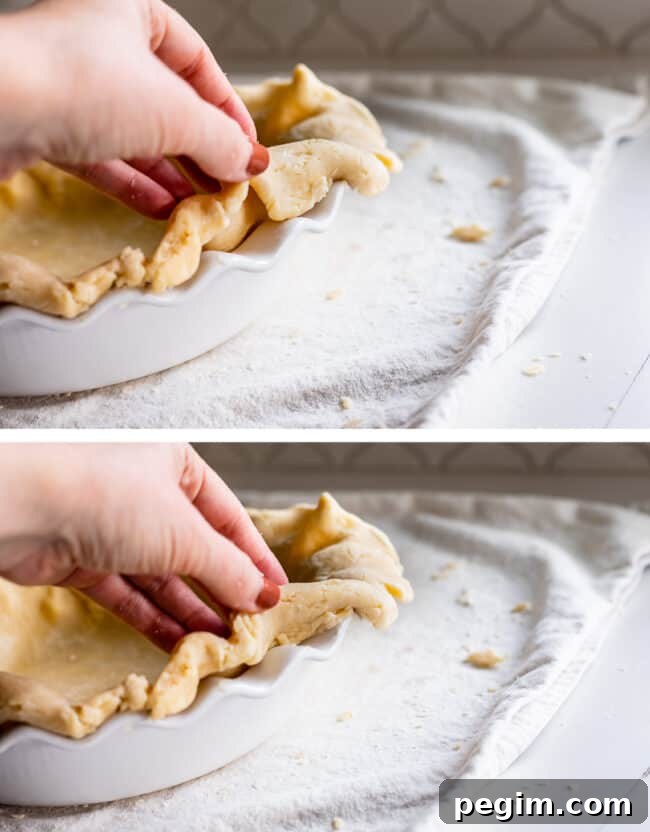
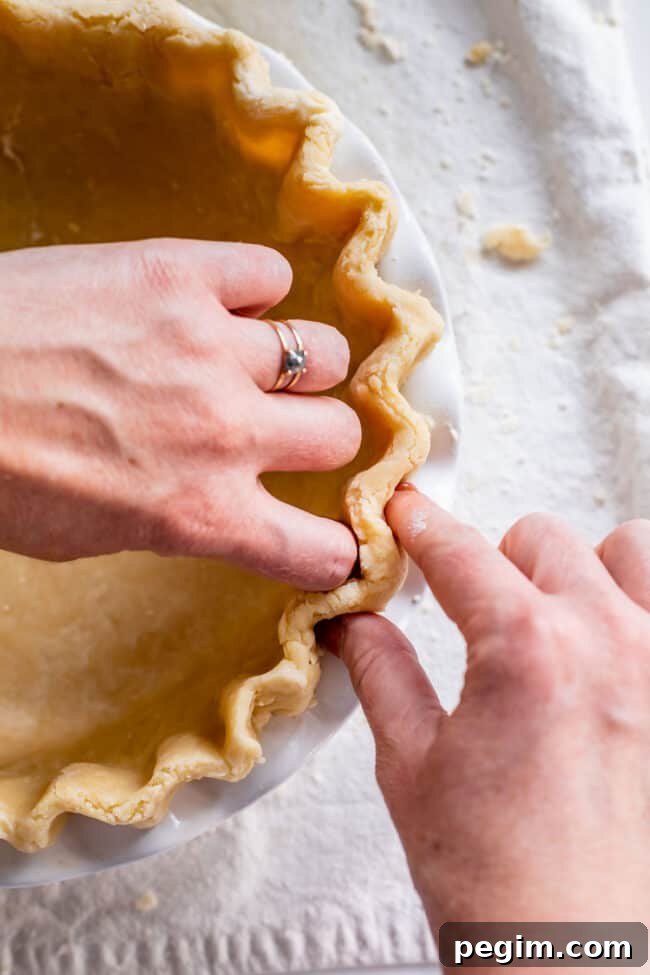
Flute or crimp the edges using your fingers, knuckles, or a fork for a decorative finish.
Chill the crust
Chill the assembled crust for at least 30 minutes, preferably an hour. Cold dough entering a hot oven gives you those flaky layers by keeping the fat solid until baking begins.
How to keep pie crust from shrinking
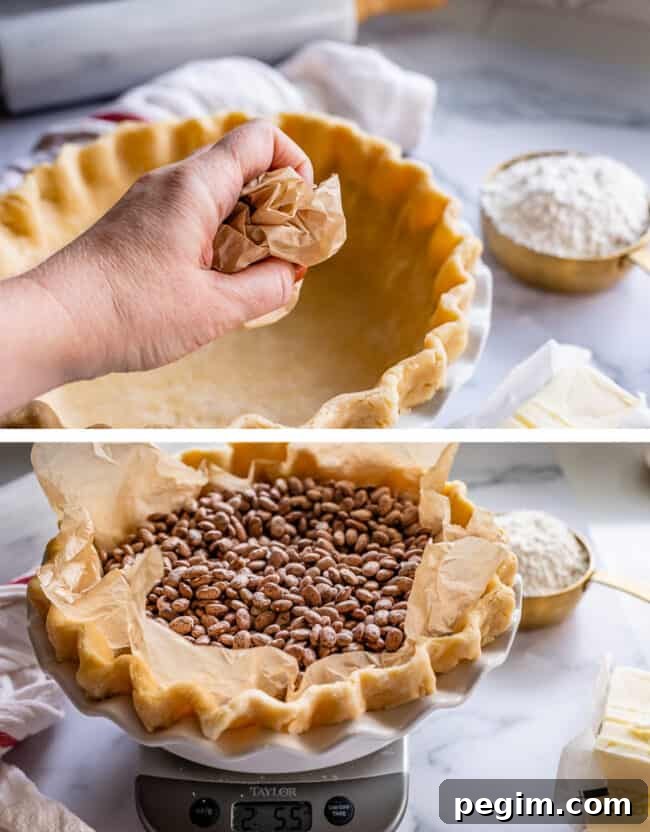
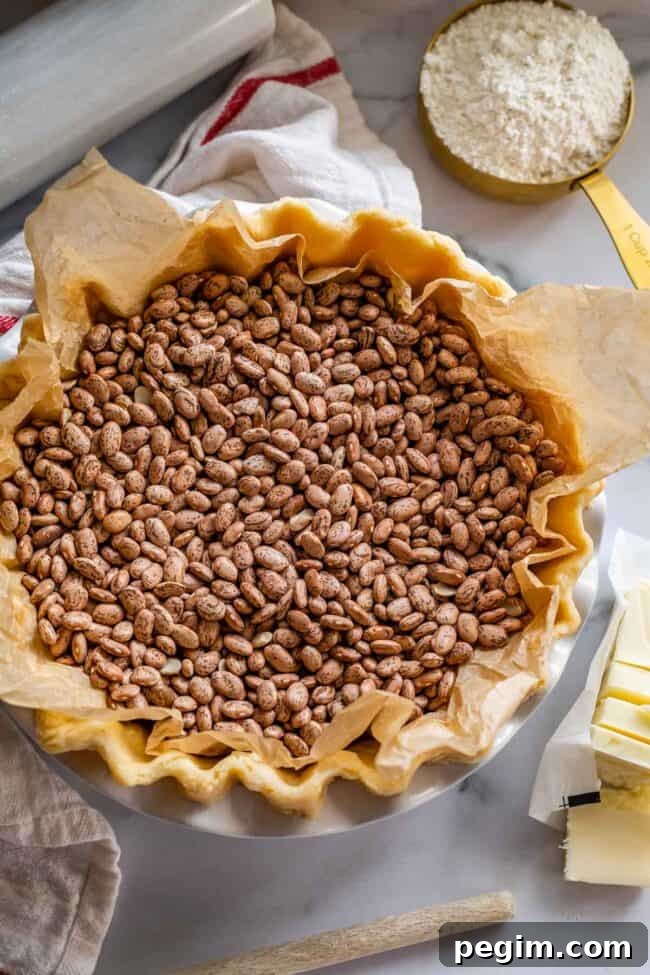
After chilling, line the pastry with crumpled parchment or foil (smoothed out) to protect the crust and make it easy to lift out weights later. Fill the lined crust with enough weights to reach up the sides—this supports the rim and prevents it from slumping. Using too few weights is a common cause of collapsed edges; be generous.
What to use instead of pie weights
If you don’t own pie weights, many household items work well:
- Marbles
- Loose change
- Dry rice (can be reused and will toast slightly)
- Dry beans (set aside and use only for weighing—don’t eat them afterward)
- Granulated sugar (will caramelize lightly and add flavor)
- Any oven-safe item that fills the shell without melting or burning
What are the best pie weights to use?
The best weights are whatever you have on hand and use generously. Dried beans, rice, marbles, or store-bought weights all work—just be sure to use enough to hold the crust’s shape while baking.
What temperature to bake a pie crust?
Preheat the oven to 425°F (220°C). Bake with weights for about 15 minutes until the edges are lightly golden, then remove the weights and continue baking to finish the bottom crust. For a full blind bake, finish for 12–18 minutes after removing weights. For a par-bake, finish for about 3 minutes after removing weights so the center turns matte and sets without browning.
How long to blind bake a pie crust
Bake at 425°F for 15–18 minutes with the weights until the rim shows light color. Remove the weights, prick the bottom with a fork to prevent bubbles, then return to the oven: 12–18 more minutes for a full blind bake, or about 3 minutes for a par-bake (if the pie will go back in the oven).
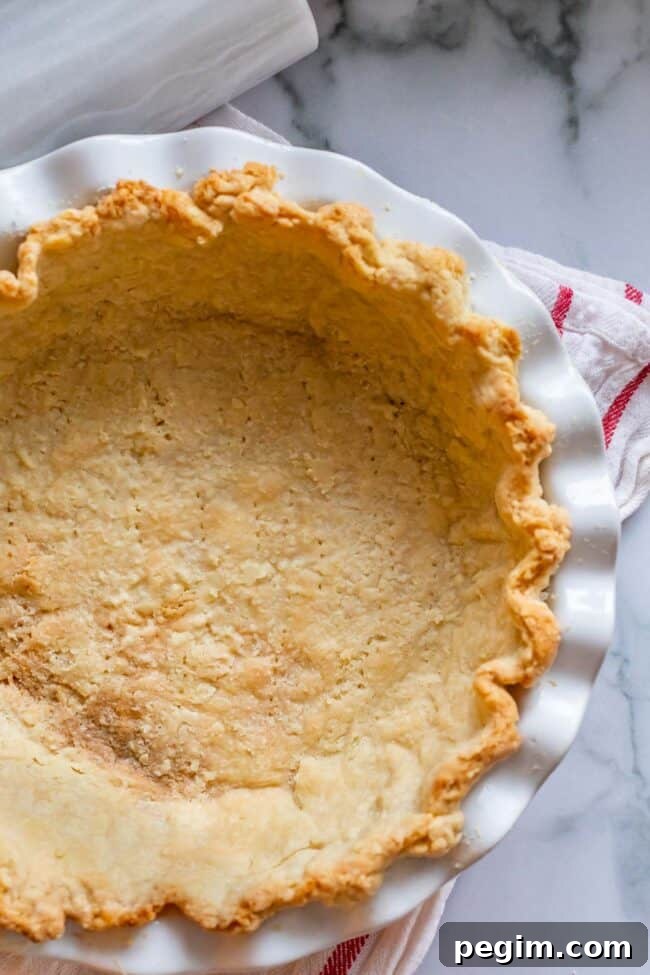
Double bake your blind baked pie crust
After removing weights, double-bake at 425°F until the bottom is golden for a fully baked shell that won’t need oven time after filling. For par-baked shells that will finish with the filling, return to the oven only until the center is matte—about 2–3 minutes.
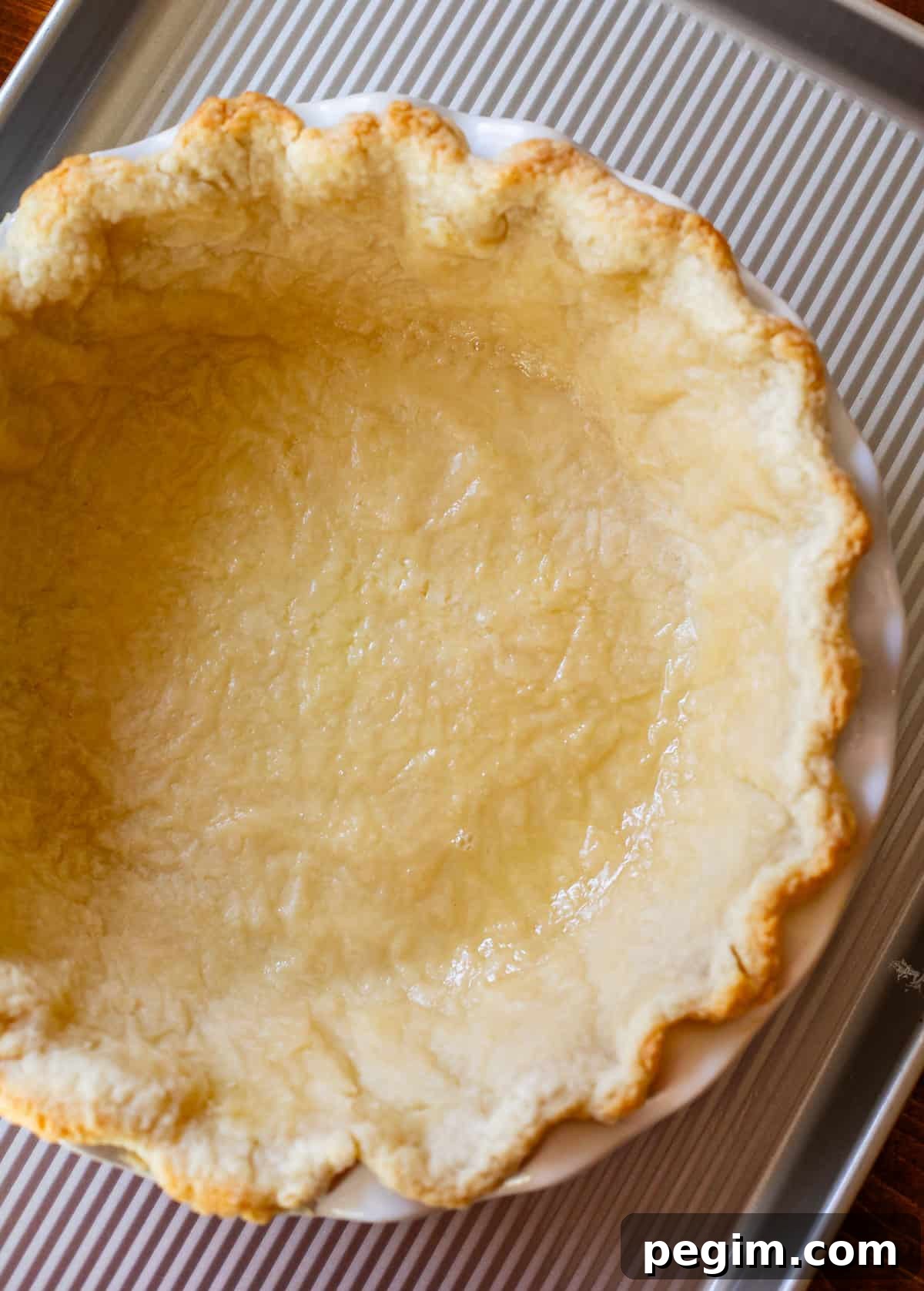
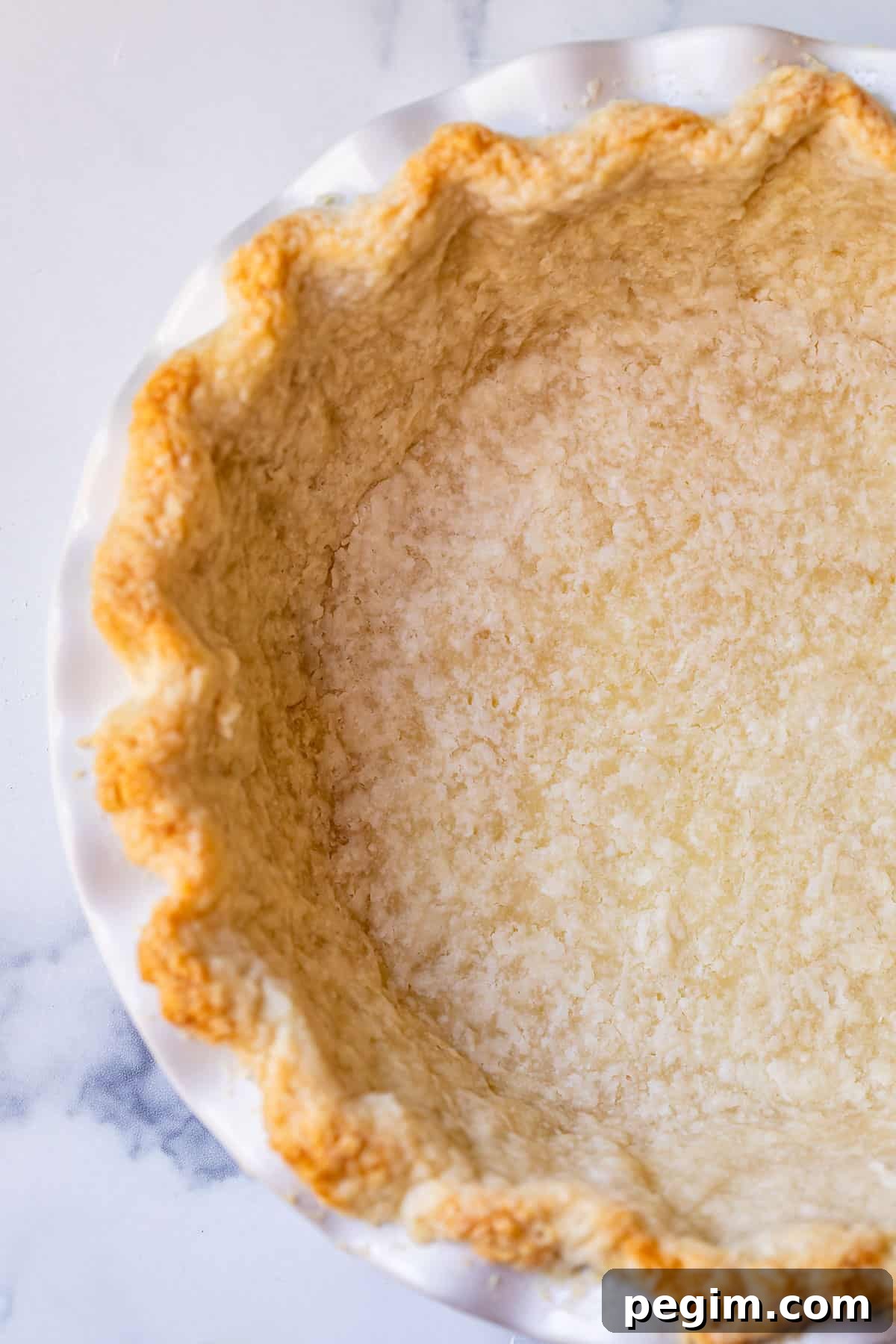
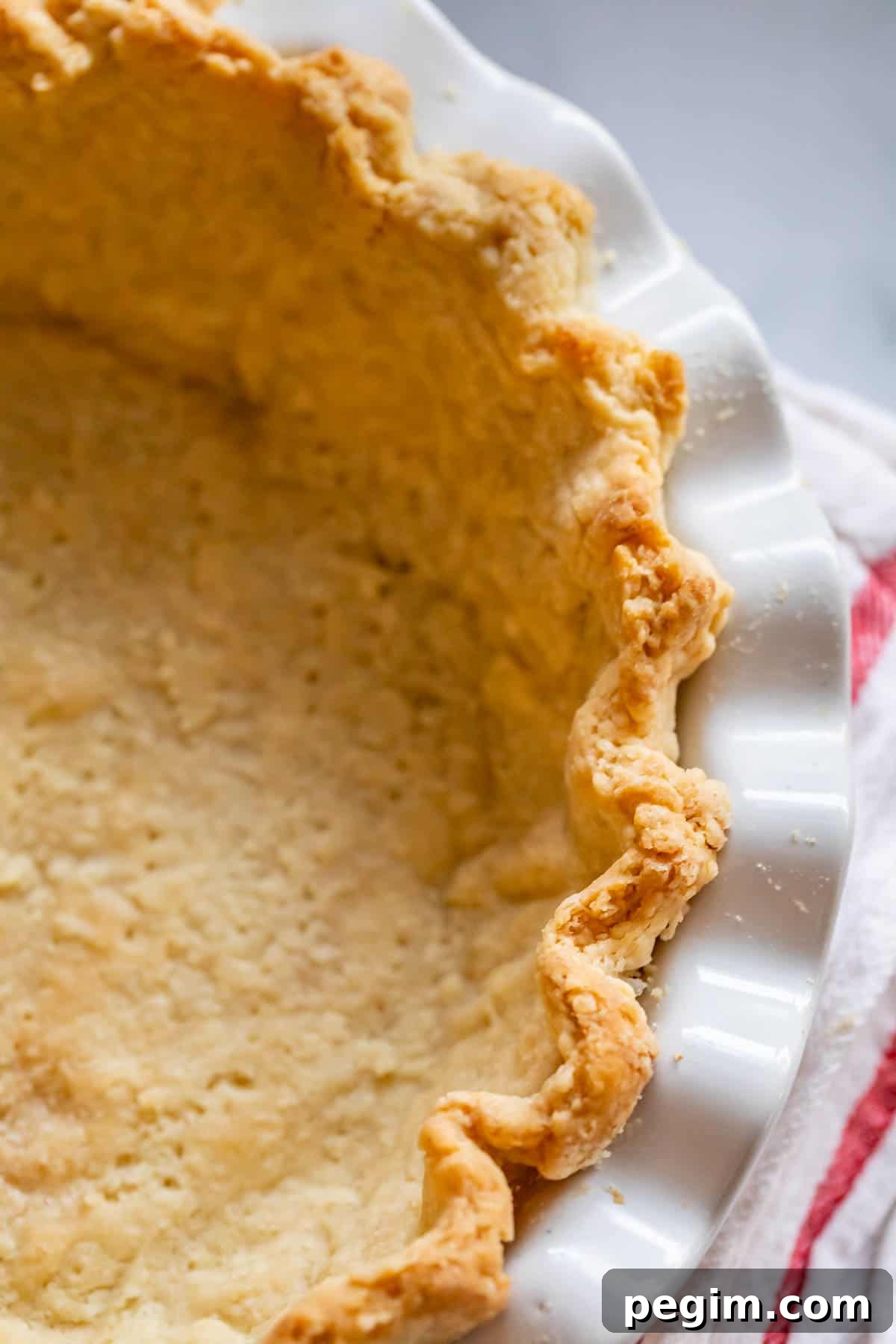
You want a pale blonde color and a matte bottom—no shiny raw spots—before filling when par-baking. For a full blind bake, continue until the bottom is a light golden brown.
Can I blind bake pie crust without weights?
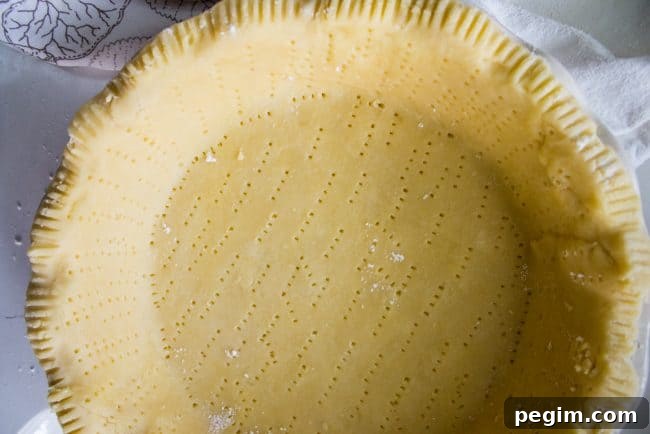
Yes, but it carries risk. Dock the crust—prick it all over with a fork—to allow steam to escape. Chilling the dough thoroughly is essential if you skip weights. Without weights, the edges can still shrink and slump, so weights are the preferred method.
How to par bake pie crust
Par-baking is necessary for pies with liquid fillings to avoid soggy bottoms. Follow the blind-bake steps but shorten the timing: bake with weights until the edges just start to color, remove weights, then bake about 3 minutes more so the bottom is matte and set but not browned.
Pies that use a blind bake pie crust
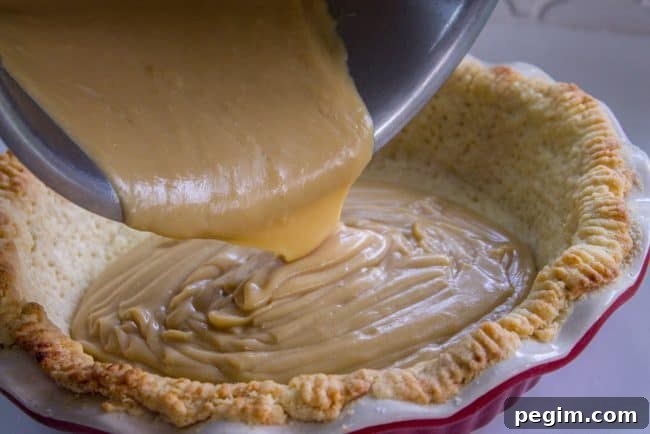
- Butterscotch pie with meringue topping (par-bake, then finish after topping)
- Pumpkin or sweet potato pies (par-bake so the filling can finish cooking)
- Lemon meringue (par-bake; finish in the oven to bake the meringue)
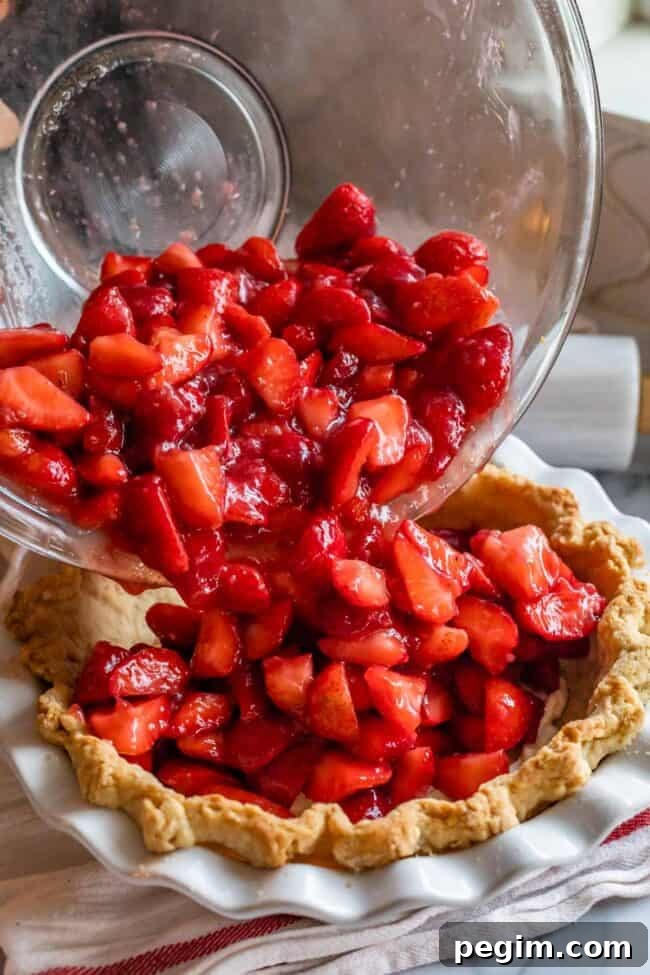
- Fresh fruit glacé pies like strawberry or blackberry (full blind bake)
- Chocolate cream and other cream pies (full blind bake)

Blind Baking Pie Crust
Ingredients
- 1 pie crust (half this recipe or a store-bought pie dough)
- parchment paper or tin foil
- pie weights (dry beans, dry rice, loose change, etc.)
Instructions
- Make or use a pie crust. If using a homemade recipe that yields two crusts, halve it or freeze the second.
- Roll out the crust and transfer to a 9-inch pie plate. Fold excess dough under rather than trimming to preserve the rim.
- Shape and smooth the edge, using cold water on your fingers if the dough cracks.
- Flute or crimp the edges with your fingers or a fork for a neat finish.
- Refrigerate the assembled crust for 30–60 minutes; the colder, the better.
- Preheat the oven to 425°F (220°C) and place a baking sheet or pizza stone inside to heat.
- Line the chilled crust with crumpled parchment or foil, smoothing so it won’t tear the pastry. Leave overhang to lift out weights later.
- Fill the lined crust with enough weights to reach up the sides and support the edges.
- Bake at 425°F for 15 minutes, until the rim shows light color. Don’t remove it too early.
- Carefully remove the pie and lift out the weights. The bottom may still look shiny—this is normal.
- Prick the bottom with a fork to prevent bubbles.
- For a full blind bake, shield the edges with foil and return to the oven at 425°F for another 12–18 minutes until the bottom is golden.
- For a par-bake, return to the oven for about 3 minutes until the bottom is matte and set but not browned; proceed with your filling and bake as directed in your pie recipe.
- Remove from oven and follow your pie recipe for cooling and filling. Most recipes recommend cooling completely before adding a filling that won’t be baked further.
Nutrition
Mention @thefoodcharlatan or tag #thefoodcharlatan on social media.
Facebook | Pinterest | Instagram