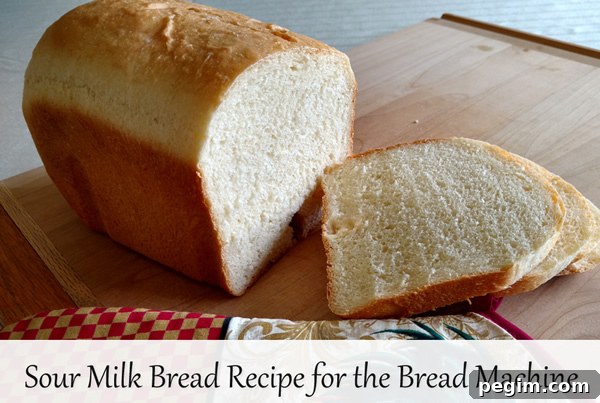
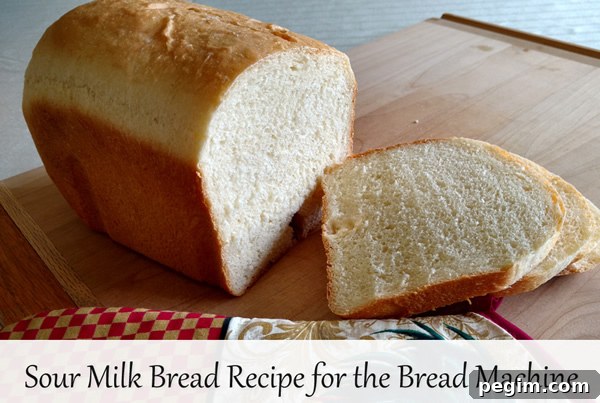
I make this sour milk bread recipe all the time. It uses simple ingredients, delivers great flavor and texture, and you don’t even need to have naturally sour milk on hand. This version includes notes for high-altitude baking.
Last Updated on May 25, 2026 – Originally posted in June of 2010
Featured Comment
I have searched for months for a breadmaker recipe that would give me a fluffy white bread like my husband likes. This recipe delivers fabulous texture AND flavour!!! ~ Megan
Sour milk bread is my go-to loaf. It’s easy to make, uses everyday ingredients, and produces a soft, tender crumb. We enjoy it at breakfast and keep loaves on hand for sandwiches and toast.
Sour Milk
Traditionally, sour milk bread was a way to use milk that had started to sour but was still safe for baking. If you don’t have sour milk or prefer not to use it, this recipe works perfectly with regular fresh milk.
To mimic sour milk, add 1 tablespoon of white or apple cider vinegar to 1 cup of room-temperature milk. Stir and wait about five minutes; the milk will develop a mild tang. For this recipe I used 1.5 tablespoons of vinegar in 1.5 cups of milk, stirred, waited five minutes, then adjusted so I had 1.5 cups of liquid.
What Milk Adds to Bread
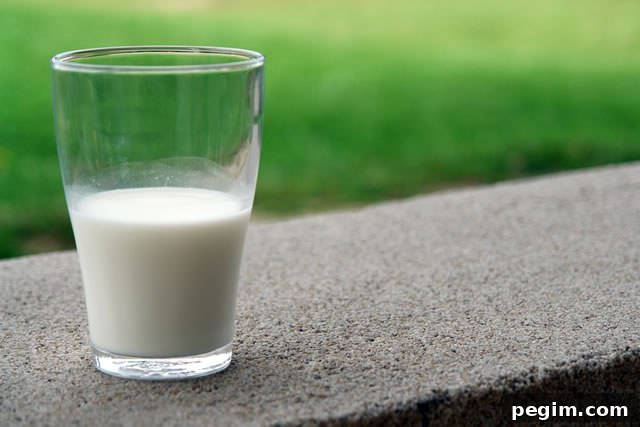
Milk enriches bread in several ways. Lactose, the sugar in milk, is not fully consumed by yeast, so it adds a touch of sweetness. Milk proteins and fats make the crumb softer and improve flavor, resulting in a richer, fluffier loaf than one made with water alone.
Scalding the Milk?
Some bakers recommend scalding milk before using it because of glutathione, a compound that can affect dough rise. In my experience this recipe works well using milk straight from the fridge, and I’ve never found scalding necessary. Modern pasteurization may make this less of an issue than it once was.
Short on Time?
I typically use active dry yeast in this recipe. If you need a quicker cycle in your bread machine, swap the active dry yeast for 3 teaspoons of instant, rapid-rise, or bread machine yeast and use the quick cycle.
Type of Milk
For many years I used 2% milk and got excellent results. I compared loaves made with 2% and whole milk (both using the quick cycle and rapid-rise yeast) and found whole milk gives a slightly better rise, though both options produce a delicious loaf.
Either milk type works well; whole milk produces a modestly taller loaf.
Oil is Optional
Oil is listed as optional. The bread tastes fine without it, but we freeze our loaves and found that adding oil keeps the crust from becoming a bit tough after toasting following freezing and thawing.
High Altitude Instructions
This recipe was developed at sea level. Above about 3,000 feet you’ll likely need adjustments. When I tested the recipe around 4,800 feet, these changes produced the best results:
- Reduce active dry yeast to 1 1/4 teaspoons.
- Use the light crust setting rather than medium.
- Check the dough after a few minutes of kneading. At high altitude you may need to add a bit more flour about half the time.
FAQ for This Recipe
Common questions include converting the recipe for different machine sizes, substituting sweeteners, and choosing flours. Refer to resources about converting bread machine recipes, using honey in place of sugar, and the difference between bread flour and all-purpose flour for detailed guidance.
Sour Milk Bread Instructions
For a two-pound loaf using the basic/white cycle with medium crust.
Follow the ingredient order recommended by your bread machine manufacturer. With most machines, liquids go in first. During the kneading cycle, check the dough after five to ten minutes. The dough should form a smooth round ball. If it’s too dry, add liquid a teaspoon at a time; if too wet, add flour a tablespoon at a time until the dough looks right.
Sour Milk Bread Ingredients
Two-pound loaf, basic/white cycle, medium crust.
- 1 ½ cups sour milk (or make sour milk by adding vinegar to regular milk as described above)
- 4 cups bread flour
- 1 ¼ teaspoons salt
- 4 Tablespoons sugar
- 1 ½ Tablespoons oil (optional)
- 1 ¾ teaspoons active dry yeast
Metric measurements and nutrition information are provided below in the recipe card.
Sour Milk Bread – Two Pound Loaf
Ingredients
- 1 ½ cups (354.88 ml) sour milk I make mine with regular, not-sour milk and it works fine.
- 4 cups (500 g) bread flour
- 1 ¼ teaspoon salt
- 4 Tablespoons sugar
- 1 ½ Tablespoons oil optional
- 1 ¾ teaspoons active dry yeast
Instructions
-
This is for a two-pound loaf. Use the basic or white setting with medium crust.
-
Add ingredients to the pan in the order recommended by your bread machine. For most machines, add liquids first, then dry ingredients, and yeast last.
-
Check the dough after five to ten minutes of kneading. It should form a smooth, round ball. If too dry, add liquid, one teaspoon at a time. If too wet, add flour, one tablespoon at a time, until the dough is smooth.
Notes
If you need a quicker bake, use the quick cycle and replace the active dry yeast with 3 teaspoons of rapid-rise (instant) yeast.
Make sour milk quickly: Add one tablespoon vinegar to one cup room-temperature milk, stir, and let sit about five minutes before using.
High altitude tips: At about 4,800 feet I reduced yeast to 1 1/4 teaspoons, switched to a lighter crust setting, and often needed to add a bit more flour after kneading began.
Metric measurements: This recipe was developed using US customary measurements; metric conversions are provided automatically.
Nutrition
All information is intended for general informational purposes only. Nutrition details are estimates and not a substitute for professional dietary advice.