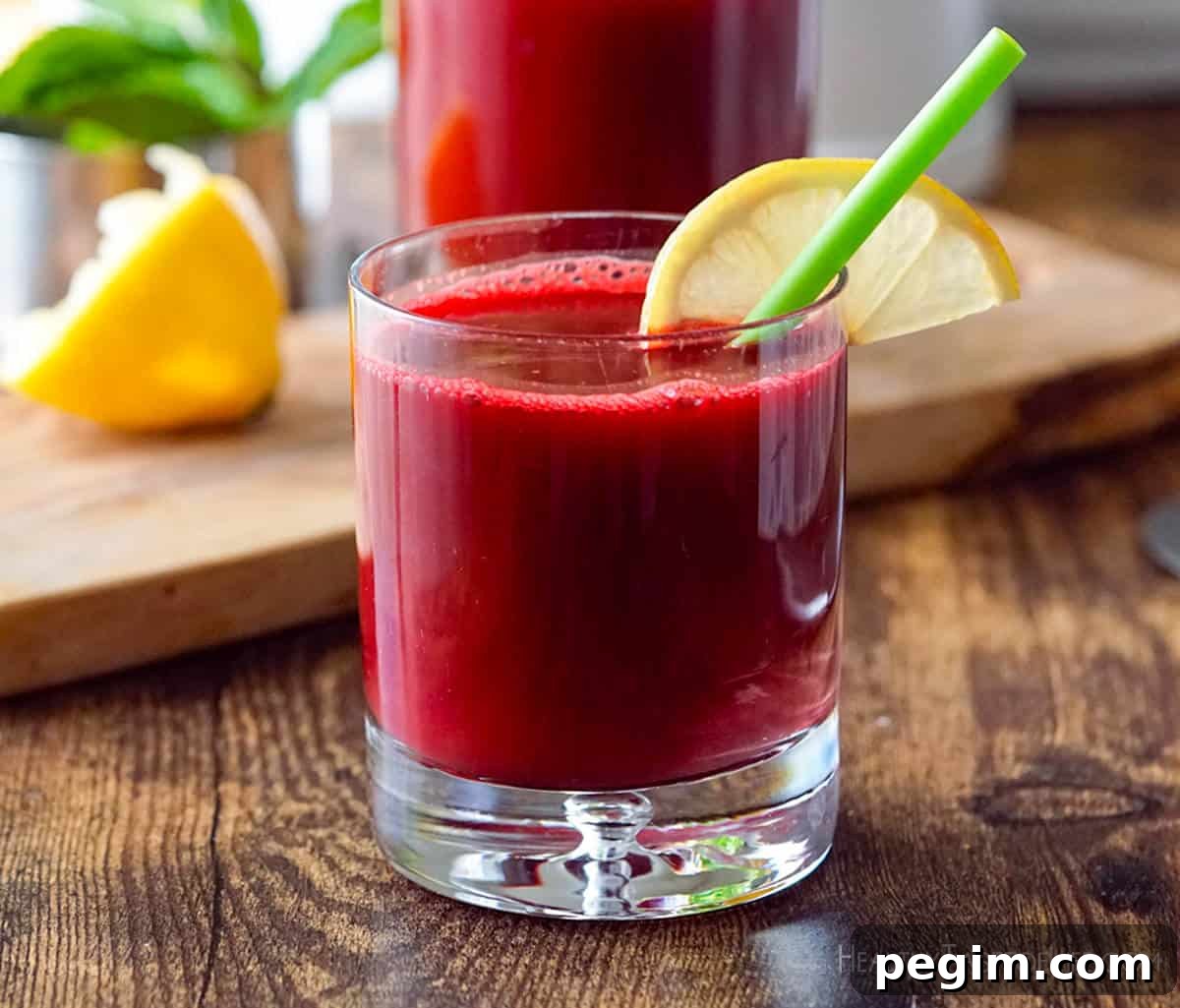
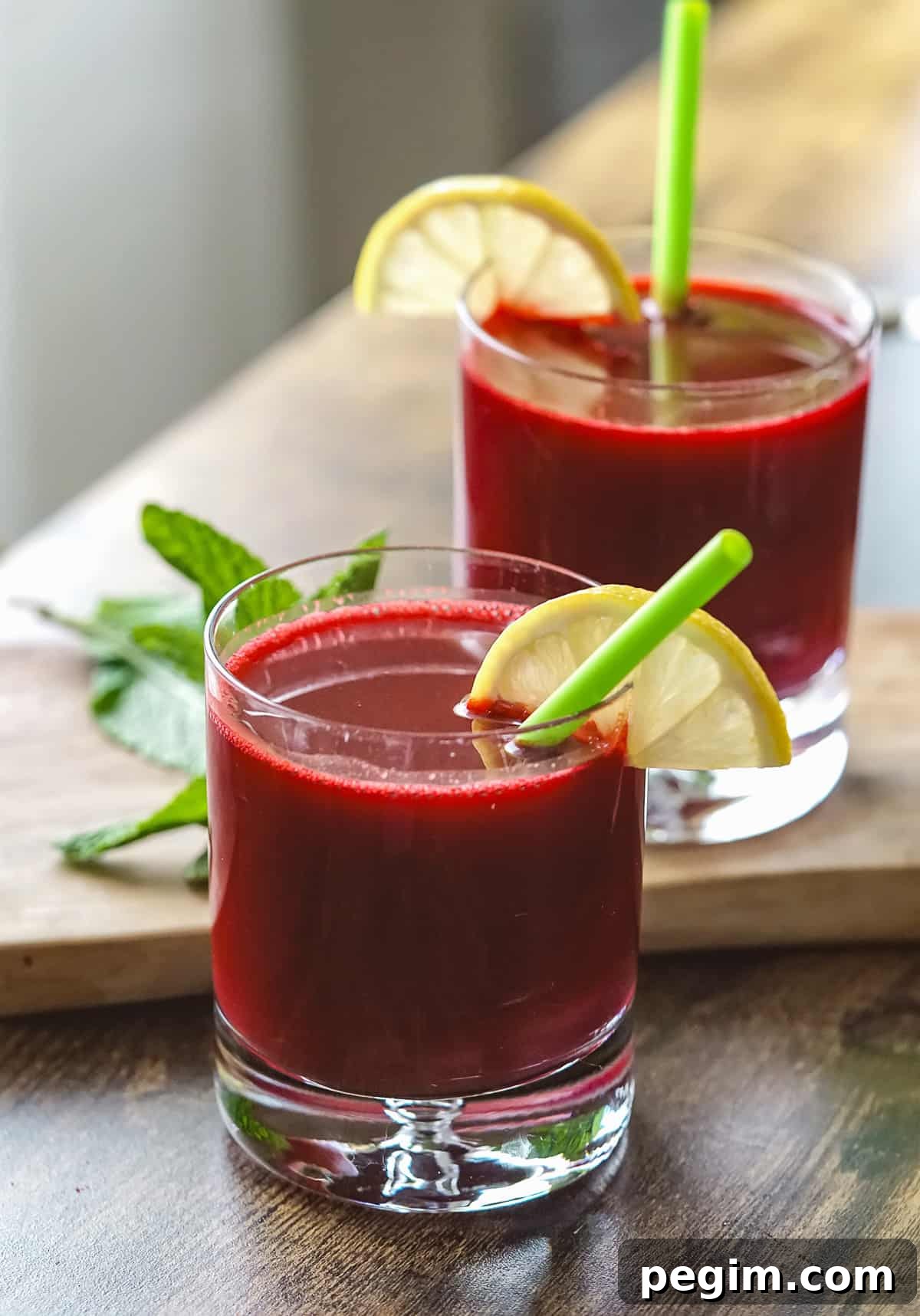
This simple beetroot juice recipe helps you get the most from beets. Rich in nutrients and natural compounds, this juice supports immune health, helps purify the blood, aids liver function, and offers anti-inflammatory, detoxifying and skin-supporting benefits. It’s an excellent vegetable juice or healthy beverage you can prepare at home.
You can make this beetroot juice with either a blender or a juicer. Below I explain both methods step by step and share the best ingredient combinations to try for flavor and maximum nutrient absorption.
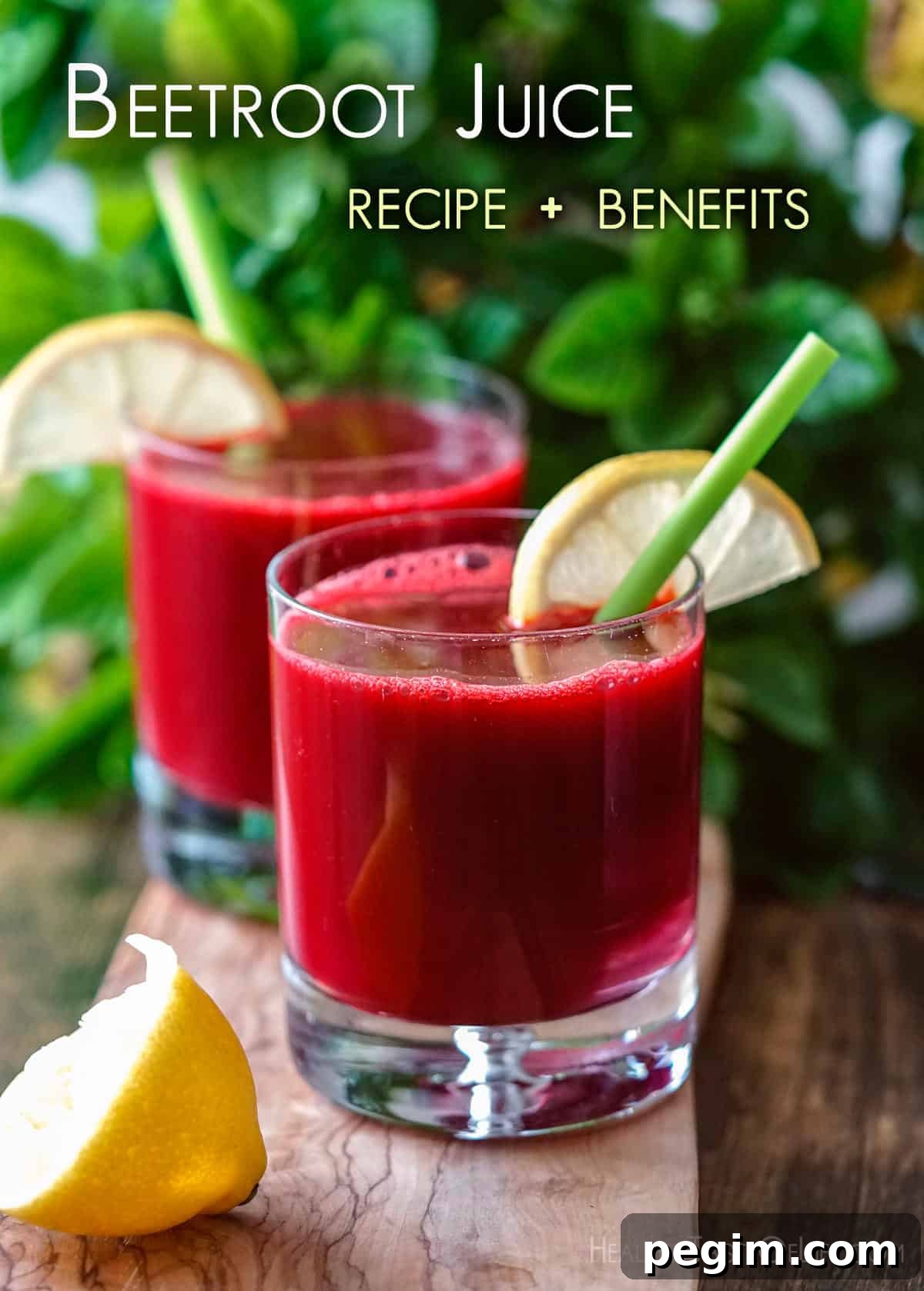
This recipe combines beetroot with carrot, apple, ginger and lemon — a mix that balances taste and improves absorption of key nutrients. The methods for both blender and juicer are described in detail further down.
Beetroot Juice Recipe Overview
For best nutrient retention, consume beets raw in the form of fresh juice or a beetroot smoothie. Juicing concentrates vitamins, minerals and antioxidants into an easily digestible drink. Alternating beet juice with other fresh vegetable juices—such as cabbage, celery, or green anti-inflammatory blends—adds variety and keeps your nutrient intake balanced.
In this recipe we blend beets with carrot, apple, ginger and lemon. The combination enhances nutrient bioavailability and yields a flavorful, energizing drink.
More Fresh Juices To Try
- Carrot Juice Recipe + Benefits of Juicing Carrots
- Energizing Pomegranate Beetroot Juice: Benefits + Recipe
- Celery and Pineapple Juice: A Nutrient-Packed Blend
- Best Cabbage Juice for Ulcers (Blender / Juicer)
- Celery Juice: Benefits, Recipes & Tips
- Anti-inflammatory Green Juice for Whole Body Health
- Carrot Orange Ginger Juice: Immunity Booster
- Pomegranate, Red Cabbage and Blueberry Juice
The preparation instructions below explain how to make this juice using a blender (then straining) or a juicer, and include tips for storage and serving.
You might also like these anti-inflammatory green smoothie recipes.
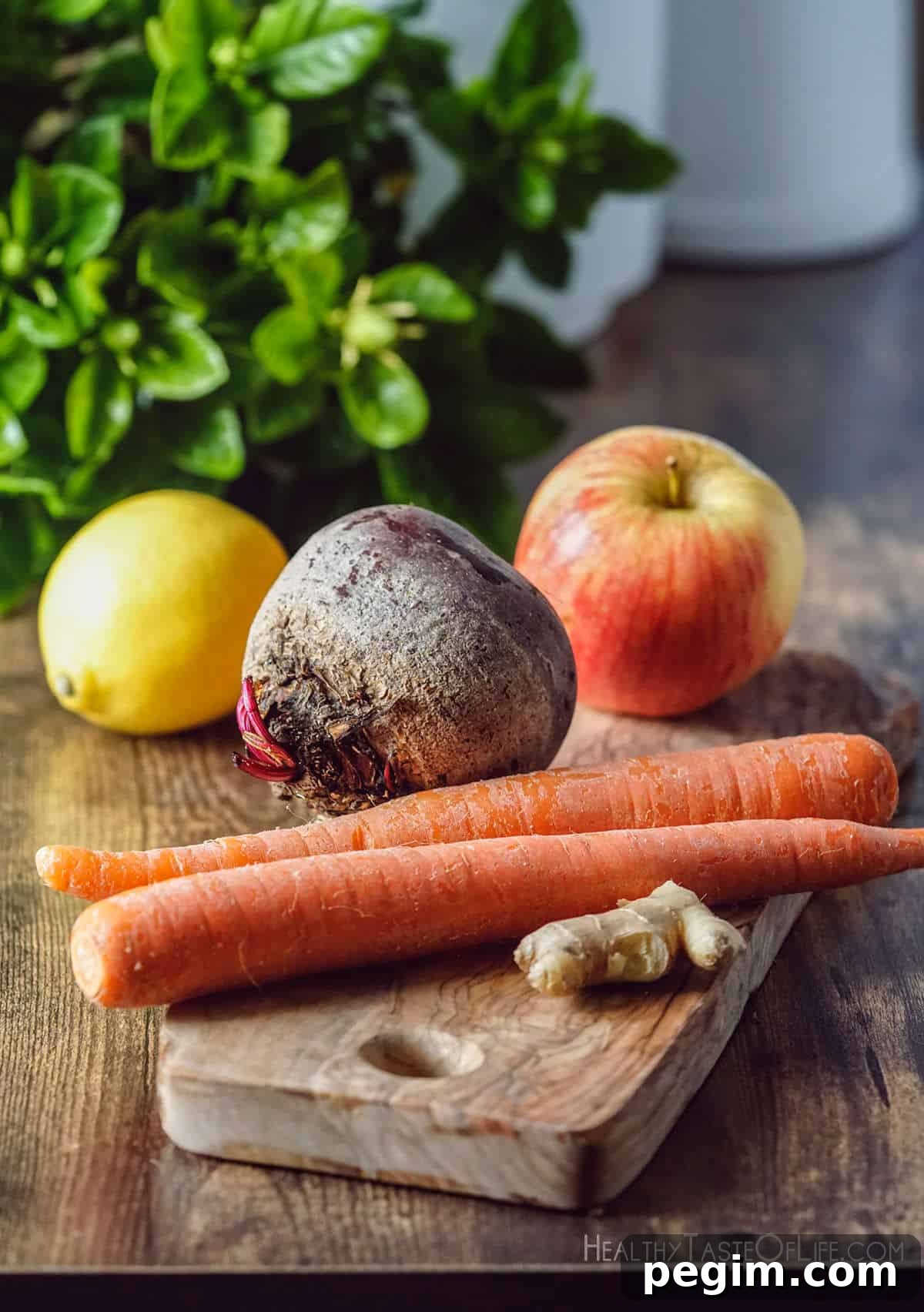
Beet Juice Ingredients And Their Benefits
- Beets – a rich source of folate, potassium, vitamin C, fiber and antioxidants, as well as dietary nitrates. They support circulation and can complement a fiber-rich diet when eaten as salads, soups or fermented preparations.
- Carrots – high in vitamin A precursors and antioxidants. Combined with beets, carrots help with nutrient synergy that supports iron status and overall nutrient absorption.
- Apple – provides natural sweetness and antioxidants such as quercetin, catechin and chlorogenic acid; apples also contribute vitamin C and potassium and can help moderate sugar absorption from the juice.
- Lemon (juice) – delivers vitamin C, which enhances iron absorption from plant foods and brightens the flavor of the blend.
- Ginger – adds anti-inflammatory and antioxidant benefits, supports digestion and may help keep blood sugar balanced. It also improves taste and can ease nausea for those new to vegetable juices.
How To Make Beetroot Juice With A Blender
You can make excellent beetroot juice with a high-speed blender and a fine straining cloth or nut milk bag. This method preserves most nutrients and is a cost-effective alternative to buying a juicer.
Steps For Making Beet Juice Without a Juicer:
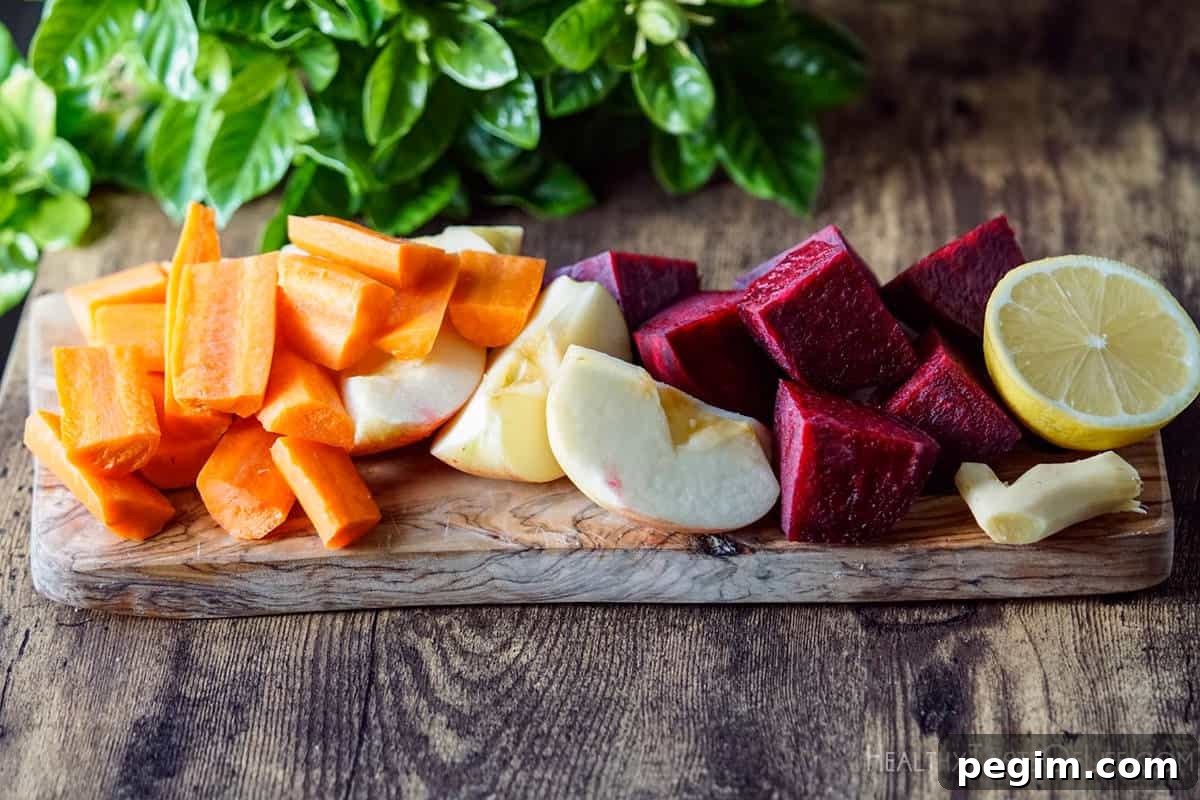
Step 1: Prepare the Ingredients
- Wash, peel (optional for beets and ginger) and chop beets, carrots and apple into smaller pieces so they blend easily.
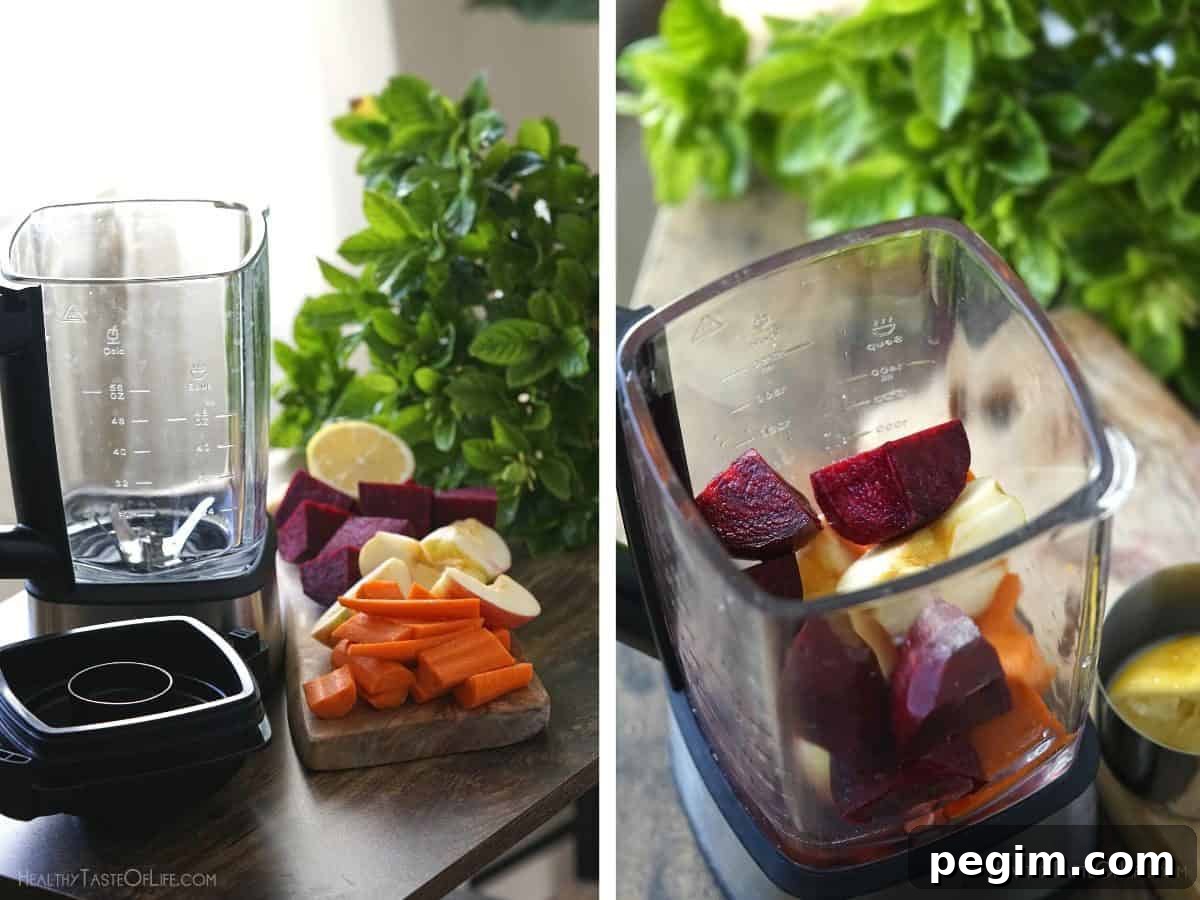
Step 2: Blend
- Combine the chopped ingredients in the blender with about 3/4 to 1 cup (180–240 ml) of water to help the blades move. Add lemon juice and blend until smooth.
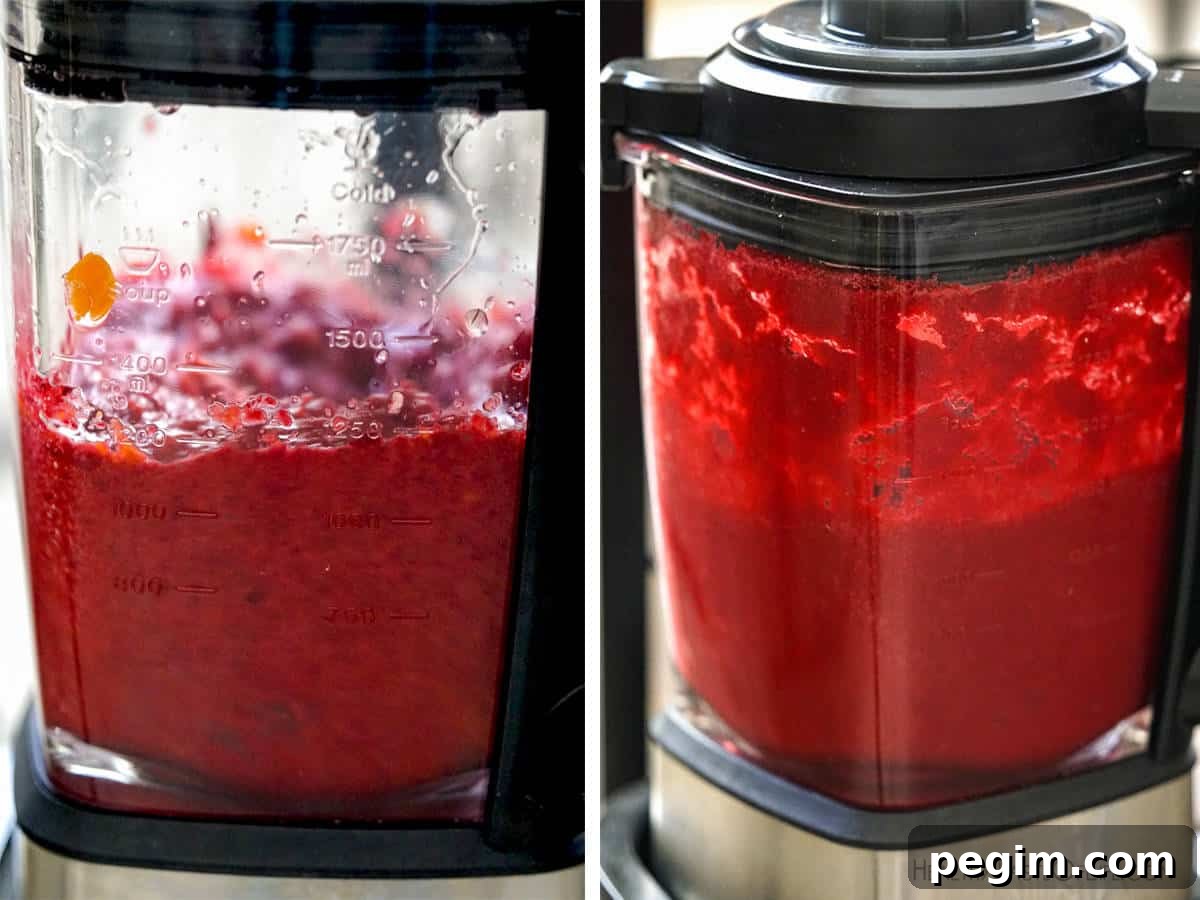
Step 3: Strain
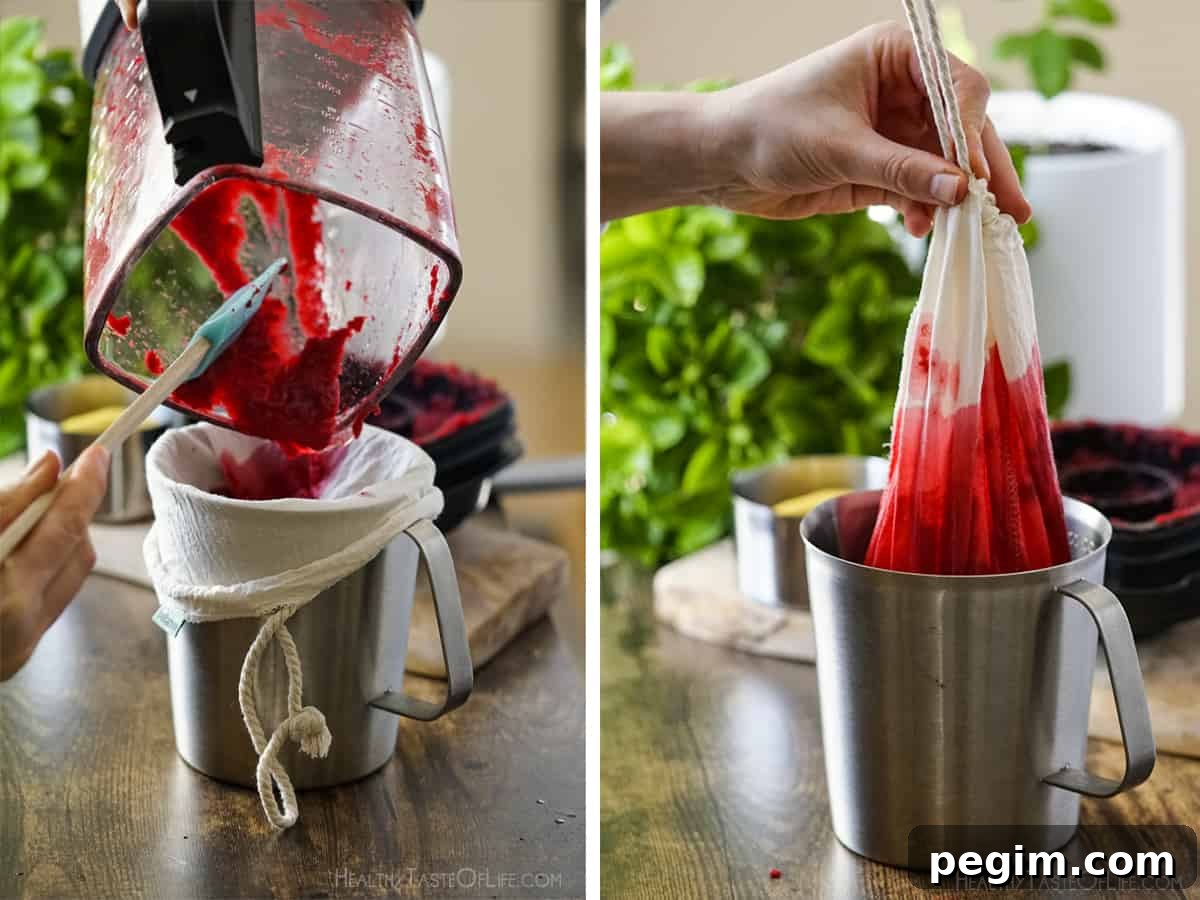
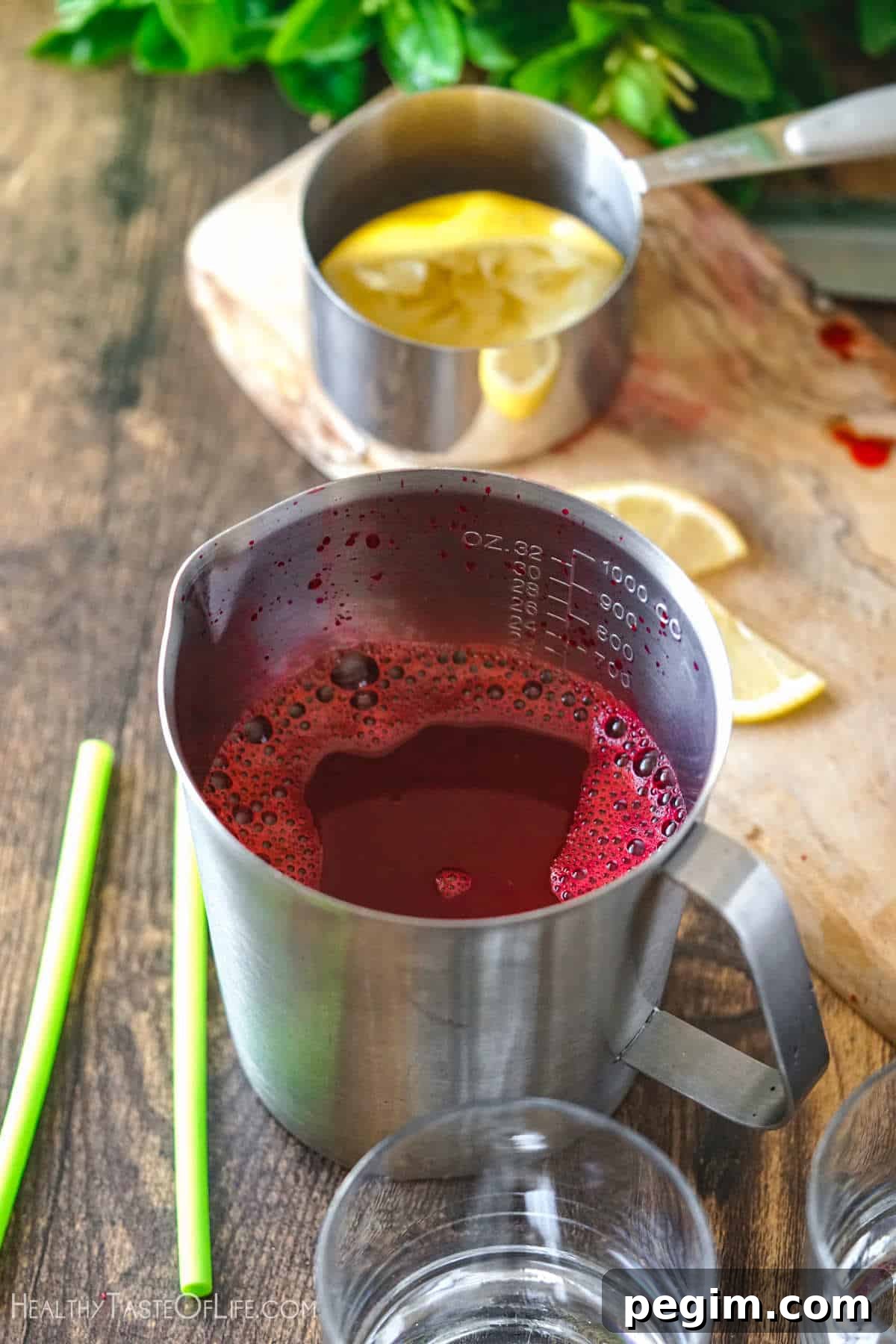
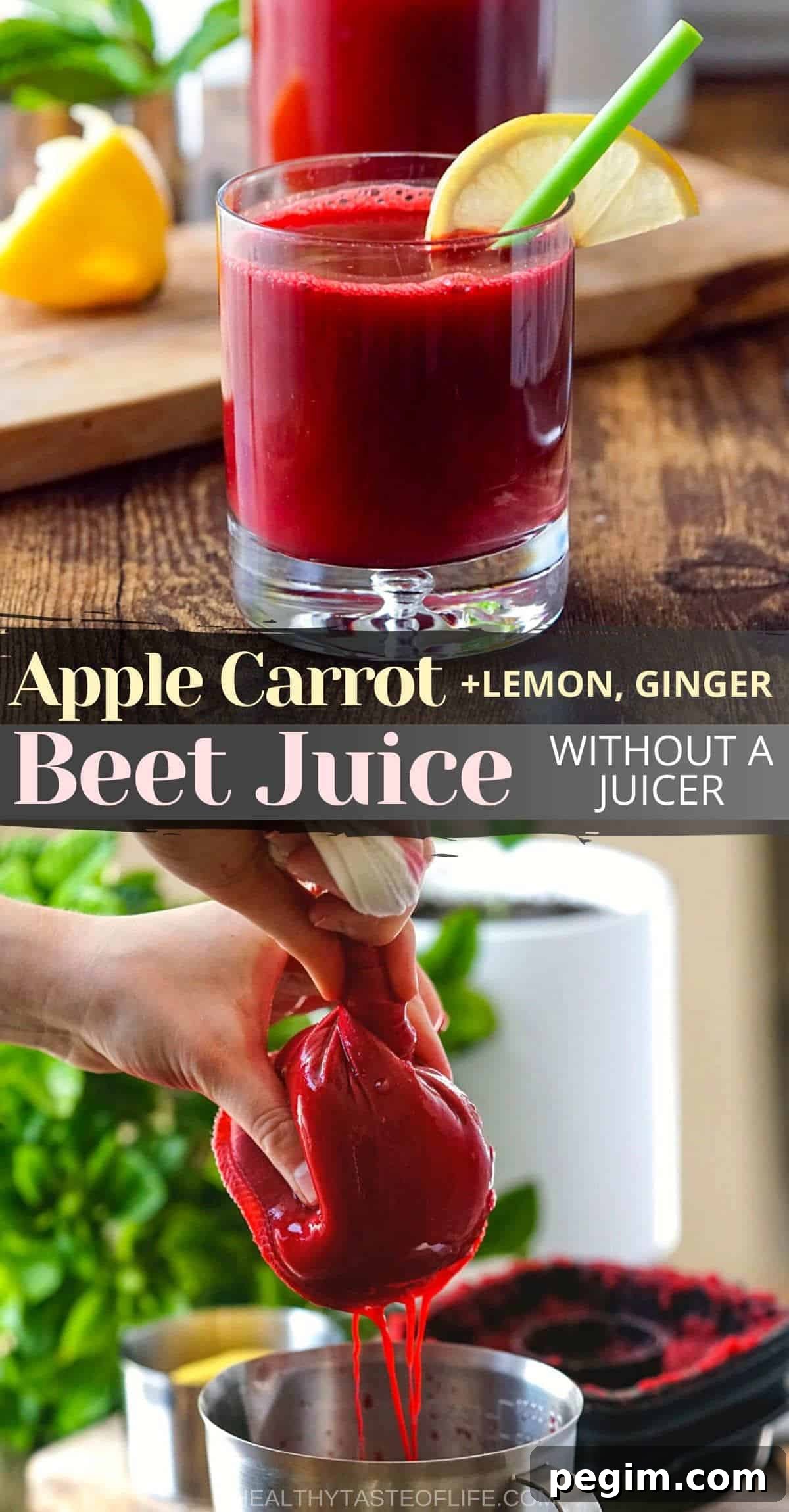
- Pour the blended mixture through a nut milk bag or a fine mesh strainer into a container. Squeeze firmly to extract as much liquid as possible. Discard or repurpose the remaining pulp.
How To Make Beet Juice With A Juicer
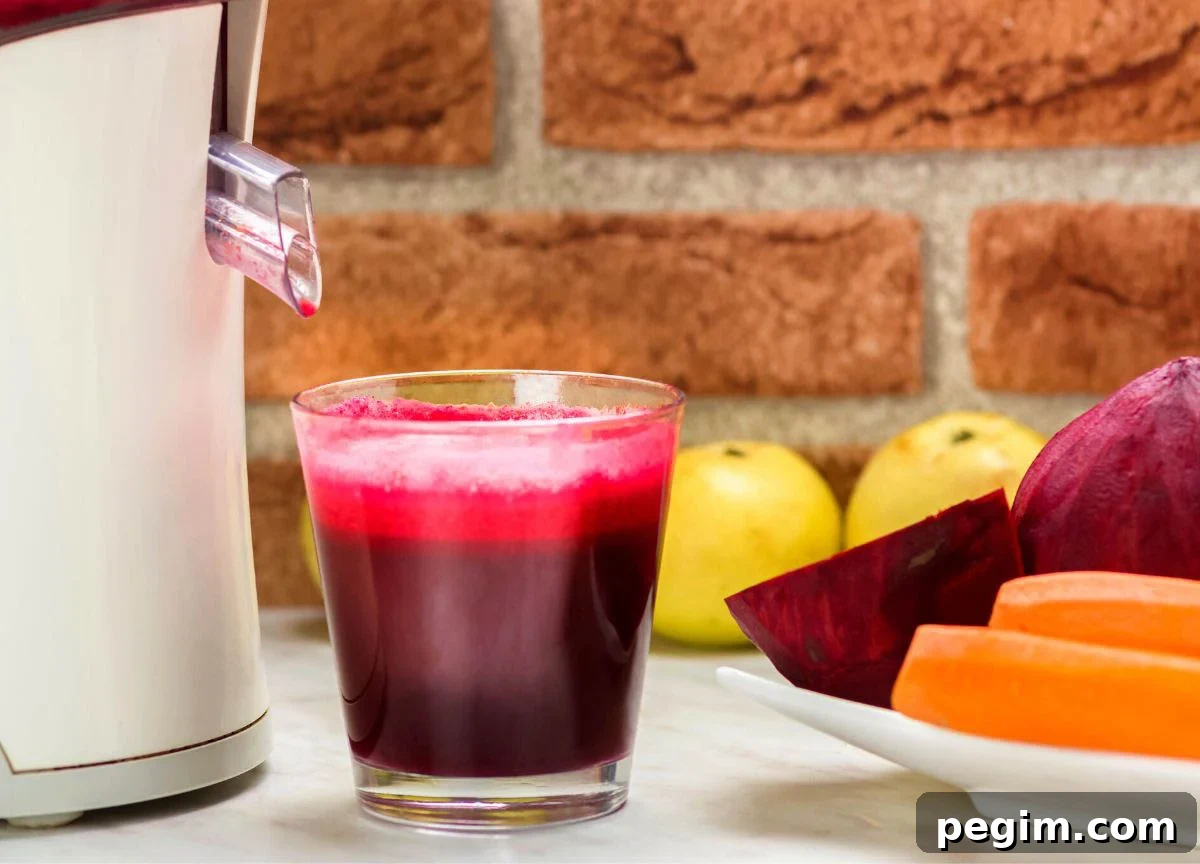
- Wash and peel ingredients as needed, then cut them into pieces that fit your juicer.
- Feed the ingredients into the juicer, alternating firmer items first so the machine can extract more liquid.
- Collect the juice, transfer to a clean glass or bottle, and enjoy immediately or refrigerate briefly.
Best Juicer For Beets
Masticating (slow or cold-press) juicers typically extract more juice with less oxidation and produce drier pulp. Vertical masticating juicers are space-efficient and convenient for home use. Choose a model that minimizes heat and oxidation during extraction for the best nutrient retention.
Tips To Juice Beets
- Choose beets wisely: Smaller beets are often sweeter and juicier. Use fresh produce and, when possible, buy organic to reduce pesticide exposure.
- Prep ahead: Peel and cut beets, carrots and apples in advance and store them in a sealed container in the refrigerator for quick juicing.
- Mix carefully: Apple and lemon help balance bitterness and improve flavor; avoid adding too many fruits to a vegetable-heavy juice, as fruit digests faster and can sometimes cause discomfort when mixed with vegetables.
- Boost nutrients: Add a handful of leafy greens or parsley to increase calcium and micronutrients, making the juice even more nourishing.
Best Beetroot Juice Combinations
- Beet, carrot and cucumber: a mild, refreshing blend where cucumber tones down beet earthiness.
- Beet, green apple and kale: tart apple and bitter kale complement beet and add depth.
- Beet, Swiss chard, broccoli stems and apple: a nutrient-dense, savory-green mix that supports digestion and immunity.
- Beet, pomegranate and lime: a bright, iron-rich combination with sweet and tangy notes.
- Beet, apple, celery and ginger: a balanced, refreshing, and slightly spicy juice ideal for daily energy.
- Beet, parsley, dandelion and apple: a cleansing, herb-forward juice with robust nutrient density.
- Beet, bell pepper and cilantro: a unique blend that supports cardiovascular and digestive health.
- Beet, apple, mint and turmeric: anti-inflammatory and refreshing, with a warming turmeric note.
More Recipes With Beets
- Fermented Beets + Cabbage (Probiotic Rich Sauerkraut)
- Liver and Colon Healing Smoothie with Beets
- Chicken Beet Salad with Avocado Dressing
- Simple Beetroot Salad with Walnuts, Prunes and Avocado (Vegan)
FAQs About Beet Juice
Regular beet juice intake may support cardiovascular health, improve circulation, boost energy, reduce inflammation and support digestion. Many people also notice improvements in skin appearance and overall vitality when including beet juice as part of a balanced diet.
People with serious kidney disease, those prone to kidney stones that contain oxalates, or anyone with very low blood pressure should consult a healthcare provider before adding concentrated beet juice to their routine. Beet juice can also interact with some medications, so check with your doctor if you take prescription drugs.
Many people prefer drinking beet juice in the morning on an empty stomach for maximum absorption. Some also find it beneficial about 1–2 hours before exercise to support blood flow and stamina.
A common guideline is 1–2 cups (about 200–400 ml) per day, depending on your tolerance and health goals. If you’re new to beet juice, start with a small amount (50–100 ml) and increase gradually.
Printable Recipe
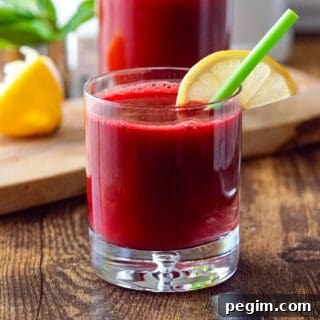
Beetroot Juice Recipe (Blender And Juicer) + Best Combinations
Ingredients
- 1 medium beet — washed, peeled
- 1 medium carrot — washed, peeled
- 1 large apple — washed
- 1½ inch piece of ginger — washed, peeled
- ½ lemon — juice only
Instructions
Prepare the Ingredients
- Wash and peel (or leave skins if preferred). Cut into chunks for easier blending or juicing.
Make the Beetroot Juice with a Blender
- Place all ingredients in the blender with about 3/4 to 1 cup (180–240 ml) of water and the lemon juice. Blend until smooth.
- Pour the blended mixture through a nut milk bag or fine strainer into a container and squeeze out all liquid. Serve immediately for best nutrient retention.
How to Make Beet Juice with a Juicer
- Prepare ingredients and cut them to fit your juicer. Feed them through the juicer, starting with denser items. Collect and enjoy the juice fresh.
Notes
The recipe yields approximately 20 oz (600 ml) of liquid (a blend of fresh juice and water). If you need to store juice, keep it in an airtight glass container in the refrigerator and use it within 24 hours. For first-time drinkers, start with a small amount and increase gradually to assess tolerance.
Best time to drink: many people choose morning on an empty stomach or about 1–2 hours before exercise to take advantage of improved circulation.
Nutrition
Nutrition info is an estimate from an online calculator.
Disclaimer: The information provided here is for informational purposes only and is not medical advice. Consult a healthcare professional for personal medical guidance.
©HealthyTasteOfLife. Content and photographs are copyright protected and require permission for reuse. Sharing the link to this recipe is encouraged and appreciated.