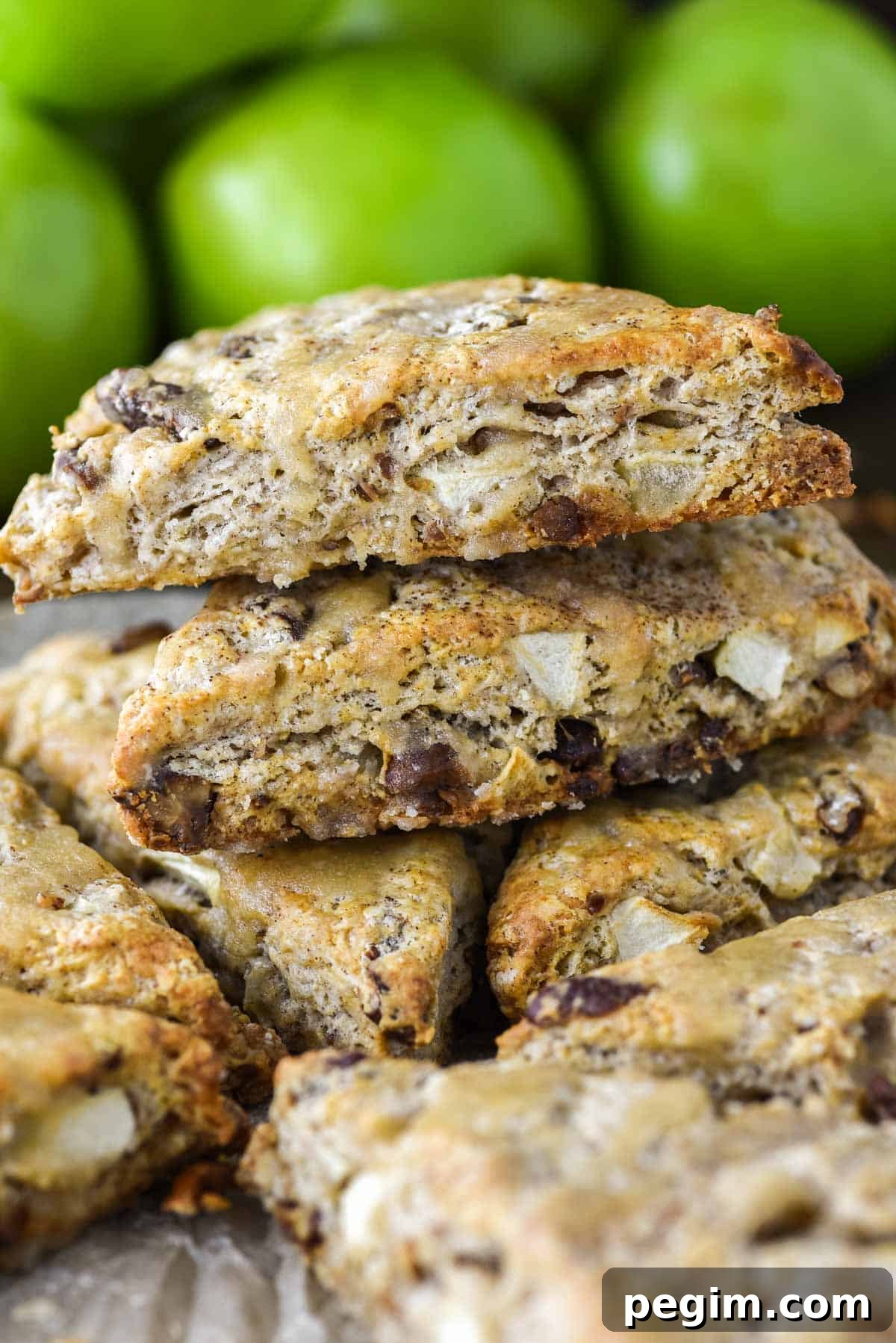
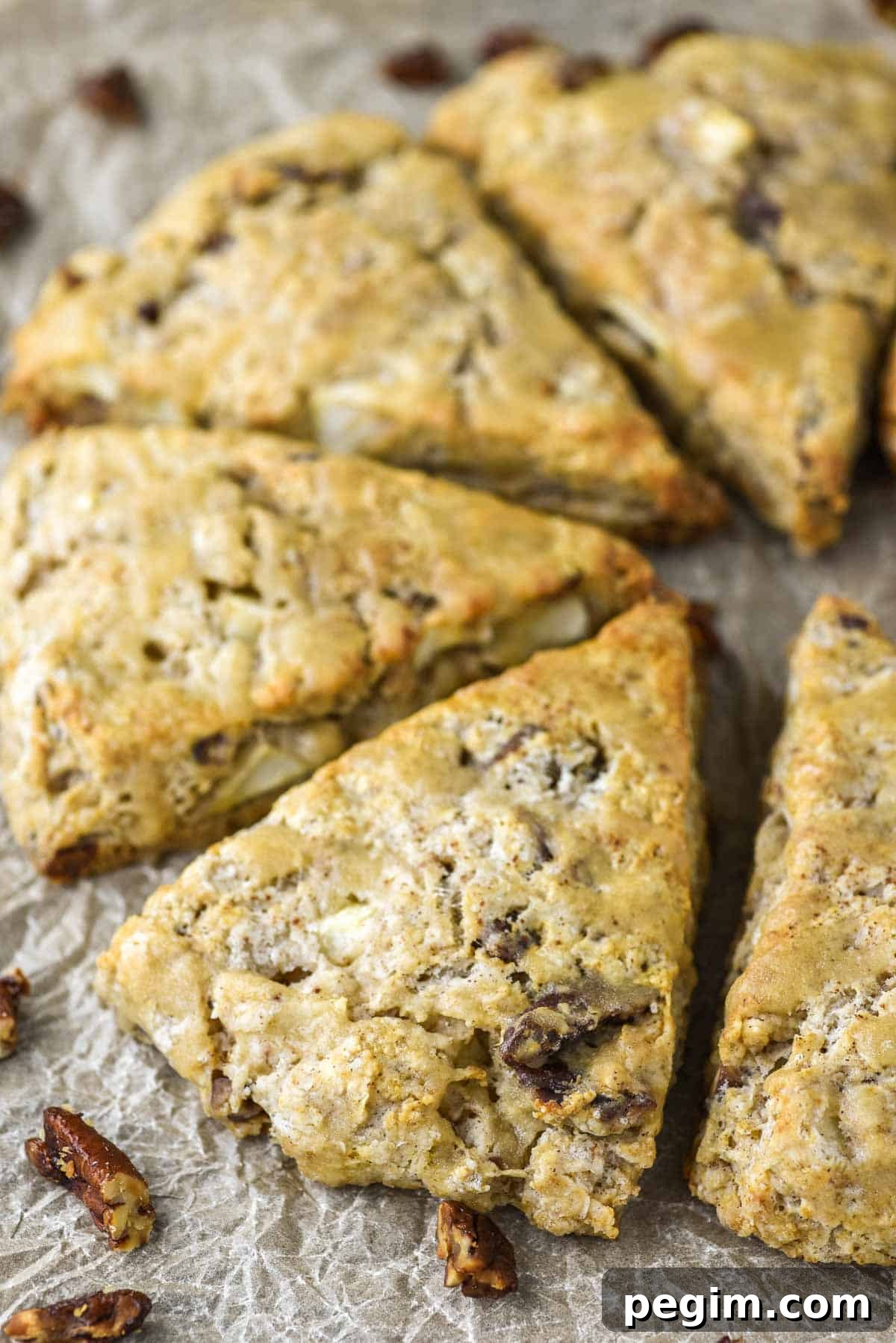
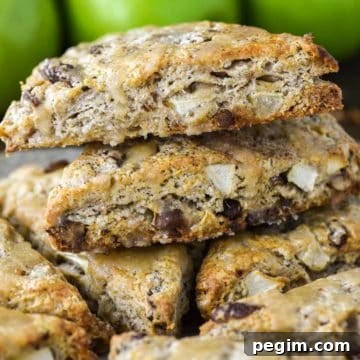
These apple scones are packed with fresh apples and candied pecans, offering a lightly sweet, buttery flavor and a crumbly, tender exterior.
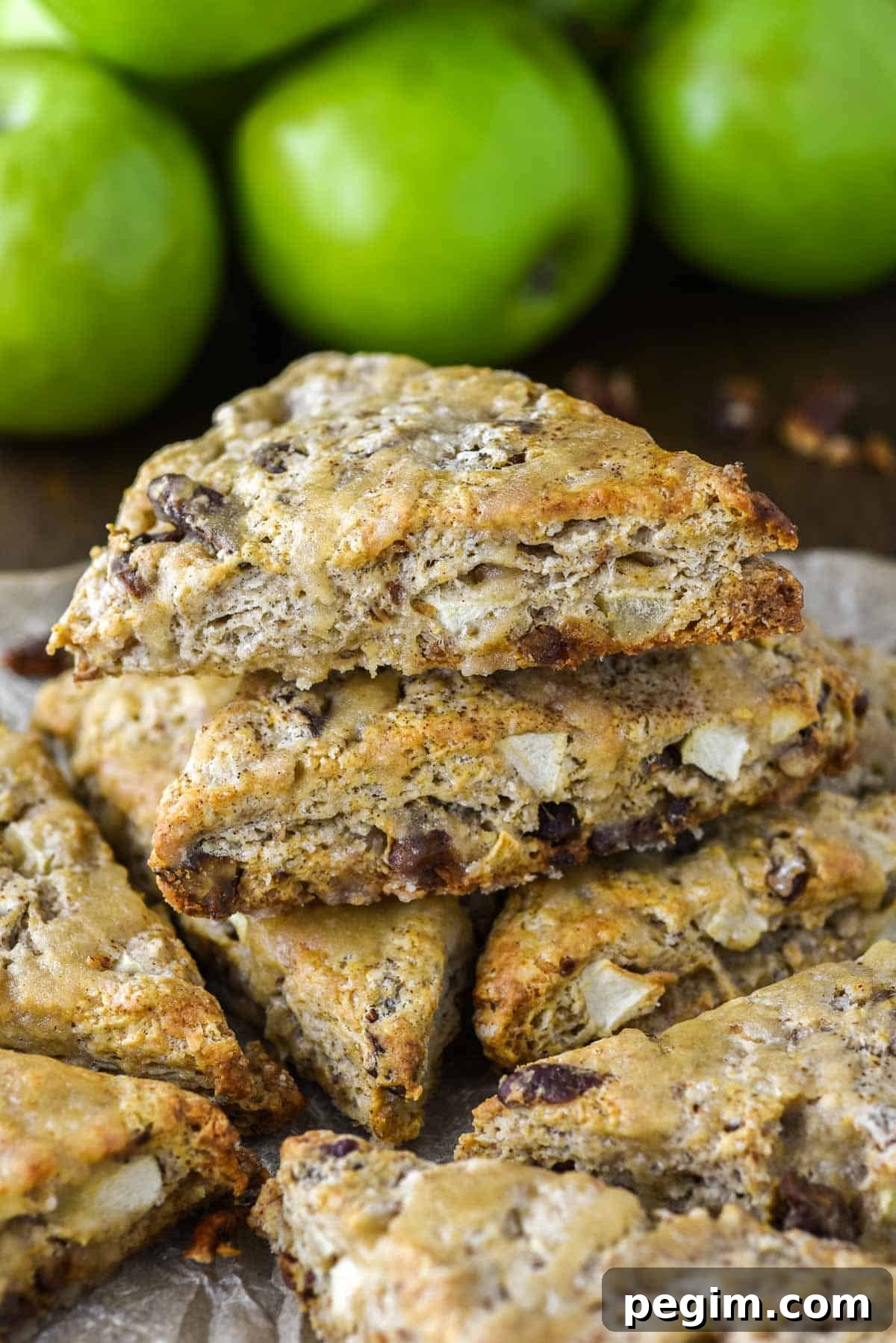
I’ve been experimenting with scones lately — from chocolate chip and bacon cheddar to blueberry, blackberry, raspberry & white chocolate, cheese & chive, and jam scones. With fall in full swing, I wanted to highlight the season’s star fruit: apples.
Scones are often compared to American biscuits, but they are different in texture and purpose. Biscuits are light and flaky with distinct layers, while scones are meant to be slightly drier and crumbly, ideal for carrying a variety of flavors.
These apple scones are wonderful on their own for breakfast or alongside a warm cup of coffee or apple cider. If you haven’t tried making scones before, give these a shot — they’re surprisingly straightforward and very satisfying.
If you have extra apples, cinnamon apple bread is another great way to use them up.
[feast_advanced_jump_to]
Ingredient Notes
- Baking powder and baking soda — these leaveners are important for helping the scones rise.
- Unsalted butter — grating or cutting cold butter into the flour creates small bits that help form a tender, slightly flaky crust.
- Apples — a tart variety like Granny Smith balances the sweetness of the scones.
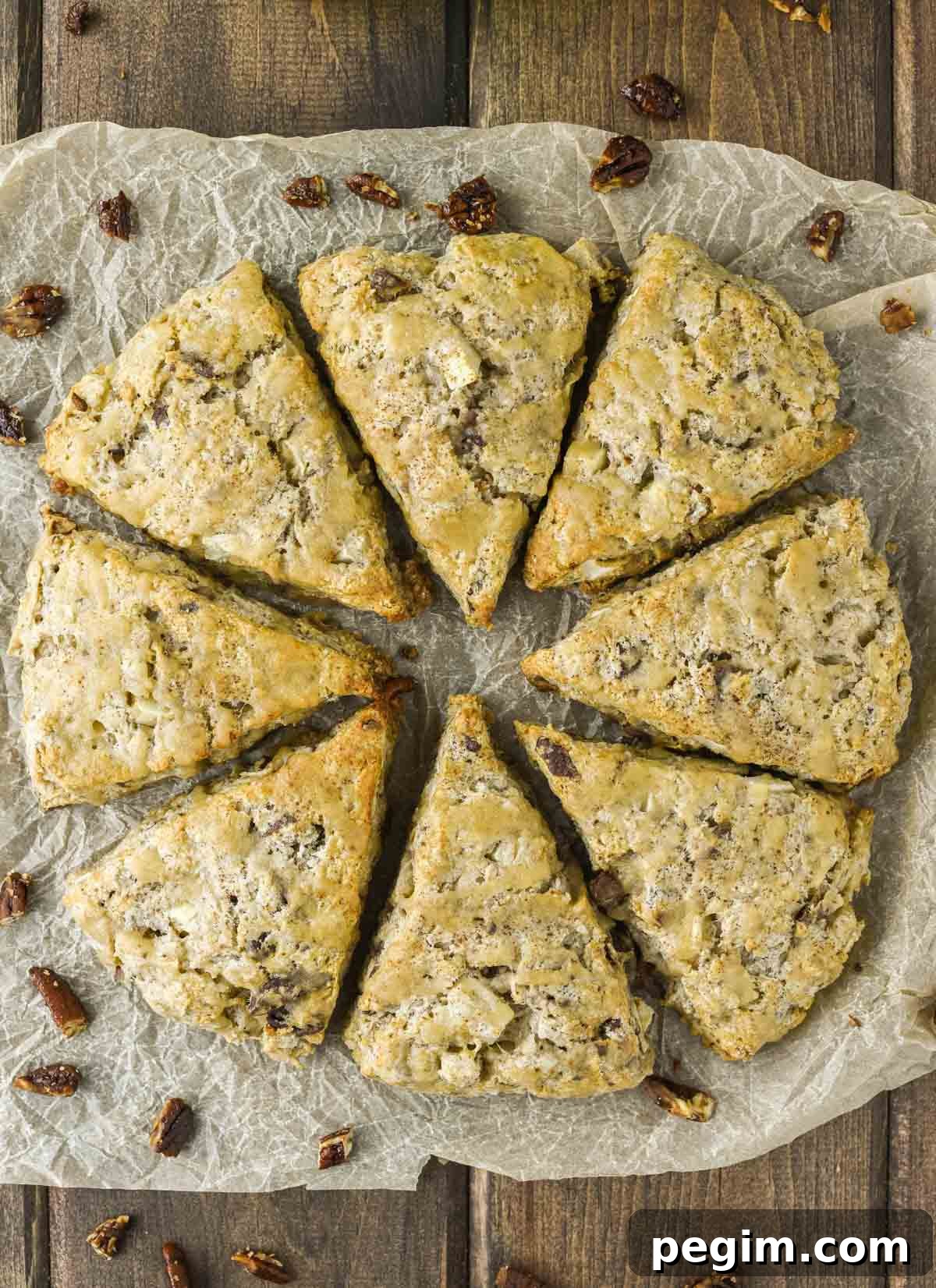
- Pecans — you can buy candied pecans or make them yourself for added crunch.
- Buttermilk — its acidity reacts with the leavening agents to give the scones a good rise and tender crumb.
Ingredient Swaps
You can swap some ingredients to suit tastes or pantry supplies. A few options:
- Use whole wheat flour in place of all-purpose for a nuttier flavor.
- Replace granulated sugar with raw cane or coconut sugar if preferred.
- Swap the apples for pears or berries for a different fruit scone.
- Use walnuts instead of pecans if that’s what you have on hand.
Step-by-Step Photos
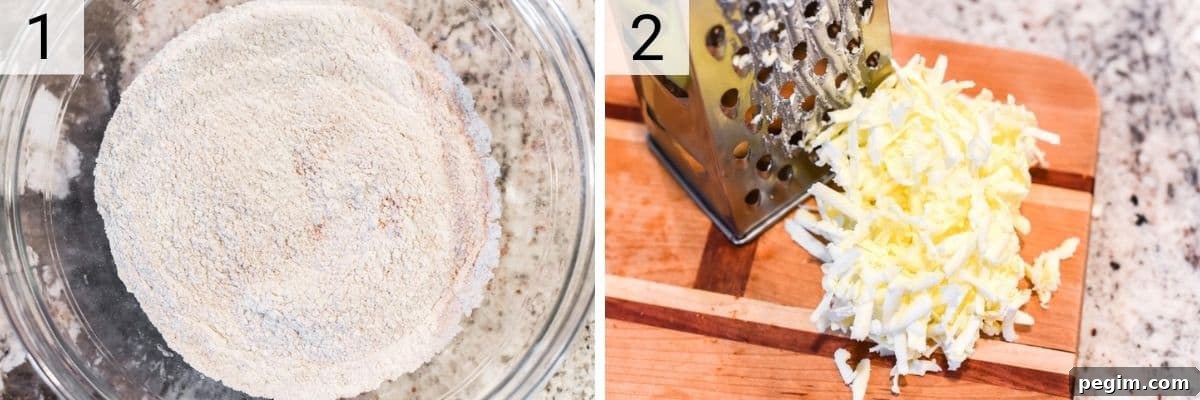
Start by whisking the dry ingredients in a large bowl. Grate cold butter with a cheese grater or cut into small cubes, then work it into the flour until the mixture resembles coarse crumbs.
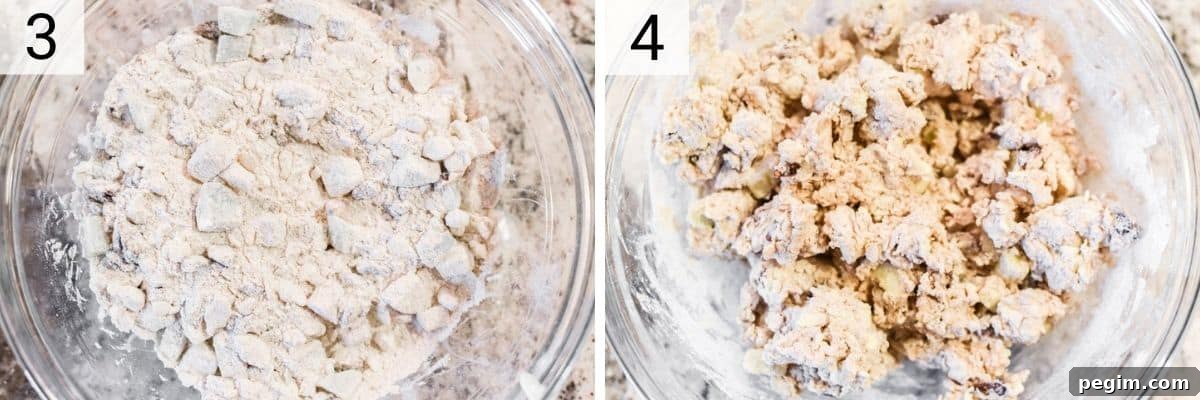
Fold in the diced apples and candied pecans. Combine cold buttermilk with vanilla, then gently mix into the dry ingredients until just combined — avoid overmixing.
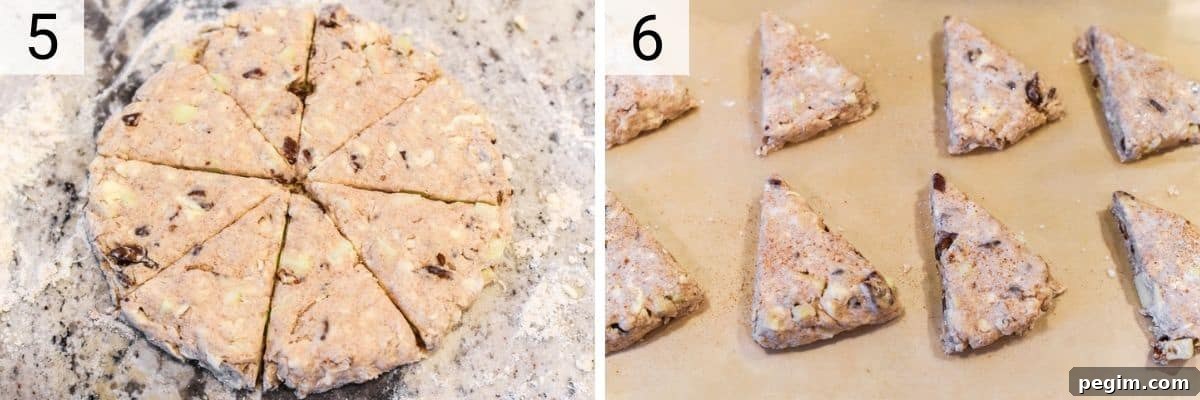
Turn the dough onto a lightly floured surface and form a disc about 1½ inches thick. Cut into 8–10 wedges, place on a parchment-lined baking sheet, brush the tops with a little buttermilk, and sprinkle with sugar. Bake at 400°F for 22–25 minutes or until golden on top.
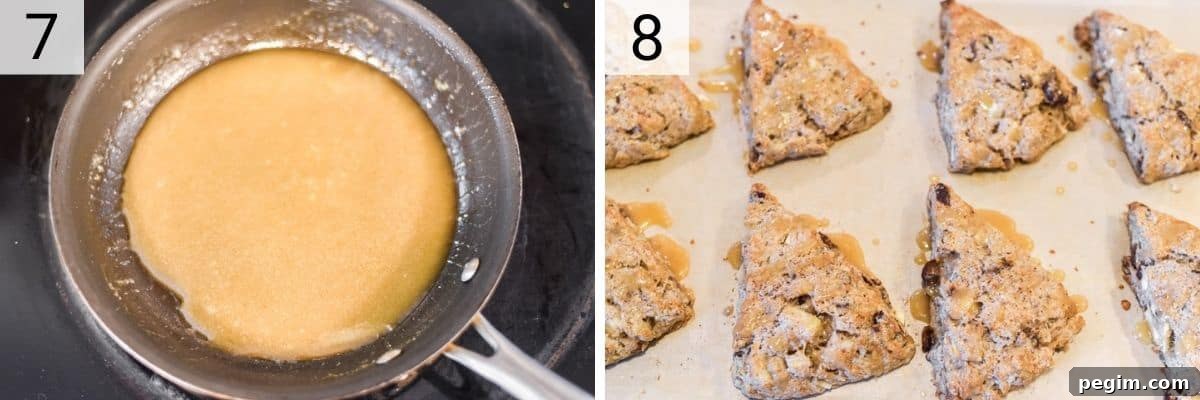
While the scones bake, make the glaze. Brown a tablespoon of butter in a small saucepan until fragrant, then remove from heat and whisk in powdered sugar, maple syrup, vanilla, and a pinch of salt. Cool the scones slightly and drizzle the glaze over them.
The Key to Light and Flaky Scones
Keep the butter cold and handle the dough as little as possible. Use a pastry cutter or two knives to work the butter into the flour, leaving pea-sized pieces. Shape the dough with your hands gently — a bit messy but worth the result.
FAQs
They are similar but not identical. Traditional British scones often include eggs and have a crumblier texture, while American biscuits are lighter and flakier. This recipe omits the egg for a lighter, flaky scone.
Make a quick substitute by adding 1 tablespoon of vinegar or lemon juice to 1 cup of milk. Let it sit for about 10 minutes at room temperature before using.
Eggs are common in some scone recipes for richness, but leaving them out produces a flakier, lighter scone as in this version.
Granny Smith apples are a great choice because their tartness balances the sweetness. You can use any apple you prefer, though firmer, slightly tart varieties hold up best in baking.
The tops should be golden brown and a toothpick inserted in the center should come out clean. The interior should be slightly moist but not doughy.
Freezing Instructions
Freeze scones either before or after baking.
- Before baking: Cut the dough into wedges, place them on a baking sheet, and freeze for about an hour. Transfer to a container or bag. Bake from frozen by adding a few extra minutes, or thaw overnight in the refrigerator and bake as directed.
- After baking: Cool the baked scones completely, freeze on a sheet for an hour, then store in a bag or container. Thaw at room temperature or in the fridge overnight. Rewarm in the microwave for 30 seconds or in a 300°F oven for about 10 minutes.
Pro Tips / Recipe Notes
- Use cold or frozen butter. Cold butter creates small pockets that steam and produce a tender, flaky texture.
- Don’t overwork the dough. Mix until just combined to avoid tough scones.
- You can drizzle apple cider caramel instead of the glaze for a richer finish.
- Storage: Scones keep at room temperature for two days or in the refrigerator for up to five days.
Other Breakfast Recipes
-
Orange Pistachio Biscotti
-
Cast Iron Buttermilk Biscuits
-
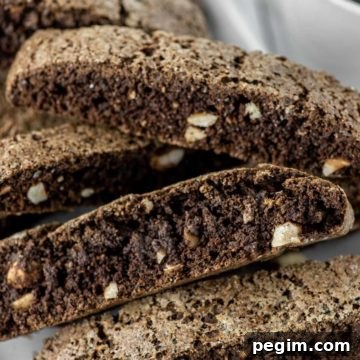
Chocolate Hazelnut Biscotti
-
Chocolate Croissants



If you try this apple scones recipe, please share how they turned out in the comments. If you’re a scone fan, maple scones and Earl Grey scones with lemon glaze are also excellent choices.
Apple Scones
Ryan Beck
Pin Recipe
Ingredients
Scones
- 2 cups all-purpose flour
- ¼ cup raw cane sugar
- 1 ¼ teaspoon baking powder
- 1 teaspoon ground cinnamon
- ¼ teaspoon baking soda
- ¼ tsp salt
- ½ cup unsalted butter, cold
- ¾ cup diced Granny Smith apples
- ½ cup candied pecans, roughly chopped
- ¾ cup buttermilk, cold
- 1 tsp vanilla extract
Glaze
- 1 tablespoon unsalted butter
- 3 tablespoon powdered sugar
- 2 tablespoon maple syrup
- ½ teaspoon vanilla extract
- ⅛ teaspoon sea salt
Instructions
-
Preheat oven to 400°F. Whisk together flour, sugar, baking powder, cinnamon, baking soda, and salt in a large bowl.
-
Grate cold butter with a cheese grater or cut into small cubes. Work the butter into the flour using a pastry cutter or two knives until the mixture looks like coarse crumbs. Stir in the diced apple and pecans.
-
Mix cold buttermilk and vanilla, then add to the dry ingredients. Stir until just combined — do not overmix.
-
Turn the dough onto a floured surface and knead briefly. Shape into a 1½-inch-thick disc, then cut into 8–10 wedges.
-
Place the wedges on a parchment-lined baking sheet. Brush the tops with milk or buttermilk and lightly sprinkle with sugar and optional cinnamon.
-
Bake 20–22 minutes until golden and a toothpick comes out clean. Let cool slightly.
-
For the glaze, brown butter in a small saucepan about 2–3 minutes, then remove from heat and whisk in powdered sugar, maple syrup, vanilla, and salt.
-
Drizzle the glaze over the slightly cooled scones and serve.
Notes
- Use cold or frozen butter. Cold butter creates pockets that steam and yield a flaky texture.
- Do not overwork the dough. Mix until just combined to avoid dense scones.
- You can drizzle apple cider caramel instead of the glaze if you prefer.
- Storage: Leftover scones keep at room temperature for two days or in the refrigerator for up to five days.