Puerto Rican Pasteles: Traditional Meat-Stuffed Masa Pockets

These authentic Puerto Rican pasteles are a savory, comforting tradition. Masa made from grated root vegetables and green plantains is seasoned with achiote oil, sofrito and sazon, then filled with a flavorful pork or chicken mixture. Wrapped in banana leaves, tied with twine, and boiled until tender, pasteles are holiday food at its finest.
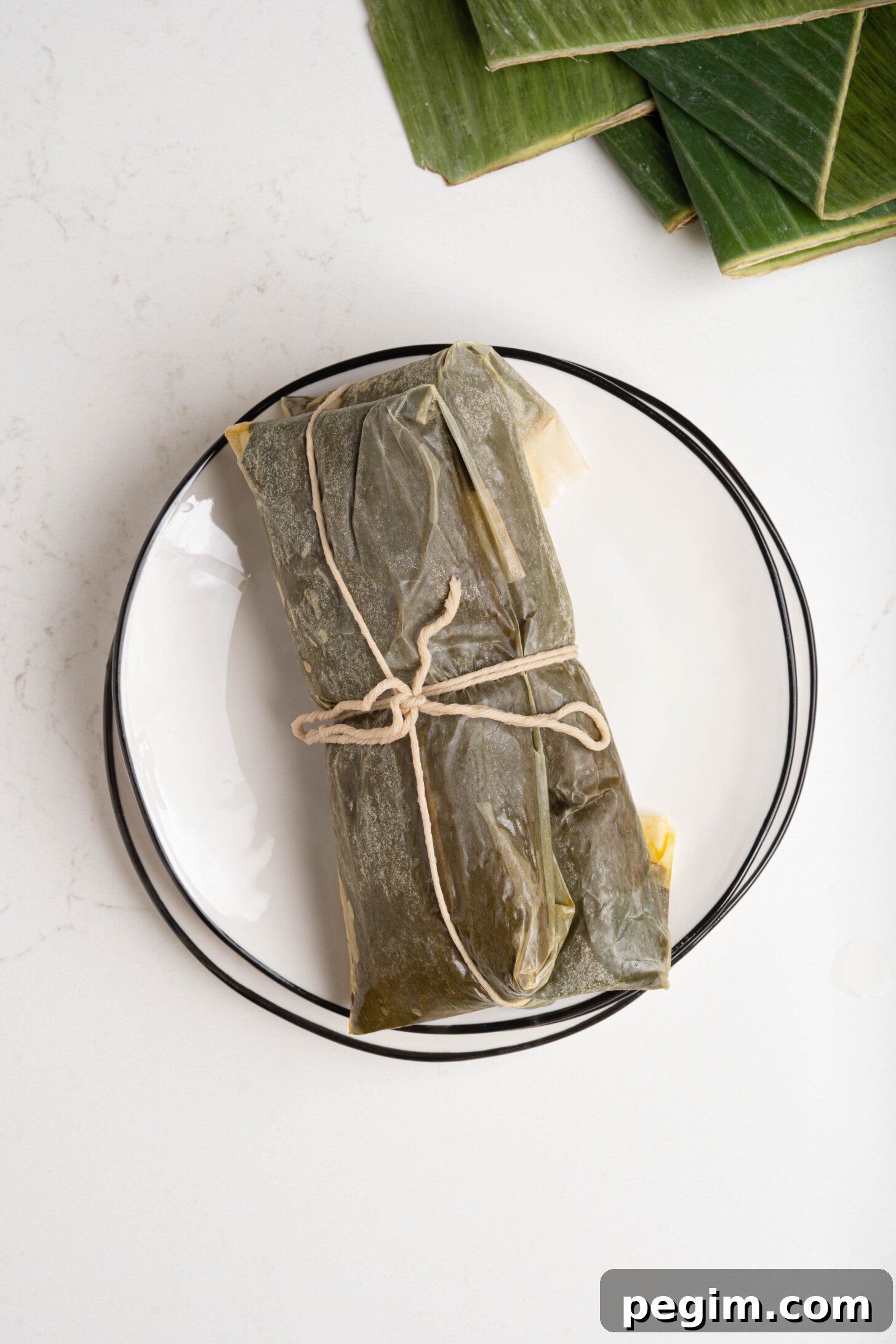
Puerto Rican pasteles on a plate.

Pasteles are labor-intensive and best made when family gathers. The process is rewarding: slow-cooked meat seasoned with sofrito and sazon, a silky masa blended from grated yautía (taro), plantains, green bananas and pumpkin, and the fragrant finish of banana leaves and achiote oil.

Both the filling and masa can be prepared a day ahead and refrigerated until assembly, which helps spread the work across two days. You can make them with pork shoulder or swap in chicken thighs if preferred.
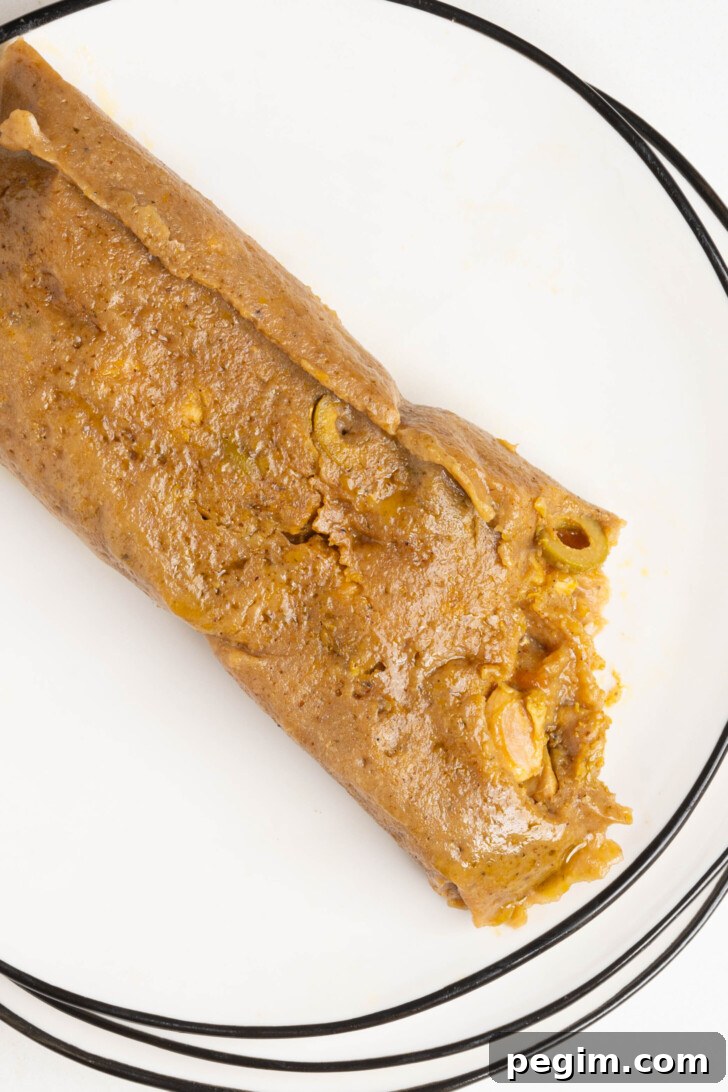
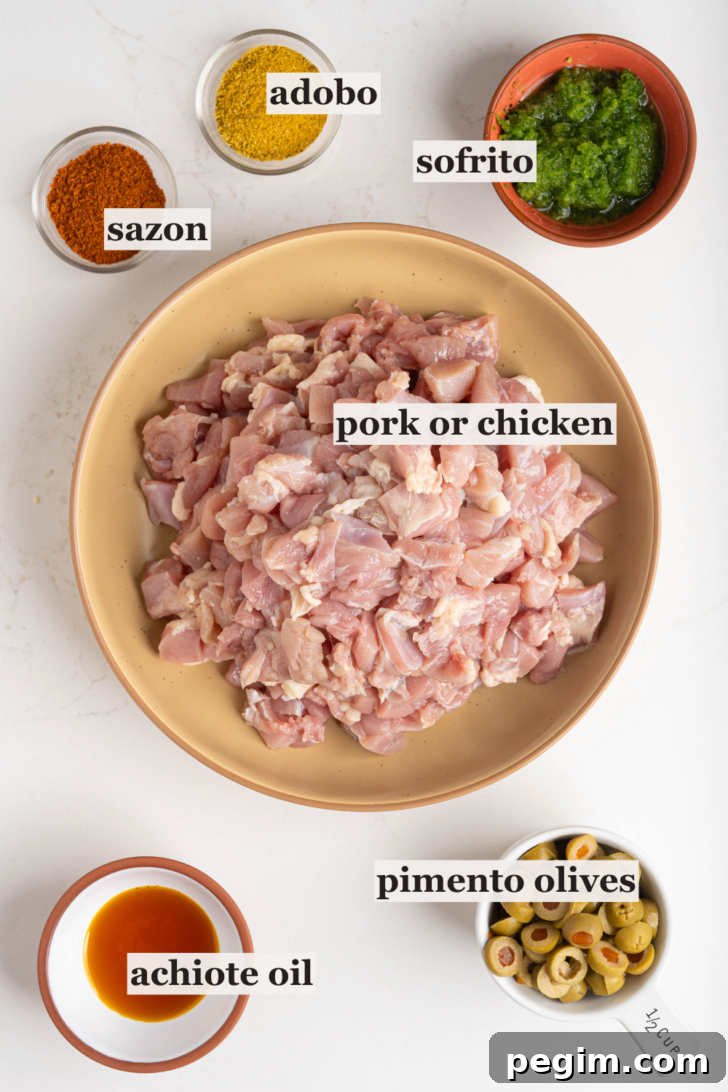
Puerto Rican pasteles on a plate.
Bowls of chicken, sazon, adobo, and more.
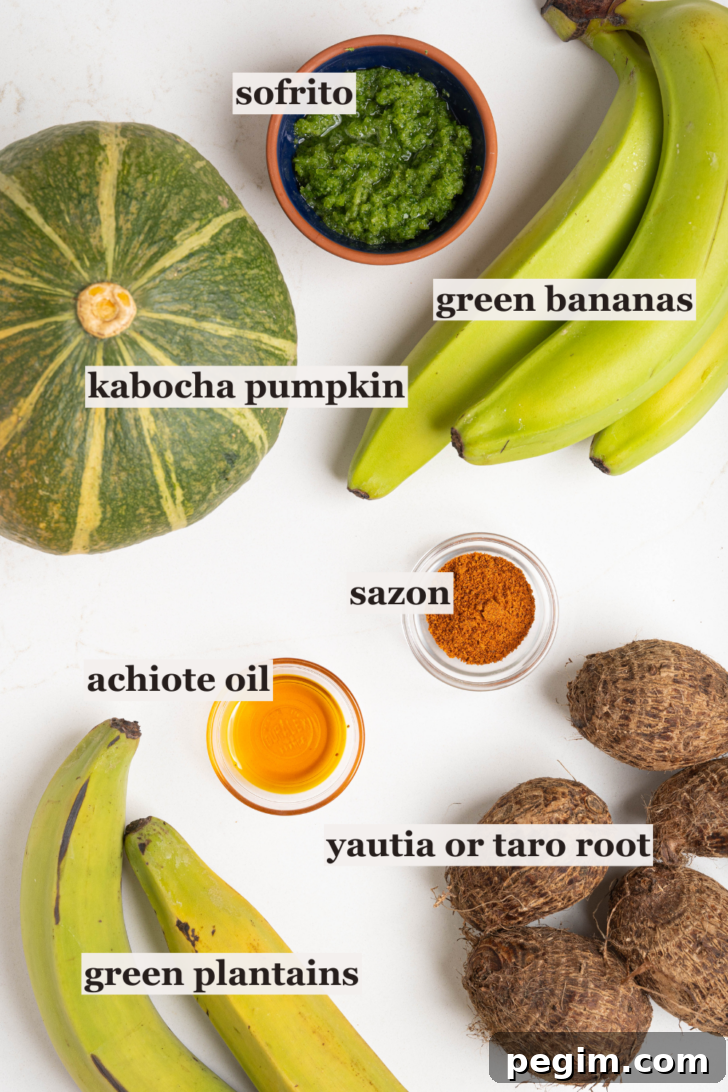
Green bananas, squash, sofrito, and more.
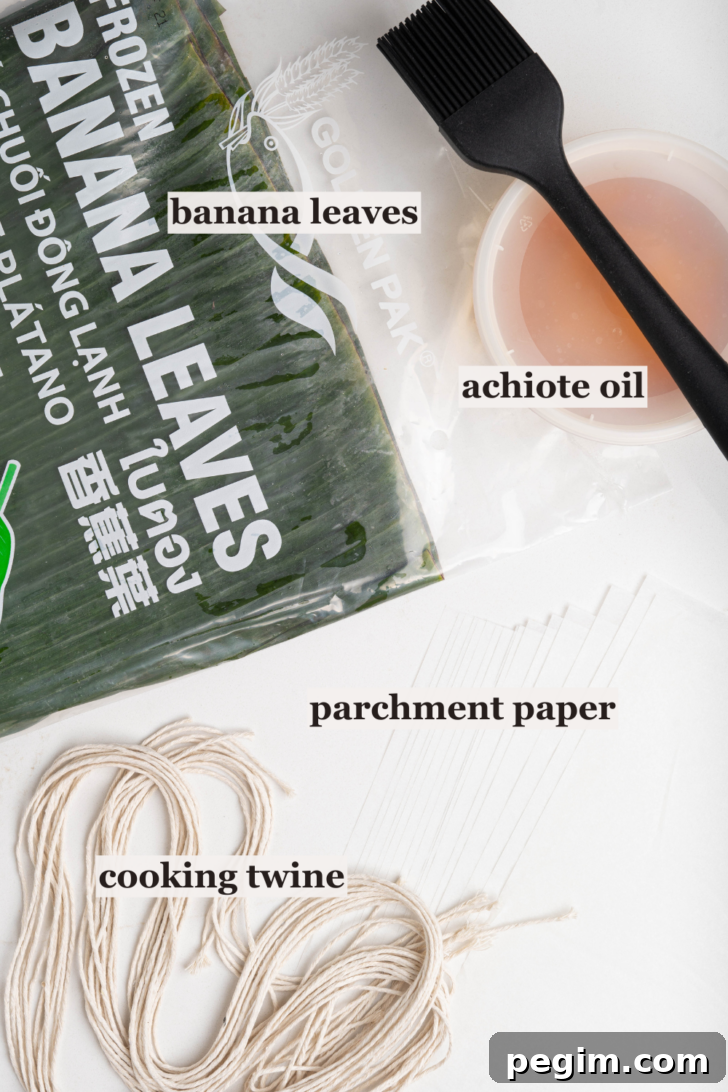
Cooking twine, banana leaves, and more.

Making the filling

Note: Both filling and masa can be prepared a day ahead and refrigerated.
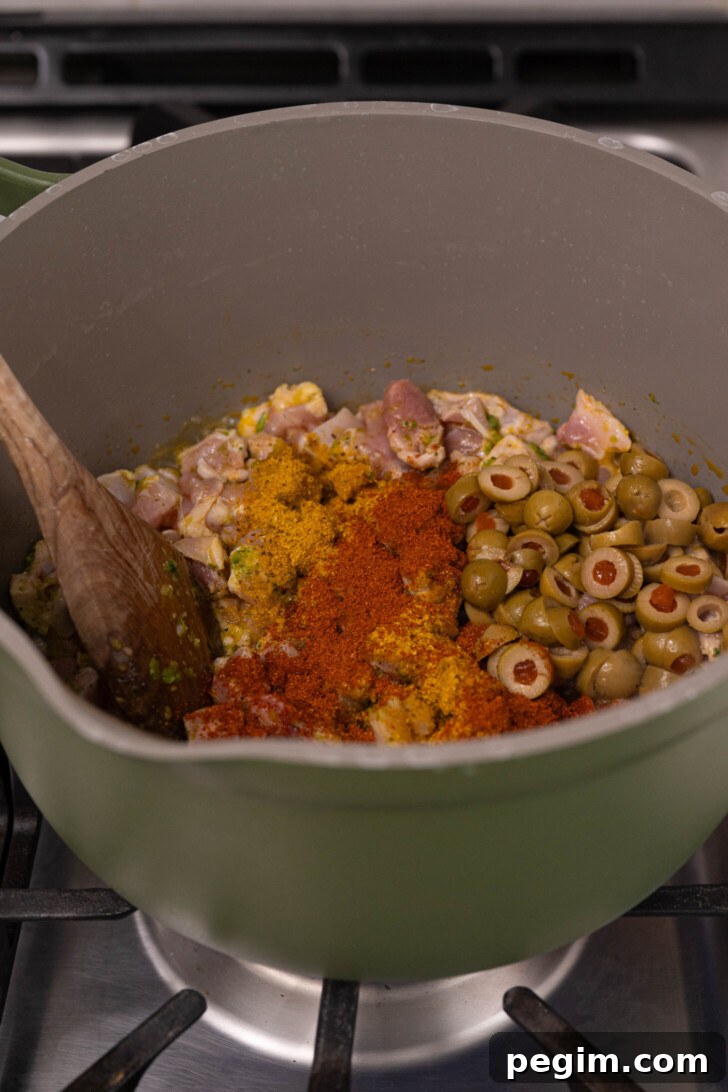
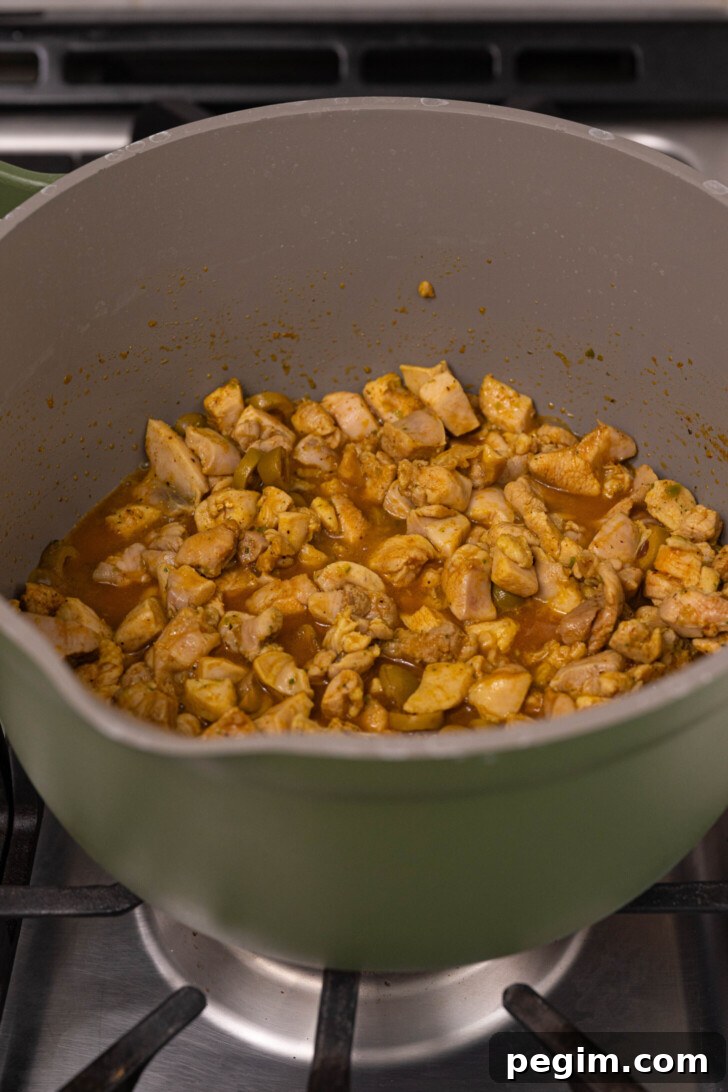
Chicken with spices and olives in a pot.
Warm achiote oil, add diced pork or chicken, then stir in sofrito, sazon, adobo and olives. Cook until the meat is tender and well seasoned.
Pasteles chicken filling in a pot.
Reserve about ½ cup of cooking liquid from the meat to moisten the masa. Cool the meat and refrigerate until assembly.

Making the masa

Tip: Wear gloves—some ingredients can stain your hands.
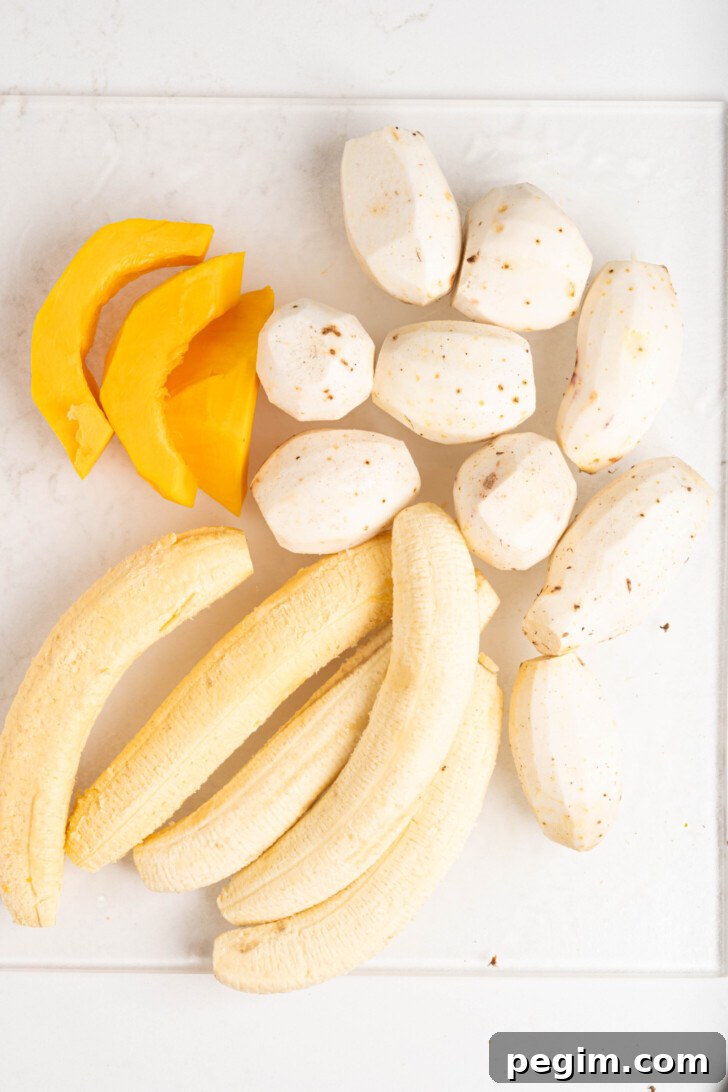
Peeled banana, plantain, squash and more.
Peel pumpkin (or squash), yautía/taro, plantains and green bananas. Take care with slippery root vegetables.
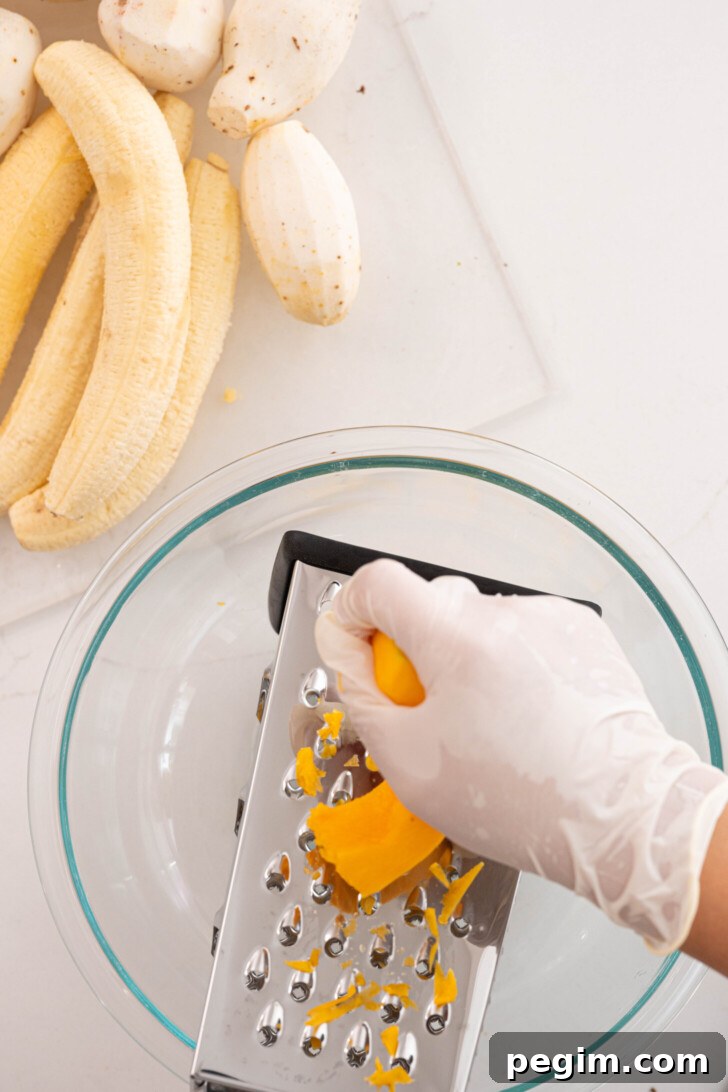
Squash being grated into a bowl.
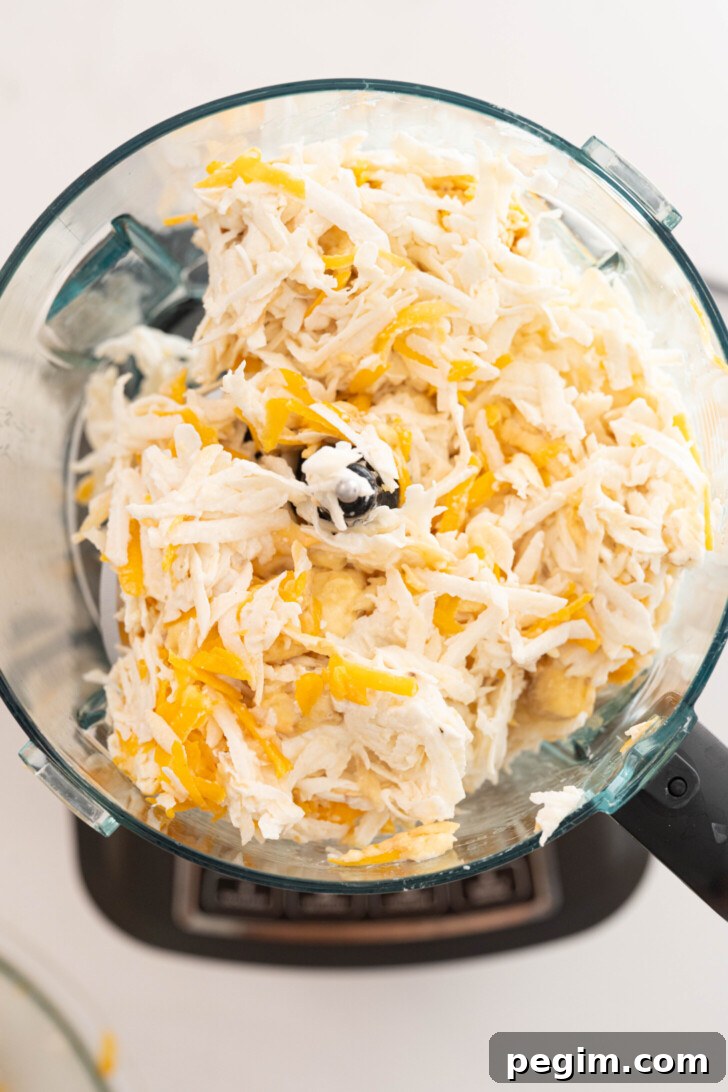
Grate the vegetables with a box grater or use a food processor with a grating attachment.
Grated masa ingredients in a food processor.
Blend the grated vegetables in batches until the masa is smooth and uniform.
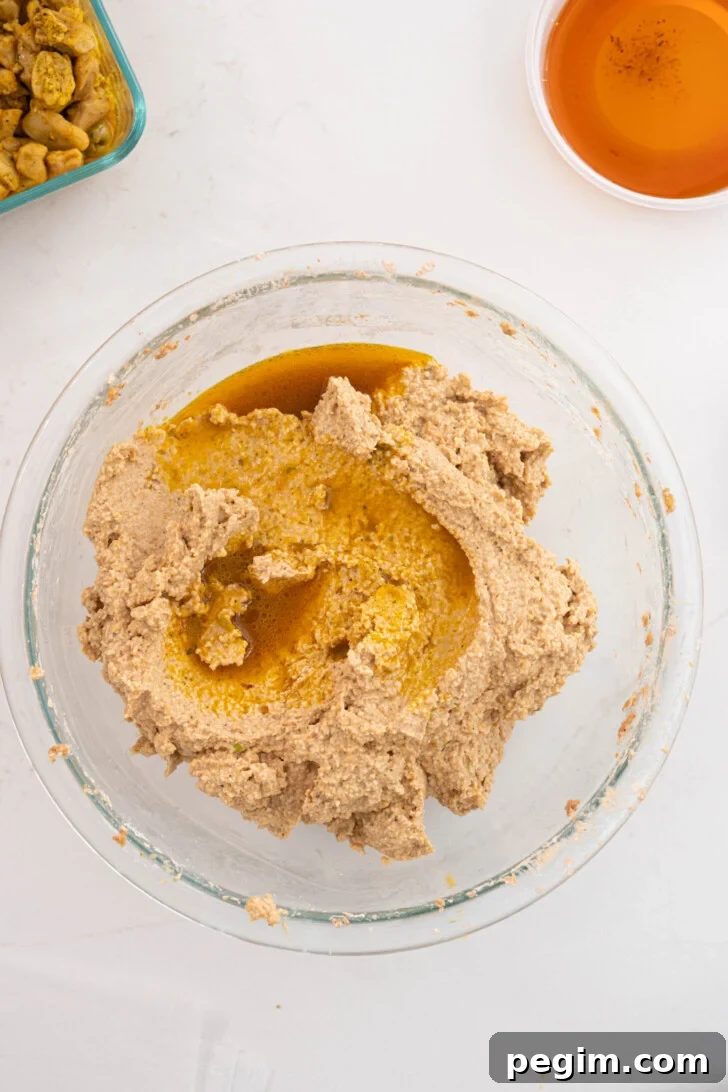
Pasteles masa in a bowl.
Combine the masa with reserved meat liquid, sofrito, sazon and achiote oil. Chill if assembling later.

Assembly

Tip: Use a video or photo guide if you haven’t wrapped pasteles before.
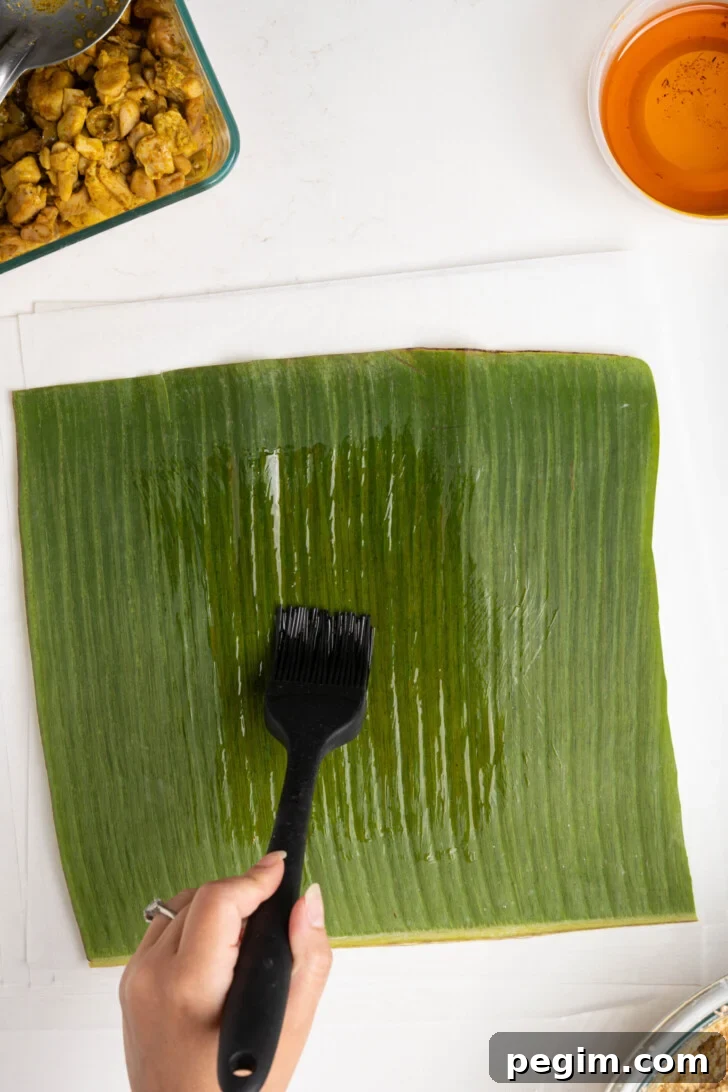
A banana leaf being brushed with oil.
Layer a square of parchment with a slightly larger square of banana leaf on top and brush with achiote oil.
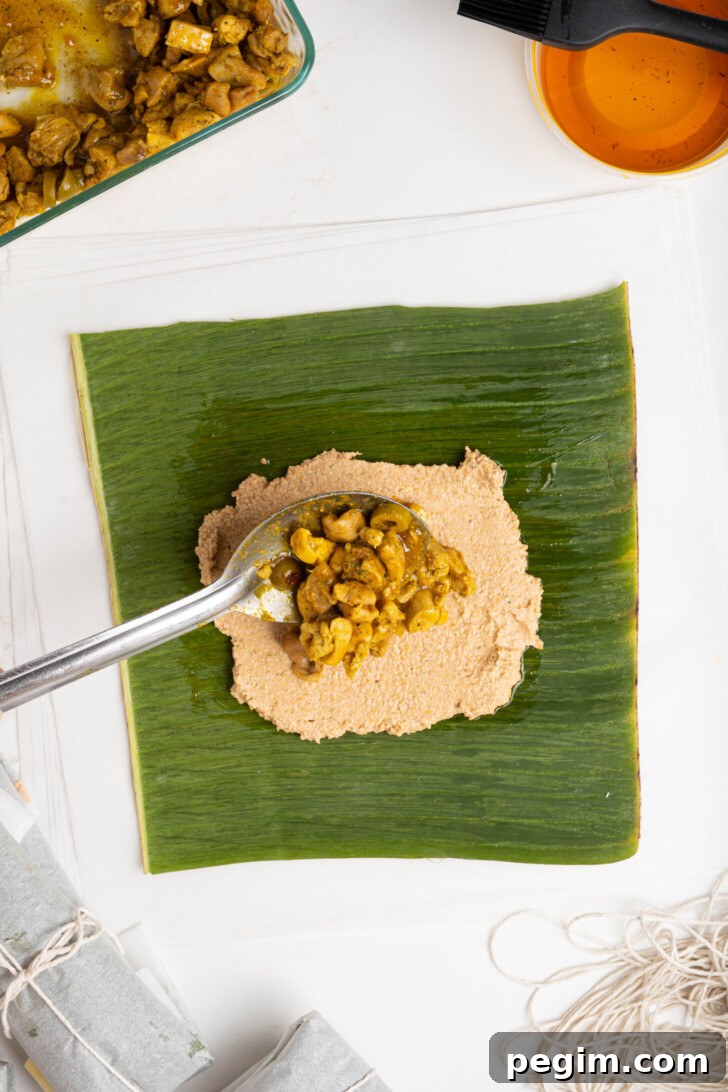
Chicken filling going over masa.
Spread about ½ cup of masa in an oval, flatten thin, then place a few spoonfuls of the meat filling in the center.
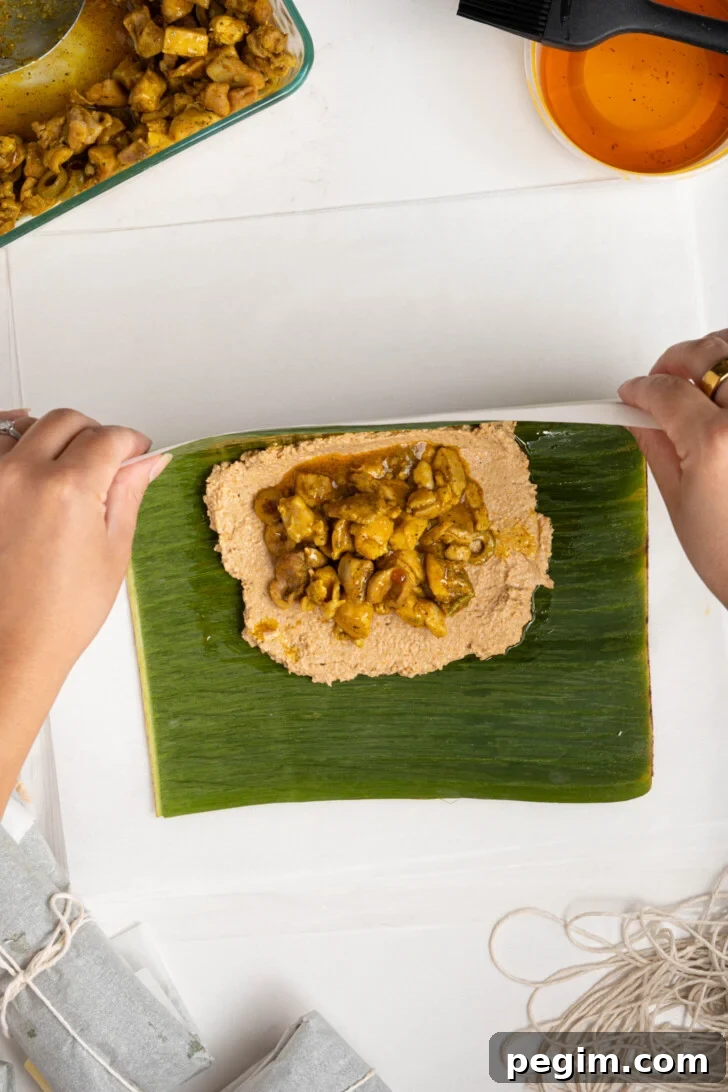
Pasteles being folded.
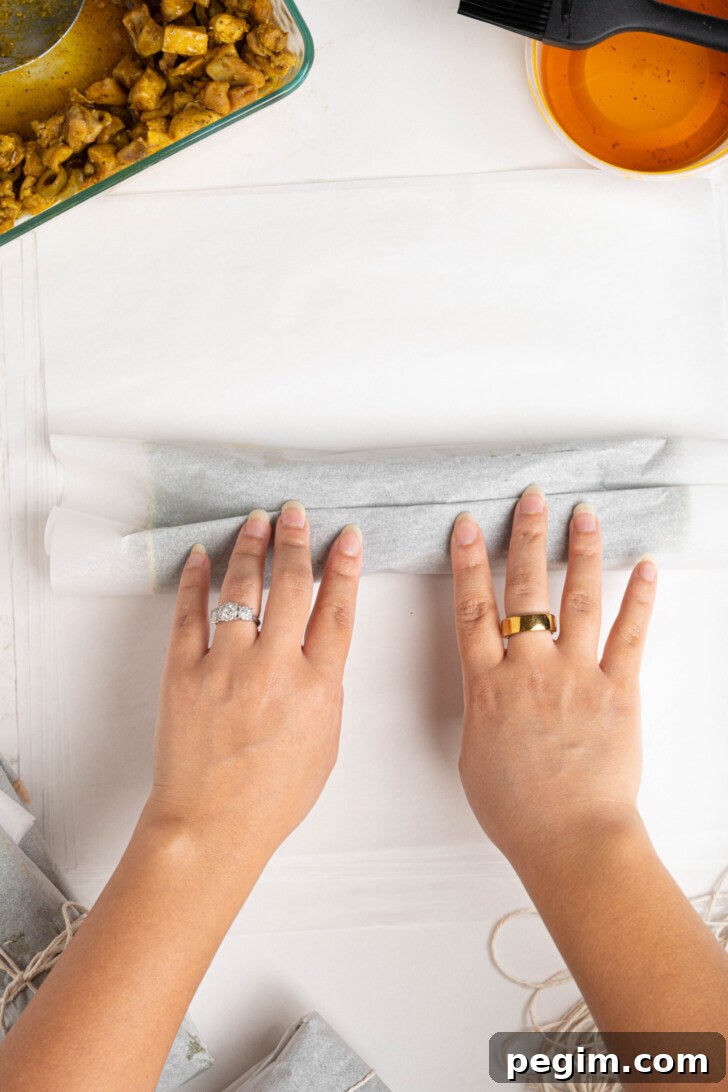
Fold the leaf and paper over the filling, enclosing it in masa.
Pasteles being folded.
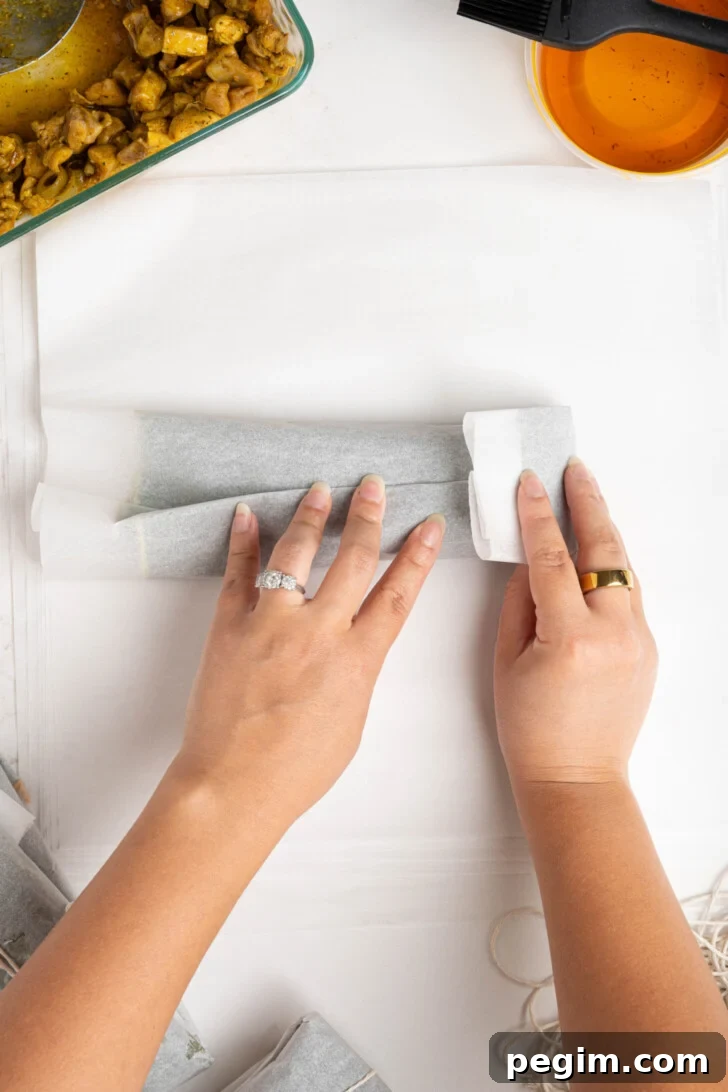
Fold until the masa and filling meet at the center to seal the pasteles tightly.
Pasteles being folded.
Tuck in the empty edges of the leaf and parchment to make a neat packet.
Pasteles being tied off.
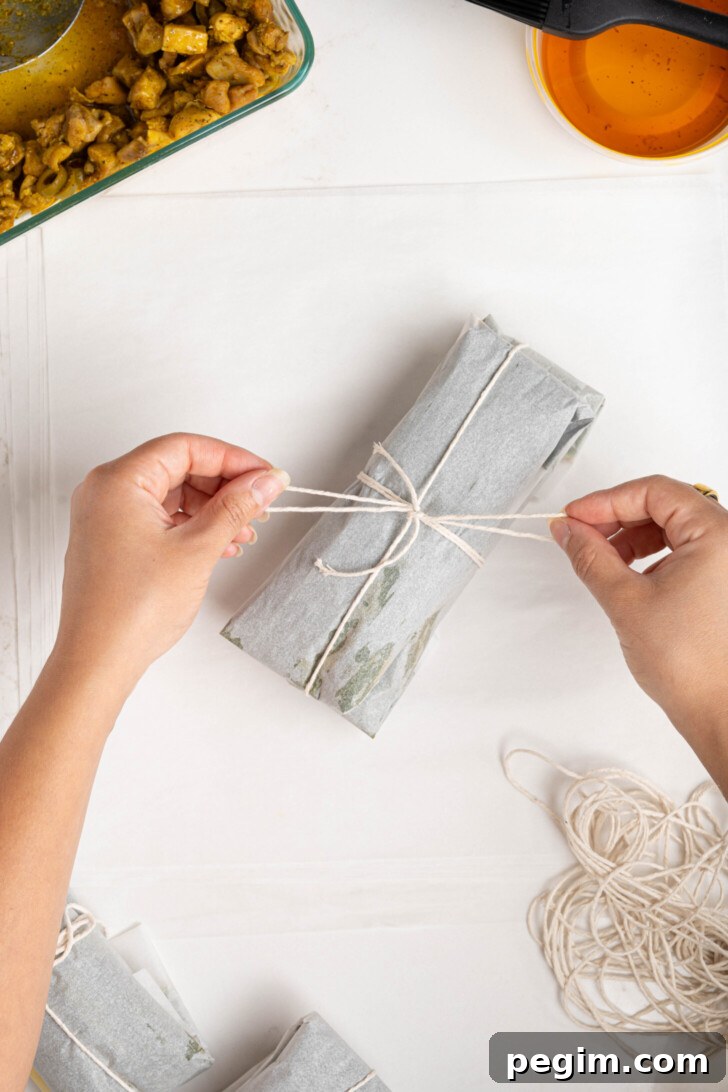
Stack two pasteles and tie them together with cooking twine, both vertically and horizontally, until all the masa and filling are used. You can boil them now or freeze for later.

If cooking from frozen: Add 15–20 minutes to the boiling time.
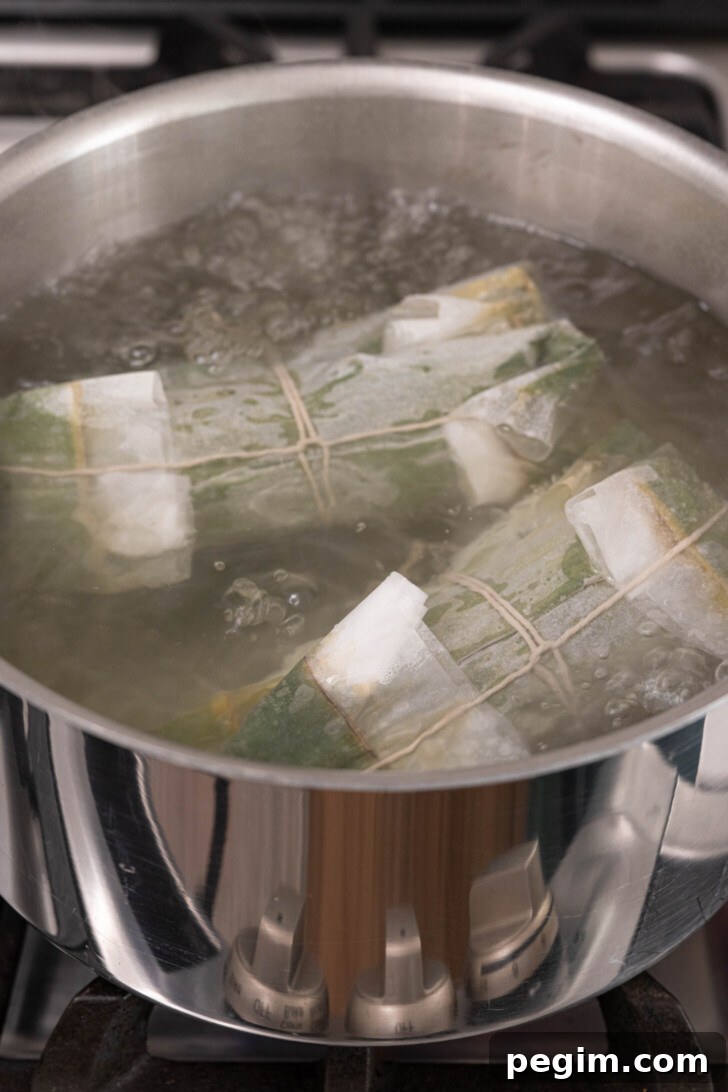
Pasteles boiling in water.
To cook immediately, place pasteles in boiling salted water, reduce to a simmer and cook for 1 hour. Remove carefully with tongs.
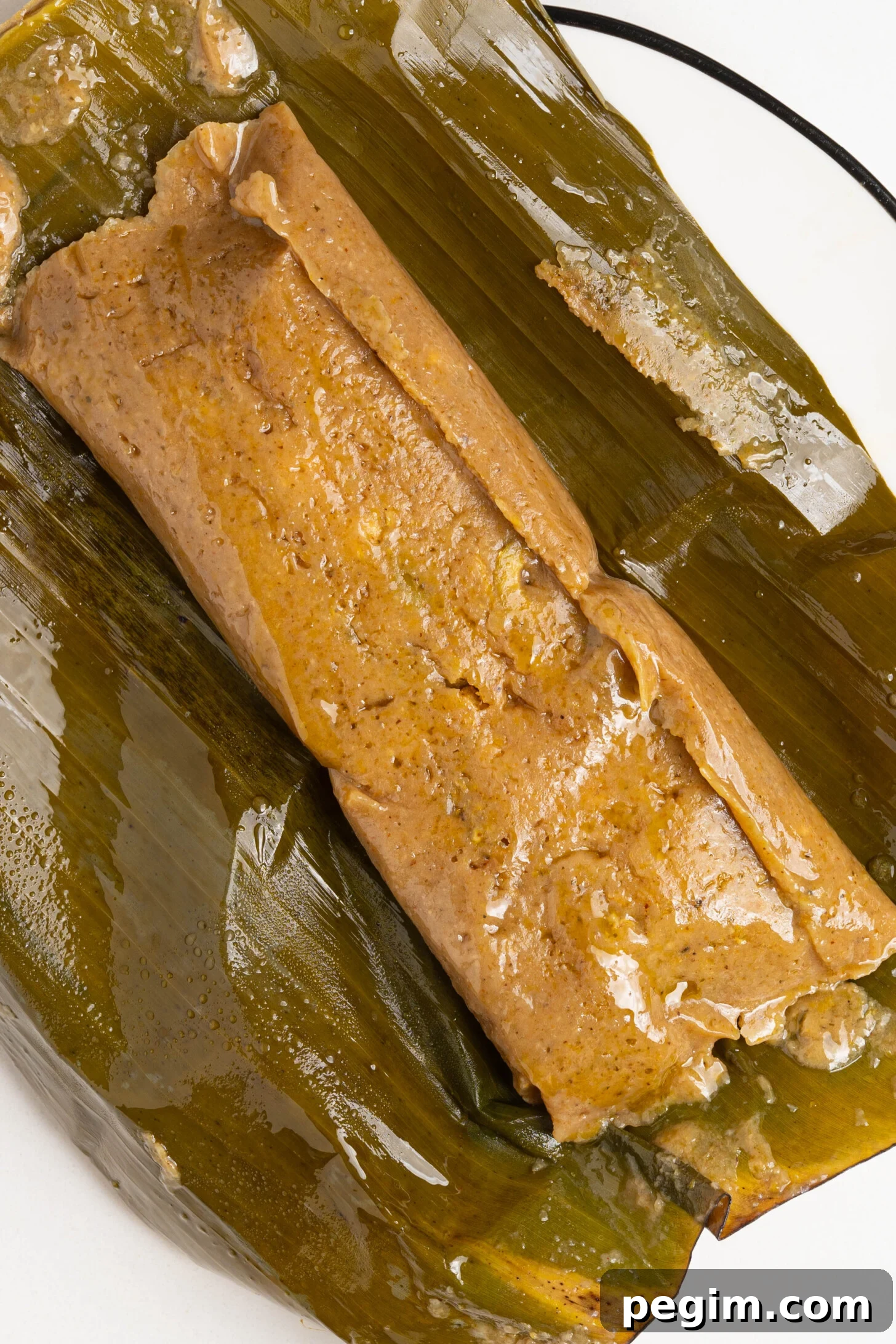
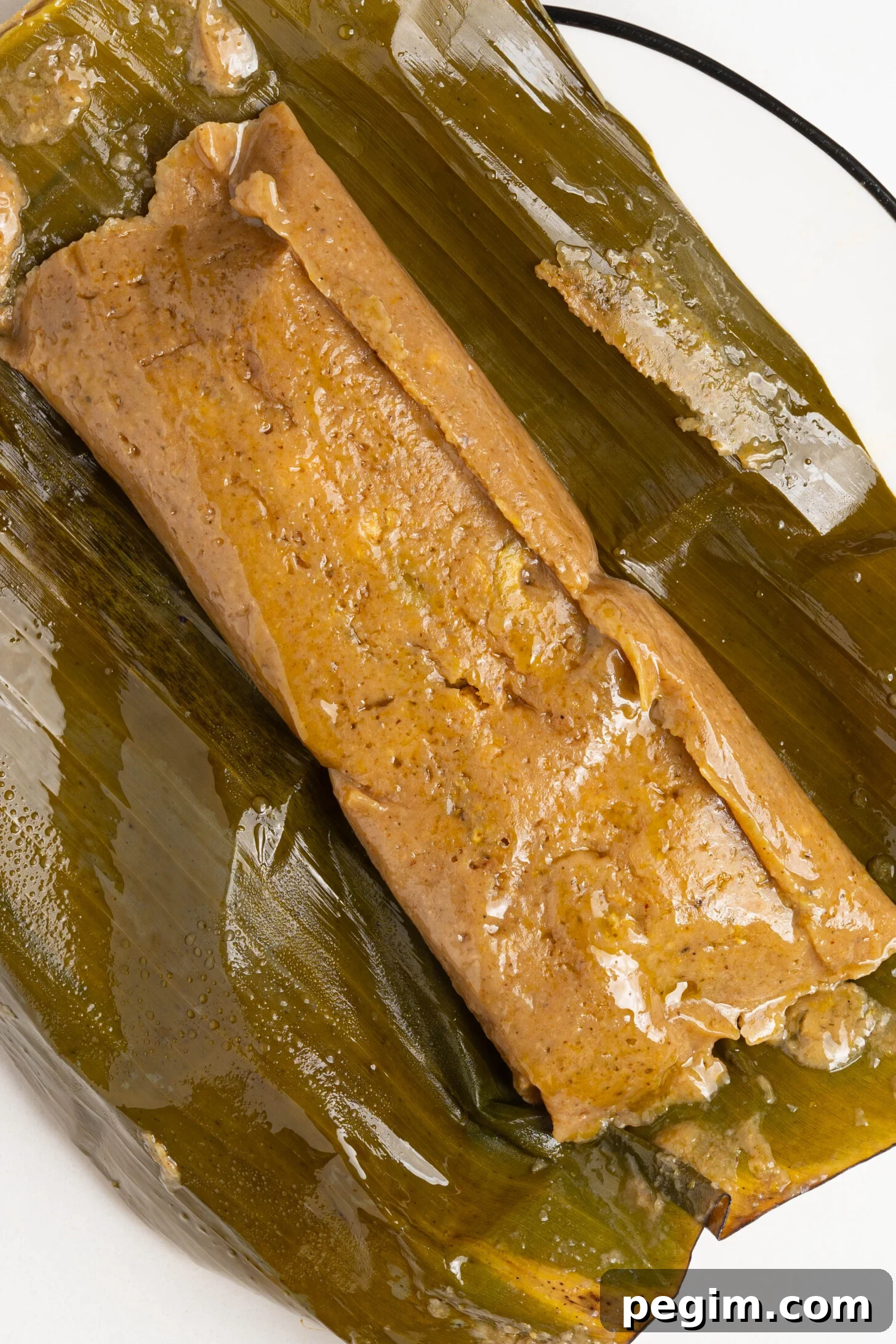
Pasteles on a plate.
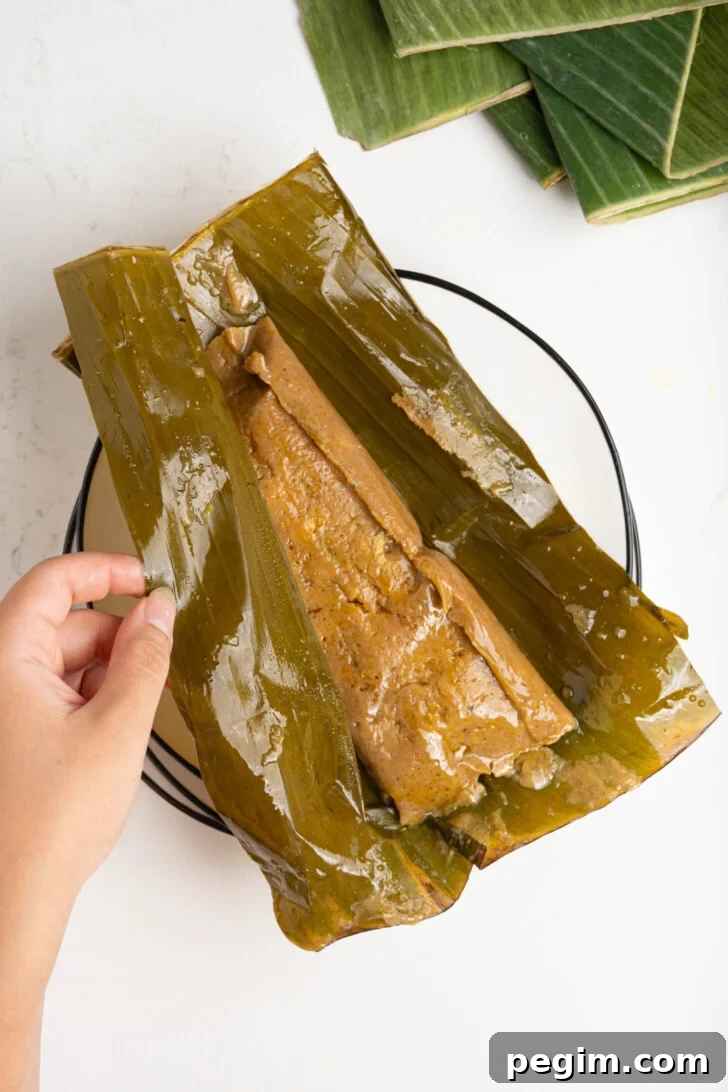
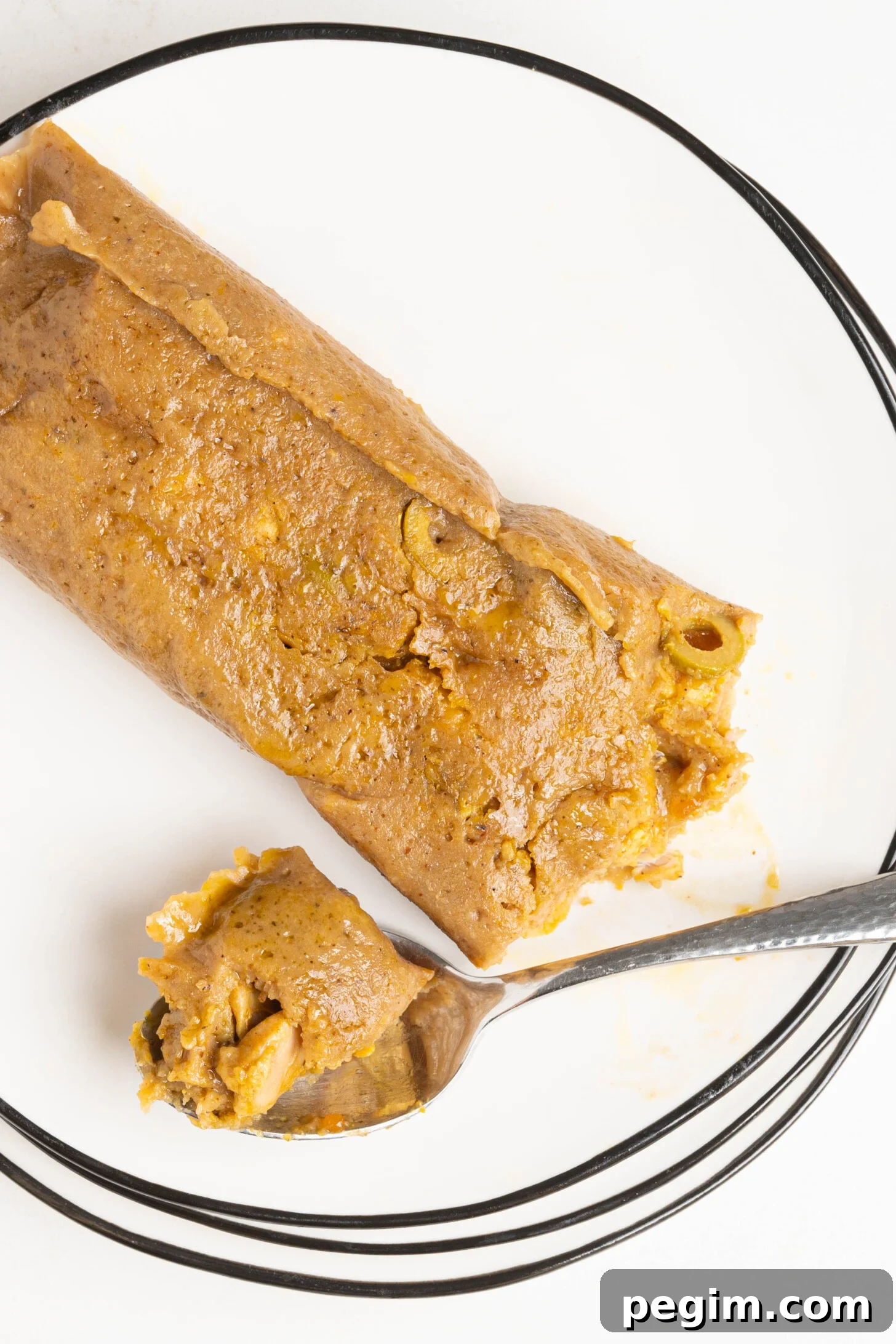
Let rest 10 minutes before unwrapping to avoid burns. Serve with arroz con gandules, pique or ketchup.
Pasteles on a plate.

Staple substitutions

If you can’t source every traditional ingredient, here are practical swaps that preserve flavor and texture:

  • Achiote oil: Use neutral oil (avocado, canola) if needed; color and subtle annatto flavor will be milder.
  • Sazon: If you don’t have a packet, blend ground annatto (or paprika), cumin, coriander, garlic powder and oregano.
  • Adobo: Substitute a mix of onion powder, garlic powder, oregano, paprika, salt and pepper.
  • Sofrito: A quick substitute is ½ cup minced cilantro, ½ small diced yellow onion, 2 cloves garlic and ½ diced bell pepper.
  • Banana leaves: Use parchment if you can’t find banana leaves; the leaves add a herbal aroma and help retain moisture, but the pasteles will still cook through in parchment.
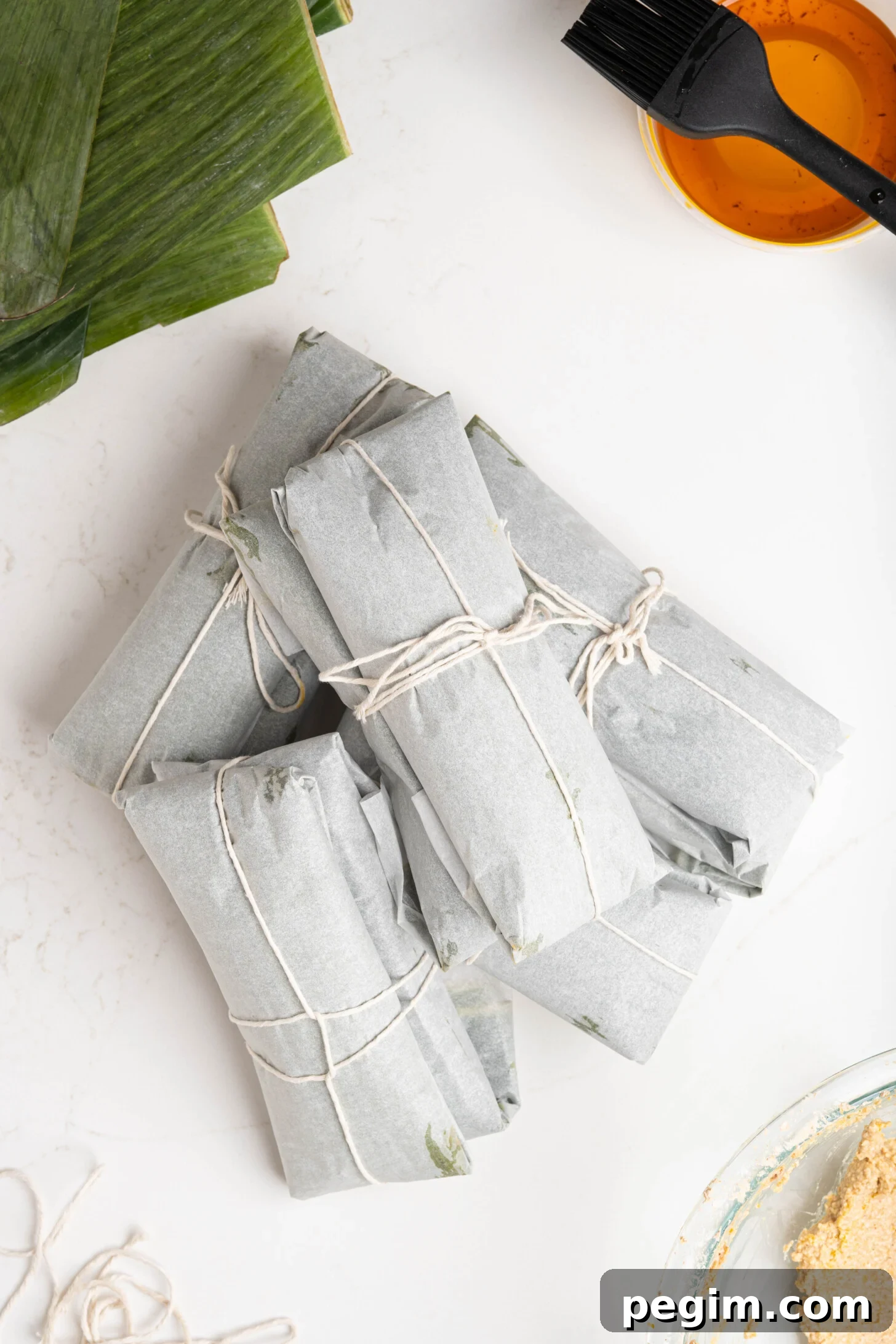
Pasteles on a white counter.

What to eat with pasteles

10 Minute Pique (Puerto Rican Hot Sauce)
10 Minute Pique (Puerto Rican Hot Sauce)

Puerto Rican Rice & Beans with Sofrito (Arroz con Gandules)
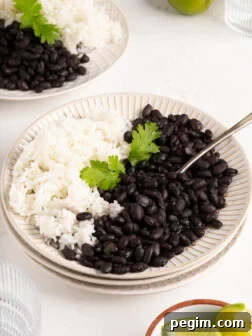
Puerto Rican Rice & Beans with Sofrito (Arroz con Gandules)

Puerto Rican Style Stewed Black Beans (Habichuelas Negras)
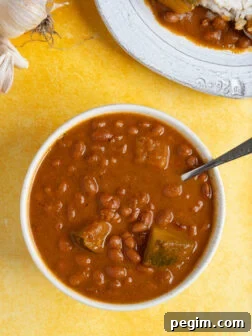
Puerto Rican Style Stewed Black Beans (Habichuelas Negras)

Habichuelas Guisadas (Puerto Rican Stewed Beans)
Habichuelas Guisadas (Puerto Rican Stewed Beans)

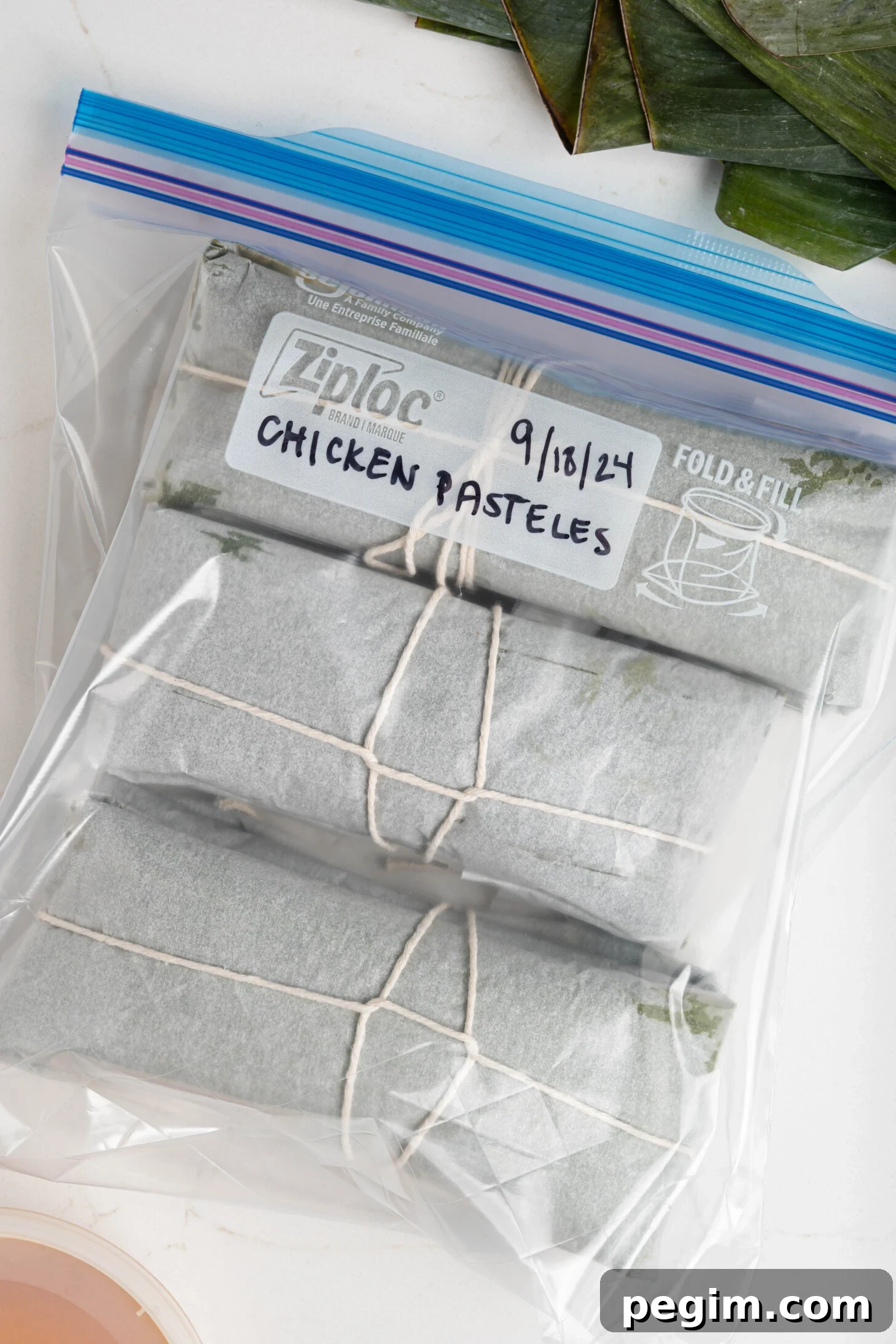
Pasteles in a freezer bag.
Puerto Rican pasteles on a plate.

Freezing & cooking directions

Pasteles freeze exceptionally well. Freeze them after wrapping (before boiling) in an airtight container or bag. When ready to cook, place frozen pasteles directly into boiling salted water. Increase the cooking time by about 15–20 minutes — expect roughly 1 hour 15–20 minutes total from frozen.
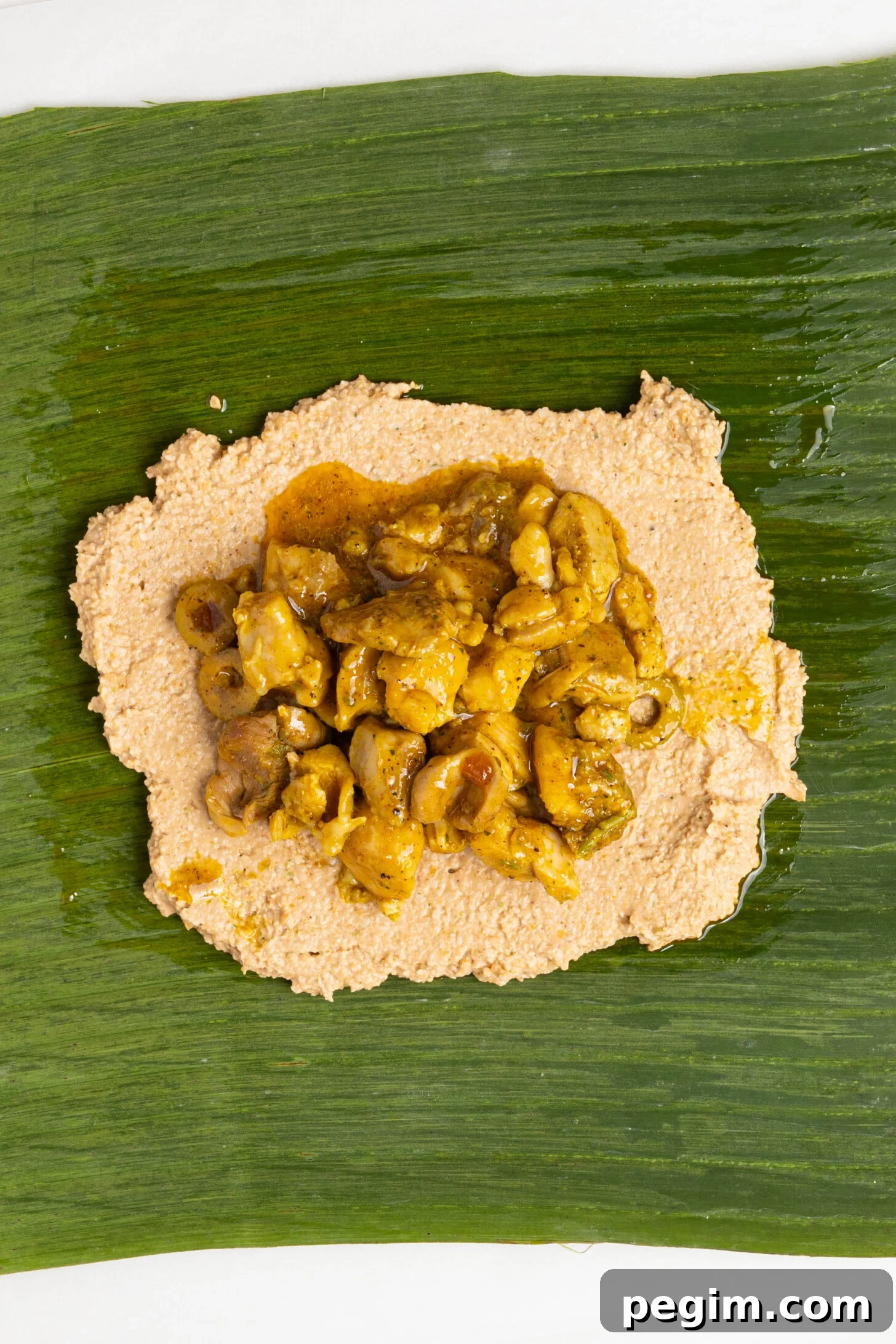
Chicken filling on masa.

Buen provecho,

Salima written in cursive