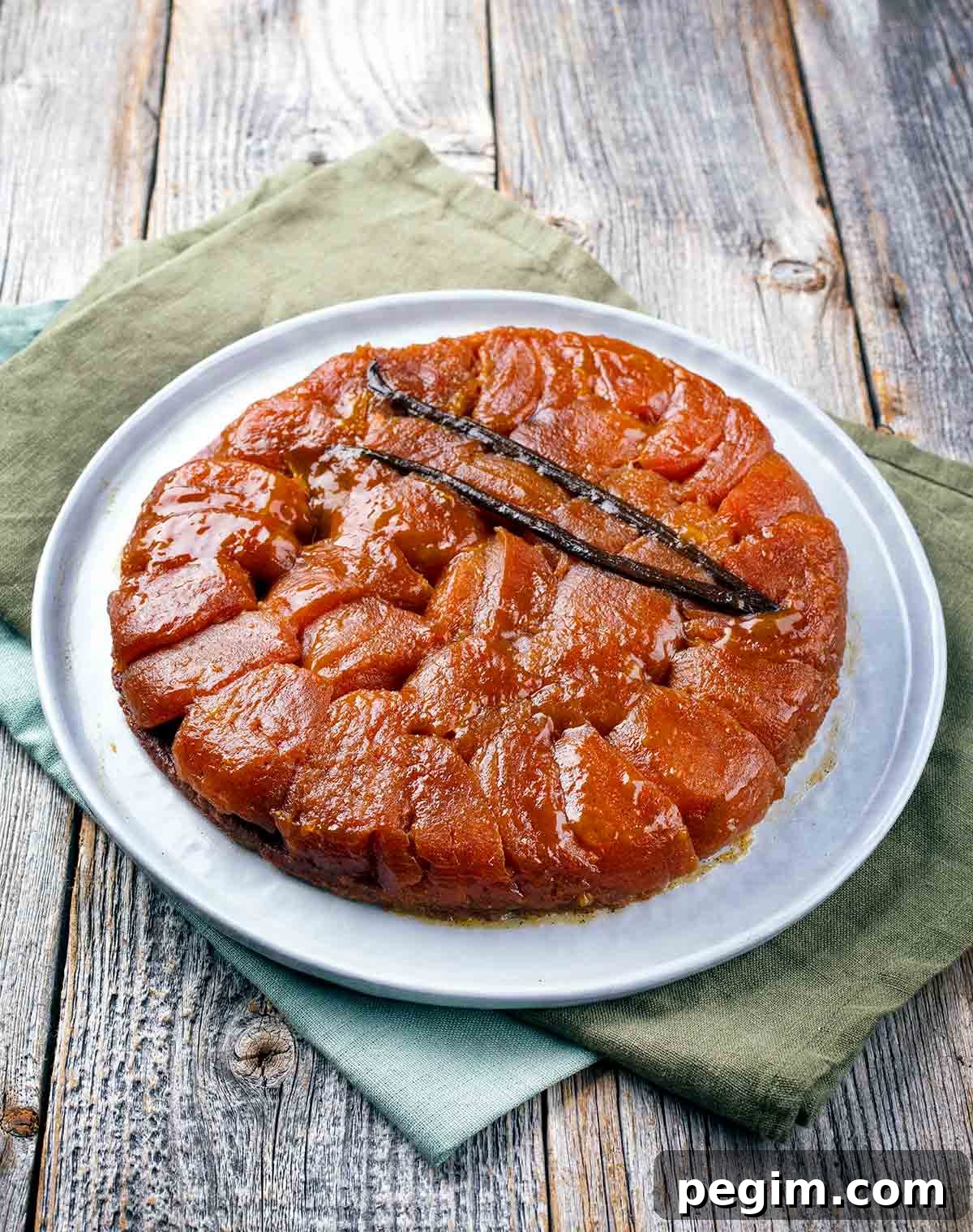
Tarte Tatin — created about a century ago by the Tatin sisters in their small hotel, this iconic upside-down tart remains a beloved French classic. Its glossy blanket of caramelized apples atop a flaky, buttery crust keeps visitors traveling to Lamotte-Beuvron, France, hoping for a warm slice of caramel-and-apple perfection.
My mother made caramel apples every autumn: she’d spear crisp apples on wooden sticks, dip them in bubbling caramel, and set them on paper-lined trays to cool. I loved watching the caramel harden. That memory makes the apple-and-caramel combination a longtime favorite of mine.
The keys to a successful tarte Tatin are patience and choosing the right apples. Though there are special tart pans available, a 9-inch cast-iron skillet works perfectly for this recipe. –Jennifer McLagan
Tarte Tatin FAQs
If you’re short on time or new to pastry, high-quality store-bought puff pastry is an acceptable shortcut. Homemade pastry delivers the best texture and flavor, but a good store-bought sheet will still produce a delicious tarte Tatin.
Choose firm apples with good flavor that will hold their shape while baking. Varieties like Ida Red or Northern Spy are recommended; Fuji or slightly underripe Golden Delicious also work well.
☞ Like tatin recipes? Try these:
- Fig Tarte Tatin
- Pear Tarte Tatin
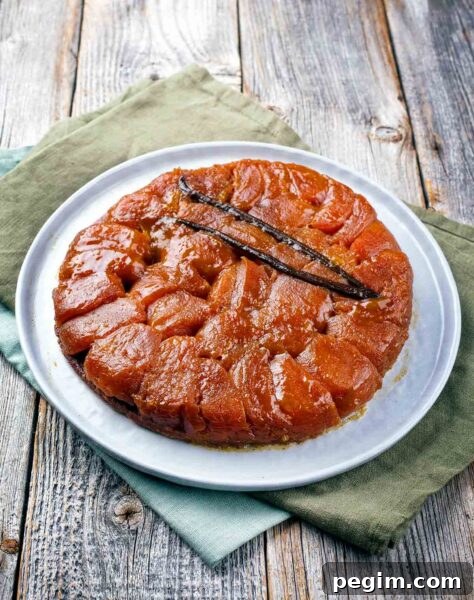
Tarte Tatin
Jennifer McLagan
Ingredients
- 1 cup all-purpose flour
- A pinch of salt
- 5 tablespoons cold fat, diced (half butter and half lard is ideal; all butter works)
- 2 tablespoons cold water
- 6 medium or 8 small apples
- 7 tablespoons (3 1/2 oz) butter
- 1 1/4 cups granulated sugar
- 2 vanilla beans (optional)
Instructions
-
Make the pastry: put flour and salt in a food processor and pulse to combine. Add the cold diced fat and pulse until the mixture has a coarse, granular texture. Transfer to a bowl, add 2 tablespoons cold water and mix with a fork. Squeeze some of the dough between your fingers—if it holds, it’s ready; if not, add a touch more water. Mix briefly by hand until it comes together, form a disk, wrap, and chill while you prepare the apples.
-
Peel and halve the apples lengthwise. Remove the core with a melon baller and trim any remaining core with a knife.
-
In a 9-inch cast-iron skillet set over medium heat, melt the butter. Sprinkle the sugar evenly over the butter and add vanilla beans if using. Nestle the apple halves cut-side up into the sugar mixture; pack them snuggly as they will shrink while cooking. The butter and sugar will bubble; cook without stirring for 30–45 minutes, shaking the pan occasionally to prevent sticking and to help the caramel color evenly. The apples are ready when the caramel is richly colored and the apples are tender when prodded.
-
Meanwhile, roll the chilled pastry into a circle slightly larger than the skillet. Refrigerate the pastry until needed and preheat the oven to 425°F (220°C).
-
When the apples are ready, remove the skillet from the heat and set it on a baking sheet. Wait until the bubbling subsides, then place the pastry over the apples, tucking the edges down around the fruit inside the pan.
-
Bake about 25 minutes, or until the pastry is golden brown. Remove from the oven and set on a cooling rack. Run a knife around the pan’s edge to loosen the tart, then wait no more than 10 minutes before turning out.
-
To unmold, place a parchment-lined flat baking sheet over the skillet and invert the pan onto the sheet. Lift the skillet carefully; most apples should drop onto the pastry. If any remain in the pan, arrange them on the tart and spoon any remaining caramel over the top. Scrape up extra caramel from the parchment if desired and spoon it back onto the tart.
-
Let the tart cool to room temperature and serve with whipped cream or vanilla ice cream.
Nutrition
Nutrition information is automatically calculated and should be used as an approximation.
Tried this recipe?
Share your result on Instagram and tag @leitesculinaria or use the hashtag #leitesculinaria.
Recipe Testers’ Reviews
Only a portion of tested recipes make it onto the site; this tarte Tatin passed rigorous blind testing by multiple home cooks and earned the recipe testers’ stamp of approval.

Melissa Maedgen
This tarte Tatin developed a deep, dark caramel over tender apples and a delicate crust. I used a slightly larger pan and packed it full of apples. The result was a beautiful tart with a glossy caramel glaze.

Cindy Zaiffdeen
I used store-bought puff pastry and followed the recipe closely with a 9-inch enamel-clad cast-iron pan. The caramel stayed chewy and the tart paired wonderfully with vanilla ice cream. Guests loved it.

Lisa O.
Tarte Tatin elevates simple ingredients into something complex and delicious when made properly. This recipe is user-friendly and explains apple selection clearly. The homemade crust is worth making; leaving some small bits of butter in the dough creates a tender texture. Be patient during caramelization—wait until it moves slowly and looks lava-like around the apples before proceeding.

Tammori Petty
This tarte Tatin was fabulous and rustic when made in a cast-iron skillet. The caramel balanced the apples perfectly and is even better with vanilla ice cream. Take care when unmolding—the tart can be delicate, but the taste makes up for any presentation imperfections.