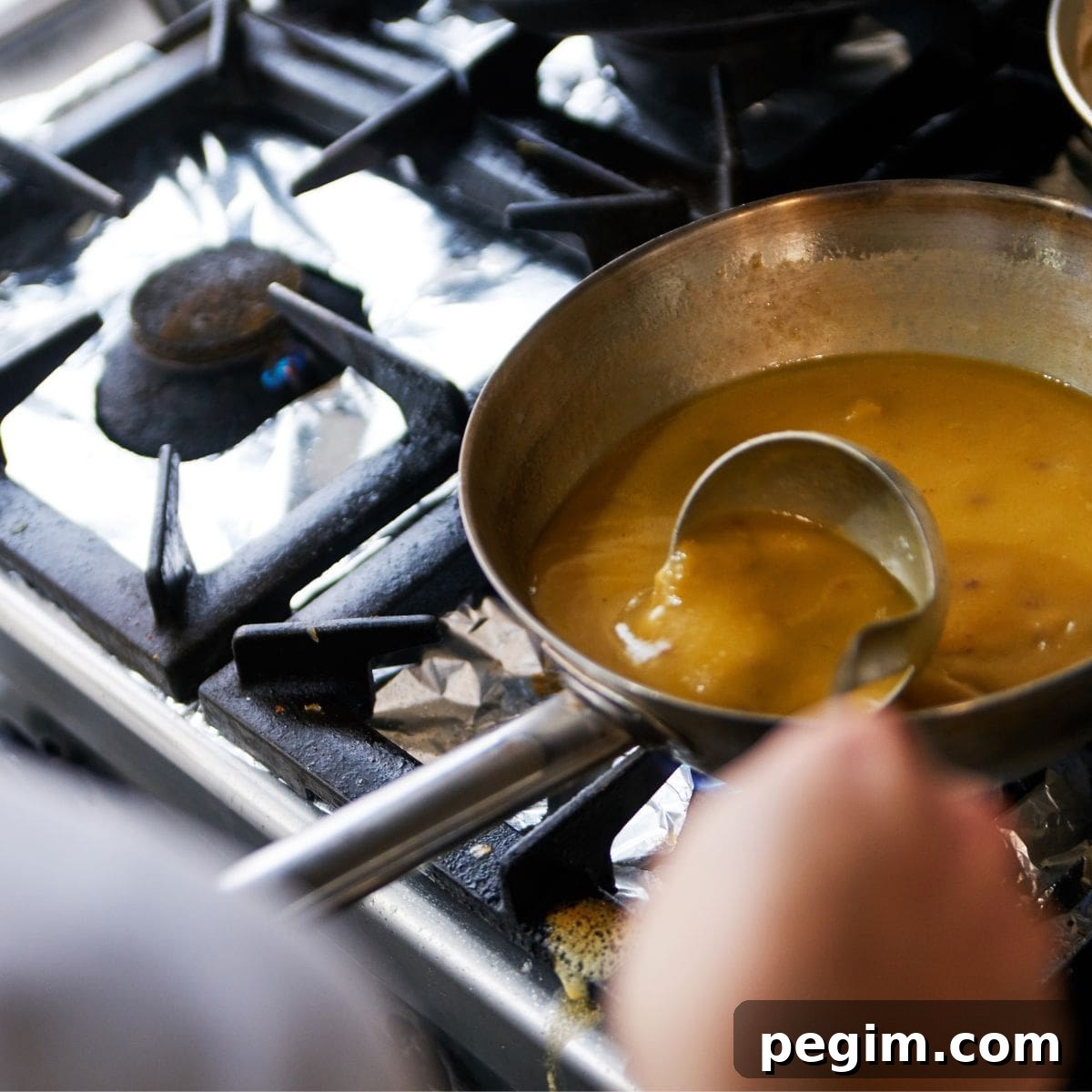
If you know how to reheat gravy properly, it can taste just as fresh and delicious as when it was first made.
Holiday meals often feature a range of classics: roast turkey, stuffing, cranberry sauce, and pumpkin pie. Gravy may not get the same spotlight as those dishes, but it remains an essential accompaniment at Thanksgiving and Christmas.
Knowing how to store and reheat gravy is as important as the techniques for reheating turkey, mashed potatoes, or casseroles. Proper reheating preserves texture and flavor so your gravy complements the meal as intended.
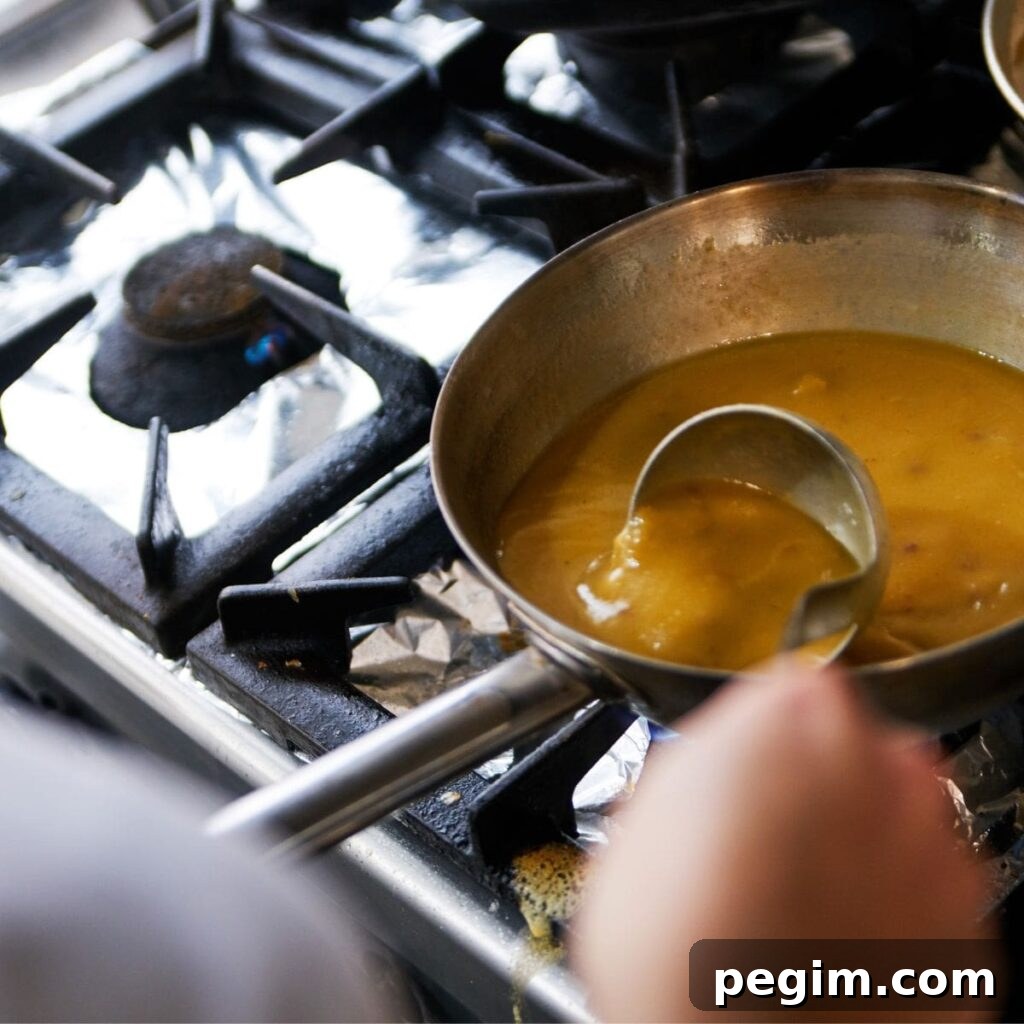
The Best Way to Reheat Gravy
The best reheating method depends on time, quantity, and available equipment. For a single serving or when you’re pressed for time, the microwave is convenient. For larger quantities and the best texture, stovetop methods are preferred.
These tips apply to all types of gravy — from sausage or turkey gravy to white or brown gravies. The key is to reheat gently and evenly.
Four reliable methods to reheat gravy:
- Skillet: Produces the best flavor and texture; my top choice.
- Pot (double-boiler): Less chance of scorching, great for larger batches.
- Microwave: Fast and convenient for small portions.
- Oven: Slowest method but useful when the oven is already in use.
Avoid unusual appliances like air fryers or pressure cookers for reheating gravy; they’re generally slower or less suited to gentle, even heating. Regardless of method, reheat gravy to at least 165°F for safety.
Storing Leftover Gravy
Proper storage prevents separation and spoilage. Gravy is often made from meat juices and fats, so it can separate when chilled. Store leftovers in an airtight container in the refrigerator and use within five days.
Freezing is possible for gravies without dairy (no cream or milk). In that case, store in an airtight container for up to 4–6 months. Some people blend gravy briefly before freezing to reduce separation.
When gravy cools it can form a jelly-like layer from congealed fats. Reheating while stirring breaks this up and restores smooth consistency.
How to Reheat Gravy in a Skillet
A heavy skillet gives even heat and helps prevent hot spots. Use a skillet to increase surface area so the gravy warms gently and uniformly.
Steps
- Place the gravy into a cold skillet to help break up any congealed bits.
- Set the heat to low and warm the gravy slowly.
- Stir or whisk frequently to prevent burning and remove lumps; heat until it simmers, then serve immediately.
If the gravy is thinning, add a little of the same thickener used originally (for example, cornstarch mixed with cold water) a spoonful at a time. If it’s too thick, whisk in a bit of stock or milk. Keep stovetop temperatures low to avoid breaking the emulsion.
How to Reheat Gravy in a Pot
A pot offers more control and reduces the risk of burning, especially when using a double-boiler method. Place about two inches of water in the pot and set a heat-safe bowl with the gravy on top or use a separate insert.
- Transfer the gravy into a heat-safe container.
- Warm over low heat, stirring often until hot.
The double-boiler technique provides gentle, indirect heat that minimizes scorching. Stir frequently and remove once the gravy reaches serving temperature.
How to Reheat Gravy in a Microwave
The microwave works well for small amounts if you follow a few guidelines. Use a shallow dish for even heating and cover to prevent splatters.
- Place gravy in a shallow microwave-safe container and cover with a splatter lid or a damp paper towel.
- Heat in 30-second bursts at medium or medium-low power, stirring between intervals.
- If the gravy thickens too much, stir in a spoonful of stock to reach the desired consistency.
How to Reheat Gravy in an Oven
The oven is best when it’s already hot for other dishes. Use an oven-safe dish, cover with foil to retain moisture, and stir midway for even heating.
- Preheat the oven to 350°F.
- Pour the gravy into an oven-safe pan and cover with foil.
- Heat for 5–10 minutes, stirring halfway through, until the gravy simmers.
Shallow pans heat faster and more evenly than deep ones.
Make-Ahead Gravy
With proper storage and these reheating tips, you can prepare gravy ahead of time and save effort on the day of your meal. Homemade gravy can be made up to five days in advance when refrigerated. When it’s time to serve, choose the reheating method that matches the quantity and equipment you have available to ensure the best texture and flavor.