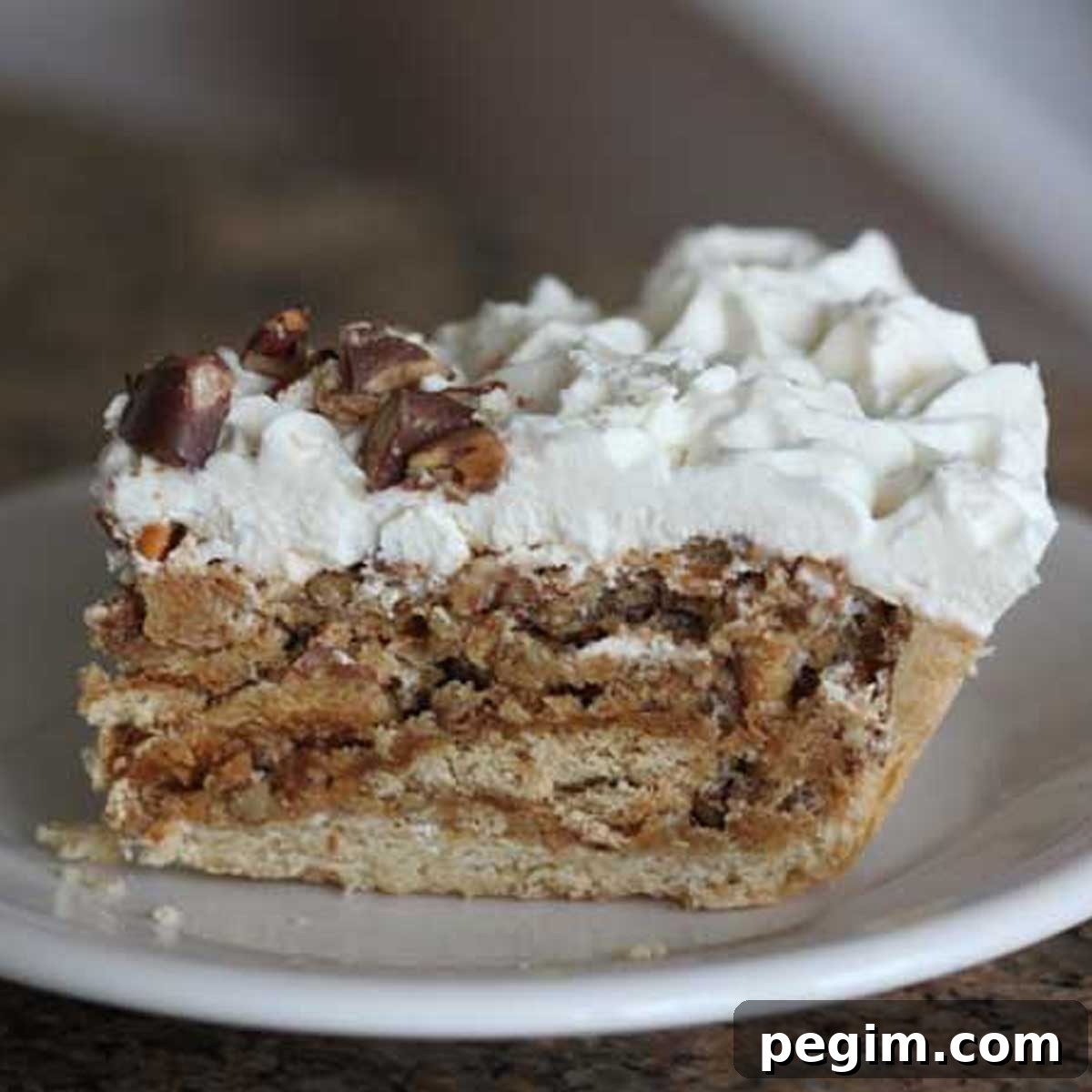
If I ever have to watch my life flash before me, many scenes will be from the view of a high chair rolling down the line at Luby’s Cafeteria. We ate there often, as did many Texans. I didn’t remember the Butternut Brownie Pie at first, but it appeared in a Luby’s cookbook. When I made it for my mother she remembered it vividly and was delighted. I’ve prepared this pie many times since, as the photos show. The earliest picture still feels like the best representation, though it could use an update.
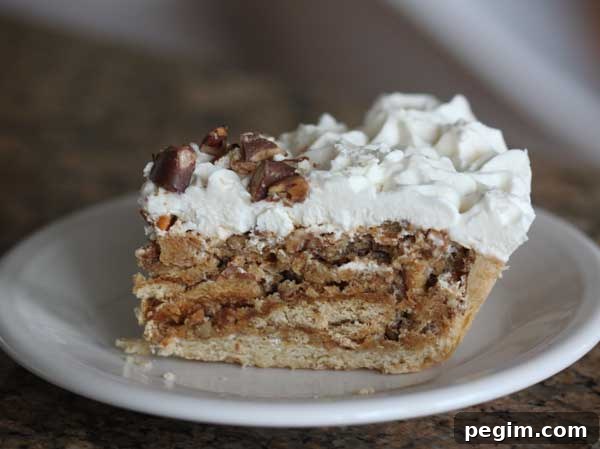
A night shot to give you an idea of the pie’s interior texture.
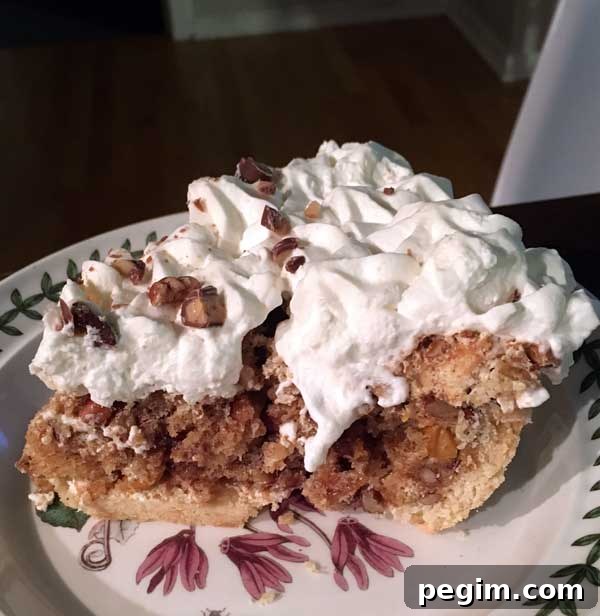
No Chocolate in Butternut Brownie Pie
Strangely, there is no chocolate in this pie despite “brownie” in the name. The color is a warm brown, which may explain the title. Update: I learned that early brownies were made with brown sugar before chocolate brownies became common, so the name might reflect that older style.
An older, unbaked shot from the time I didn’t use a bottom crust.
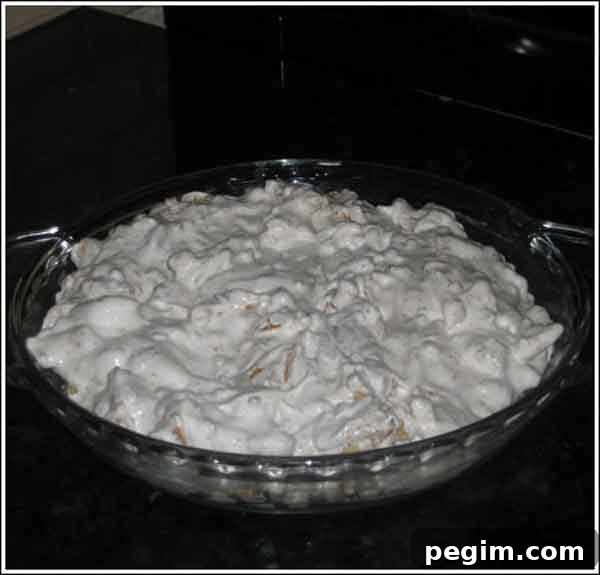
One experiment included Butterfinger pieces — not recommended.
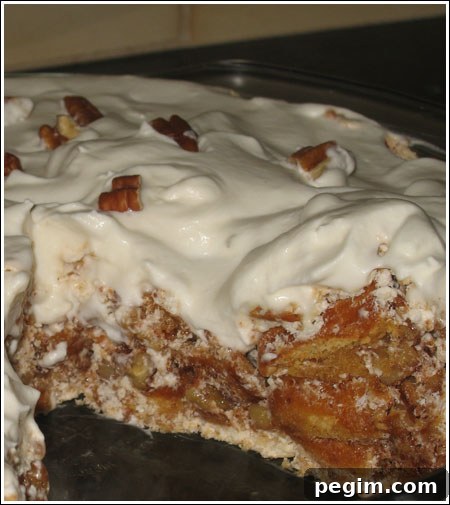
Crust or No Crust
Over the years I’ve made this pie both ways. Lining the pie with a baked crust gives neater slices and a more polished appearance, but the original Luby’s version is baked directly in a greased pie dish with no crust. I also bake at 350°F rather than the 300°F called for in the original cookbook — it yields a reliable result and a nicely set filling. Below are photos of a recent pie made in a crust.
More Photos
Filling in the crust and ready for the oven.
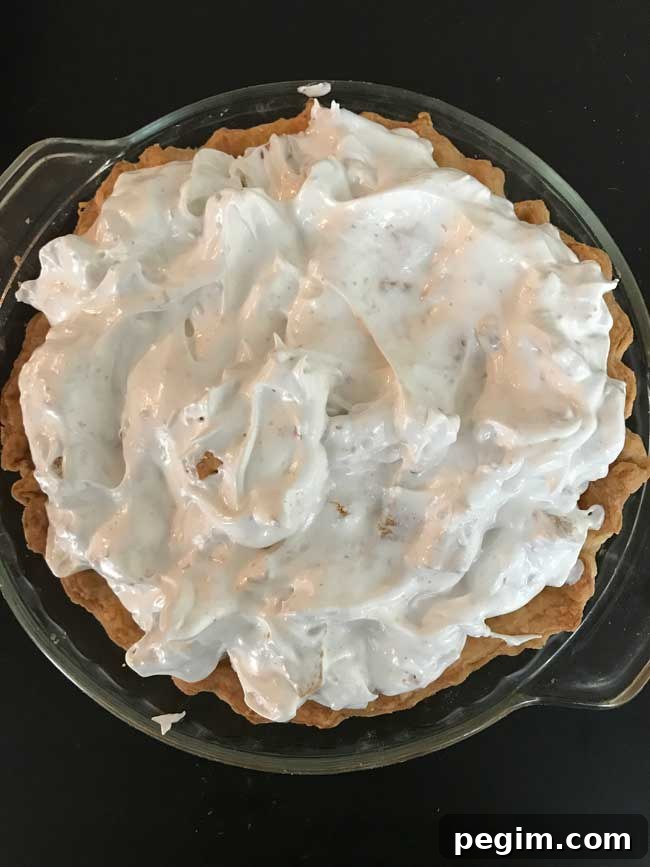
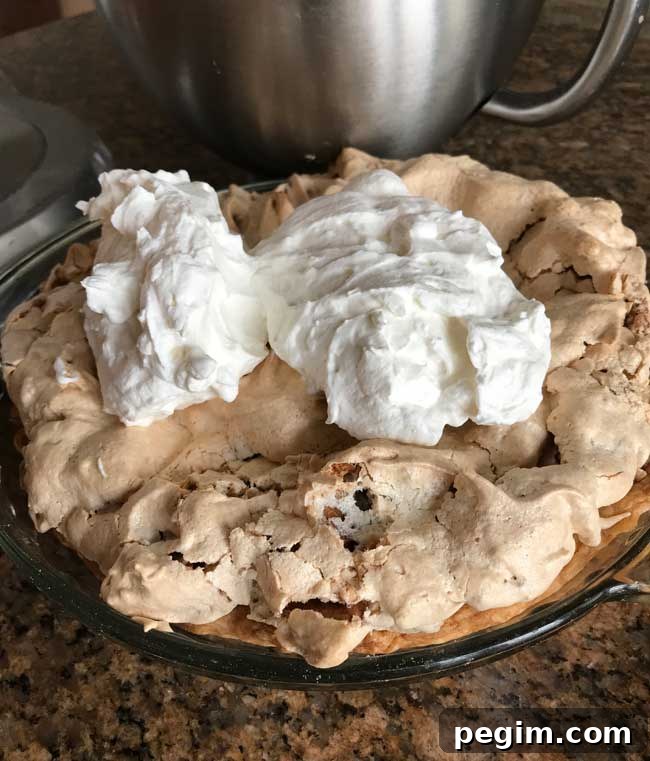
Fresh from the oven. The pie puffs up while baking and settles as it cools.
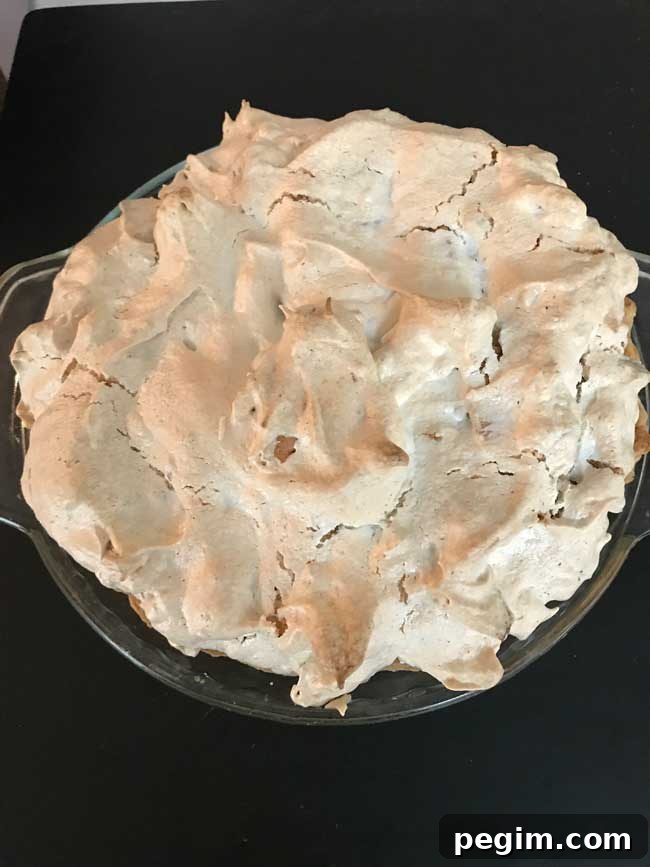
Topped with lightly sweetened whipped cream — always a welcome finish.
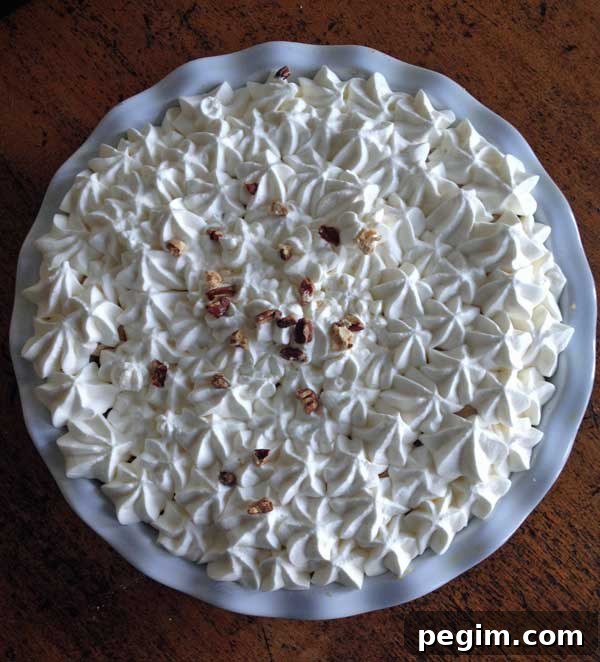
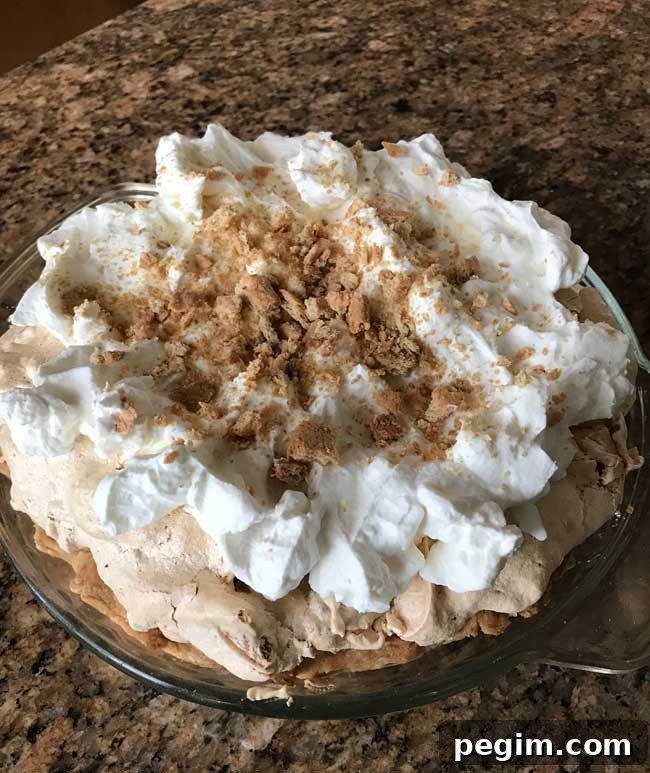
Ready to serve. I sprinkled crushed graham crackers on this one for texture and visual interest.
Here is the recipe I use, adapted slightly from the Luby’s cookbook.
Recipe
Luby’s Butternut Brownie Pie
Anna
Pin Recipe
Ingredients
- Butter or shortening for rubbing pie plate about 1 tablespoon OR 1 fully baked pie crust
- 5 large egg whites (or 4 extra-large)
- ⅛ teaspoon baking powder
- ⅛ teaspoon cream of tartar optional
- 1 cup granulated sugar (about 200 g)
- 1 teaspoon vanilla extract
- 14 squares graham crackers broken into 1/2-inch pieces or coarsely crushed
- 1 cup toasted, chopped pecans (90–100 g)
- Optional: ¼ cup butterscotch chips adds a pleasant note, but increases sweetness
Topping:
- 1 cup whipping cream
- 3-4 tablespoons granulated sugar or ¼ cup powdered sugar
- ½ teaspoon vanilla
Instructions
-
Preheat oven to 350°F. (The original calls for 300°F, but 350°F works well for me.)
-
Rub a 9-inch glass pie plate generously with butter or have a pre-baked pie crust ready.
-
In a mixing bowl, beat egg whites and baking powder until soft peaks form. If using, add cream of tartar and continue beating. Gradually add 1 cup sugar, beating until stiff peaks form. Beat in vanilla. Fold in the broken or coarsely crushed graham crackers and the toasted pecans (and butterscotch chips, if using) with a rubber spatula. Pour into the prepared pie plate or baked shell.
-
Bake for about 30 minutes. Remove and let cool completely on a wire rack; the pie will sink slightly as it cools.
-
Prepare the topping: chill a mixing bowl and beaters, then whip the cream until it begins to thicken. Add sugar and vanilla and continue to whip to stiff peaks, taking care not to overbeat. Spread or pipe the whipped cream over the cooled pie and garnish with extra pecans or a sprinkle of crushed graham crackers.
Notes
For best texture, break the graham crackers into pieces about 1/2 inch across or coarsely crush them with a rolling pin. Too fine a crumb makes the filling mealy. Toast your pecans for the best flavor — pre-roasted, chopped pecans work well. If you add butterscotch chips (¼–⅓ cup), they give a pleasant flavor but will increase sweetness.