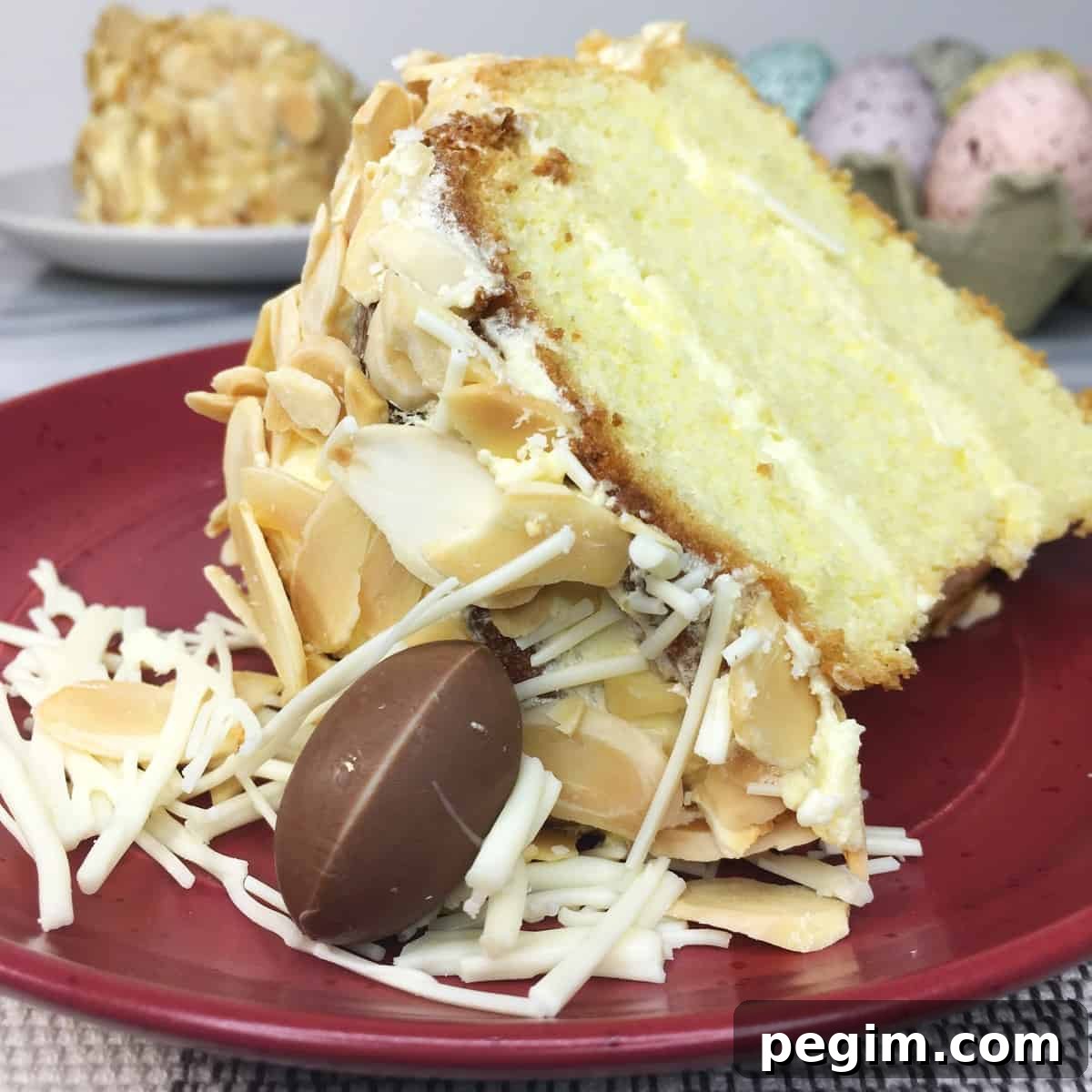
This is our favorite Easter bundt cake — a showstopping centerpiece to finish Easter dinner. It layers three sheets of light sponge cake with silky mousseline cream, then covers the cake in toasted flaked almonds and a delicate white chocolate “nest.” The result is crunchy, creamy, and delightfully festive.
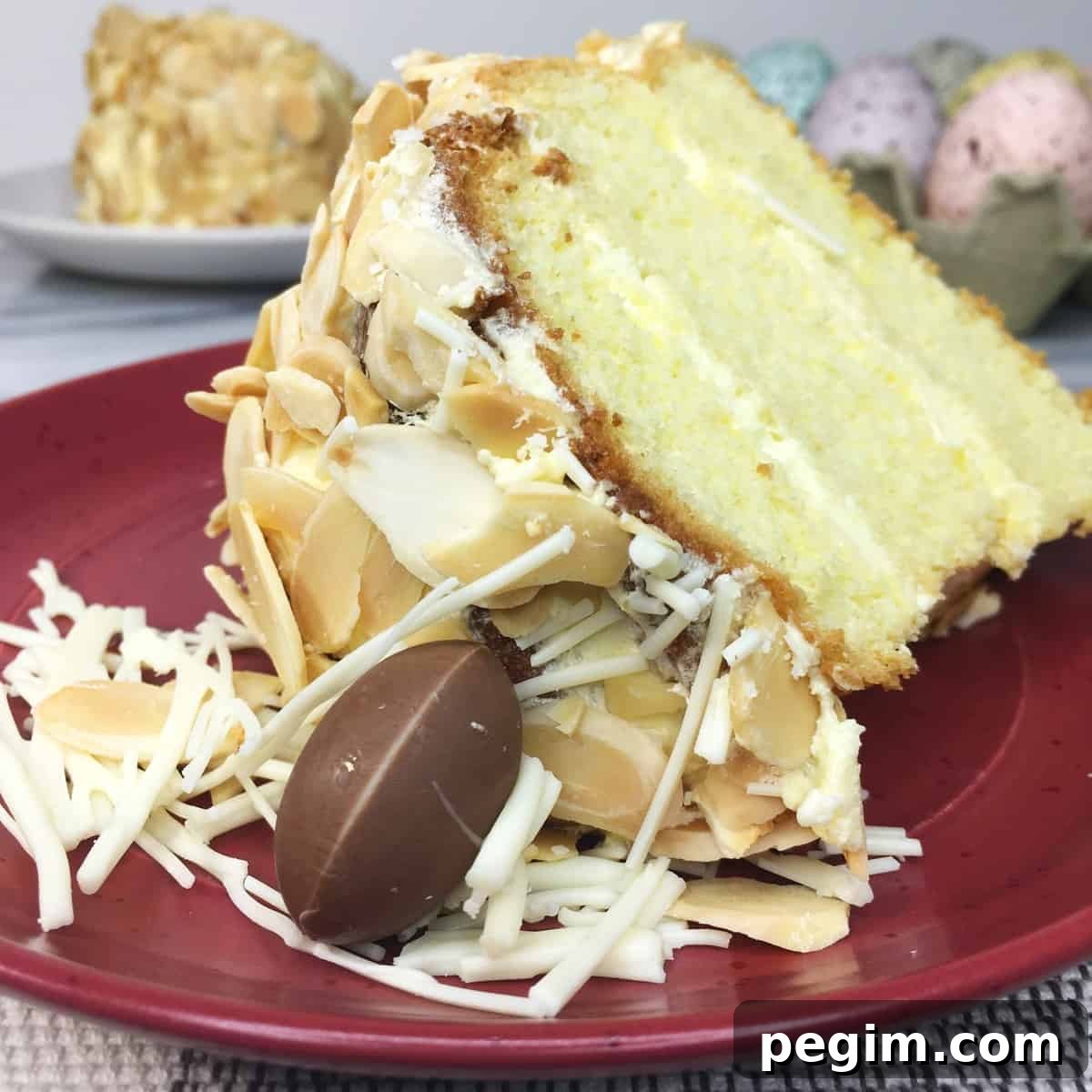
Have you ever wondered how to turn a simple fluted bundt cake into a showpiece for your Easter table? This Easter bundt cake (gâteau bundt de Pâques) uses classic techniques and a few decorative tricks to create an elegant dessert that’s surprisingly approachable.
Easter bundt cake recipe
This recipe is straightforward and rewarding. Bake a light, airy sponge in a fluted pan, soak the layers with a simple sugar syrup, fill and coat the cake with vanilla mousseline cream, cover it with toasted flaked almonds, and finish with white chocolate filaments arranged to resemble a bird’s nest. Add small decorative eggs for a final festive touch.
Ingredients
See the recipe card below for exact ingredient quantities and measurements.
- Cornstarch — softens the flour proteins and reduces gluten development for a tender sponge.
- Eggs — use large eggs at room temperature for optimal volume and texture.
- Baking powder — provides additional lift in the biscuit/sponge.
- Vanilla extract — pure vanilla is ideal; you can substitute a citrus or coconut extract, or a splash of fruit brandy like kirsch for a different aroma.
- Milk — whole milk is recommended for richness; low-fat milk may be used as a lighter option.
- Butter — unsalted and softened. Remove from the refrigerator 1–2 hours before use for easier incorporation.
- Flaked almonds — buy pre-toasted flaked almonds or toast raw sliced almonds in a moderate oven until golden.
- White chocolate — for making the delicate filaments; milk or dark chocolate can be substituted.
- Edible decorations — small chocolate eggs, jelly beans, or any preferred Easter candy to finish the nest.
How to make Easter bundt cake
Make the sponge: Preheat the oven to 355°F (180°C). Sift together all-purpose flour, cornstarch, and baking powder. Separate the eggs and whisk the yolks with a portion of the sugar until pale. In a clean bowl, whisk the egg whites to soft peaks, gradually adding the remaining sugar until glossy and firm. Fold the whites gently into the yolk mixture, then fold in the sifted dry ingredients.
Prepare a tall fluted or bundt pan by buttering and flouring it. Pour in the batter and bake for 25–30 minutes, or until a thin skewer comes out clean. Remove from the oven and cool on a rack.
Make the sugar syrup: Simmer water, sugar, and vanilla until the sugar dissolves. Let the syrup cool to room temperature and set aside.
Make the pastry cream: Whisk together egg yolks, a little milk, sugar, flour, and cornstarch. Heat the remaining milk to a boil, then temper the hot milk into the yolk mixture and return to the pan, stirring until the mixture thickens. Transfer to a shallow dish, press plastic wrap directly onto the surface, and cool to room temperature.
Make the extra buttercream: Heat sugar and water to a soft-ball stage (about 250°F / 120°C). Pour the hot sugar syrup slowly over a room-temperature egg while whisking continuously until the mixture becomes pale and voluminous. Add softened butter and vanilla, then beat until light and emulsified. Adjust temperature briefly if the cream is too firm or too soft — it should be smooth and homogeneous.
Make mousseline cream: Gradually incorporate the cooled pastry cream into the extra buttercream, whisking until you have a velvety mousseline. Set aside until assembly.
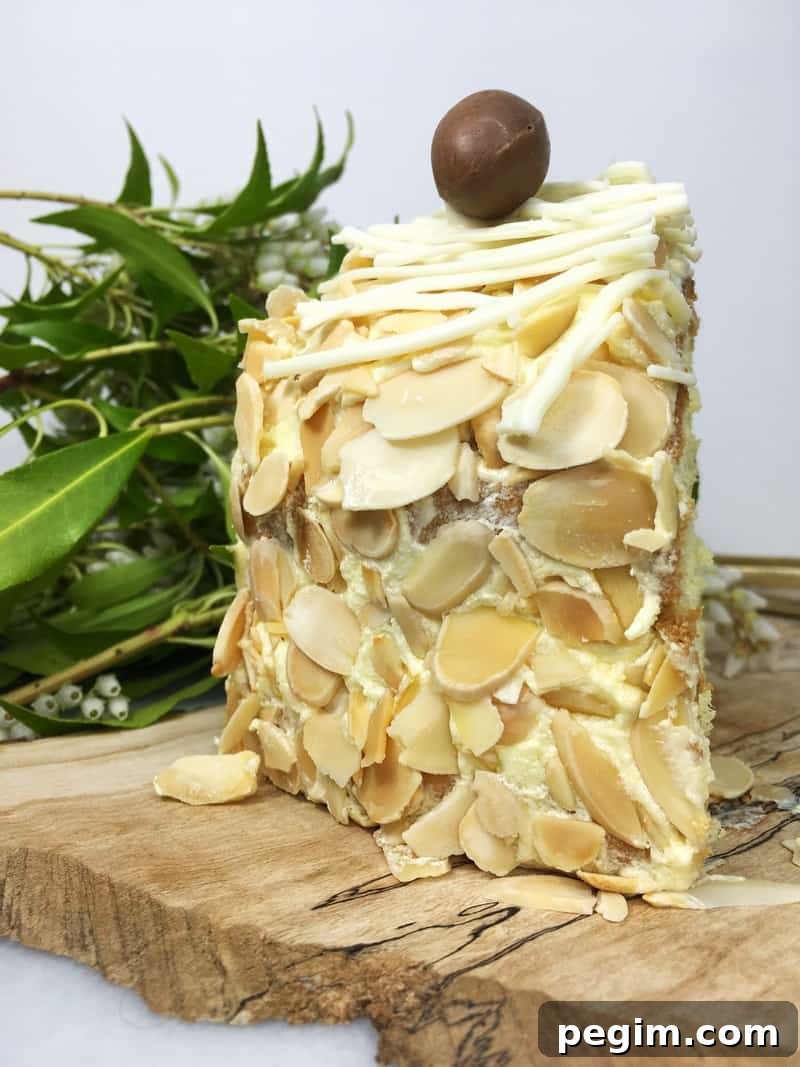
Assemble the cake: Trim the cooled sponge into three equal horizontal layers with a serrated knife. Brush each layer with sugar syrup. Pipe or spread mousseline cream between the layers, stacking them carefully. Cover the outside of the cake with the remaining cream and smooth the sides. Press toasted flaked almonds all over the cake to coat the exterior evenly.
Make white chocolate filaments: Gently melt white chocolate in a bain-marie until warm but not hot. Cool slightly, then transfer to a piping bag with a small opening. Work quickly: pipe thin spirals or threads onto an inverted chilled plate; let them set for a few seconds, then lift the delicate filaments and arrange them on top of the cake to create a nest shape. Use a little melted chocolate to glue a few small eggs into the nest.
Expert Tips
- Prepare the sponge a day ahead. Wrap it and refrigerate overnight — this makes trimming and slicing easier and improves flavor development.
- Use a tall fluted pan (kouglof mold) or your favorite bundt pan for the classic shape.
- To toast flaked almonds, bake at 355°F (180°C) for 10–15 minutes until golden, stirring once. If using pre-toasted almonds, give them a short re-toast at 300°F (150°C) for deeper color.
- Swap white chocolate for milk or dark chocolate if you prefer a richer filament or a more contrasted nest.
Recipe variations
If you’re short on time or new to baking, use a high-quality cake mix for the bundt sponge. For the filling, mousseline cream is excellent, but you can also use Chantilly (sweetened whipped cream) or a stabilized cream cheese frosting as simpler alternatives.
Decoration ideas: fully coat the cake with flaked almonds, coconut flakes, or chopped nuts; create nests from tempered chocolate or caramel; or shape nests from thin, crunchy noodles dipped in chocolate for a playful texture. Finish with chocolate eggs, pastel candies, or fresh seasonal berries for color contrast.
Storing & Freezing
Store the assembled bundt cake with mousseline cream in the refrigerator for up to 48 hours. Freezing assembled cakes with mousseline is not recommended since the texture can suffer. You may freeze the undecorated, fully cooled sponge: wrap tightly in plastic and freeze for up to 3 months. Thaw in the refrigerator, still wrapped, for at least 8 hours before finishing and decorating.
Recipe FAQ
Mousseline cream is a pastry cream that has been enriched with softened butter until smooth and airy. It combines the stability of pastry cream with the richness and pipeability of buttercream, making it ideal for layering and finishing cakes and choux pastries.
A bundt cake is baked in a fluted pan with a central hole, exposing more surface area to the oven. Because of its shape, achieving an evenly moist crumb requires attention to baking time and proper soaking or brushing with syrup. Regular cakes baked in round or rectangular pans often retain moisture more easily.
Love Easter desserts? Try these next!
- Ottolenghi’s Carrot Cake
- The Best Savoy Cake
- Apple Tarte Tatin
- Explore more Easter dessert recipes and seasonal ideas.
Want more beautiful, delicious recipes? Subscribe to newsletters and follow your favorite food creators for updates and new ideas. If you make this recipe, leave a rating and share your experience — it helps others and inspires improvements.
Recipe card
Easter Bundt Cake (Gâteau Bundt de Pâques)
This festive bundt cake combines a tender three-layer sponge, rich vanilla mousseline cream, and toasted almonds for a textured, elegant dessert perfect for Easter and spring occasions.
- Author: Irina Totterman
- Total Time: ~2 hours
- Yield: 10 servings
- Category: Cakes
- Method: Baking
- Cuisine: French-inspired
Ingredients (summary)
For the biscuit: flour, sugar, cornstarch, eggs, baking powder, vanilla.
For the sugar syrup: water, sugar, vanilla.
For the pastry cream: milk, egg yolks, sugar, cornstarch, flour.
For the extra buttercream: egg, sugar, water, vanilla, butter.
Decoration: toasted flaked almonds, white chocolate, small decorative eggs.
Instructions (summary)
- Preheat oven to 355°F (180°C). Sift dry ingredients. Separate eggs and whisk yolks with a portion of sugar until pale.
- Whisk whites to glossy peaks with the remaining sugar, fold into yolks, then add dry ingredients gently. Bake in a buttered and floured fluted or bundt pan for 25–30 minutes. Cool.
- Make sugar syrup by dissolving sugar in water with vanilla; cool.
- Prepare pastry cream: combine yolks, a little milk, sugar, flour, and cornstarch; add hot milk, cook until thick, then cool under plastic.
- Make extra buttercream by pouring hot sugar syrup over an egg while whisking, then beat in butter and vanilla until smooth. Combine with pastry cream to make mousseline.
- Slice the sponge into three layers, soak with syrup, fill with mousseline, coat the exterior and press on toasted flaked almonds.
- Pipe melted white chocolate into thin filaments on a chilled surface, lift and arrange into a nest on top of the cake, and place small decorative eggs in the center.
Notes
- Make the sponge a day ahead and refrigerate wrapped for easier assembly.
- Use a tall fluted pan for the classic look; a standard bundt pan works fine too.
- Toast almonds for the best flavor and color. Substitute chocolate type as desired for filaments.
Nutrition (per serving, approximate)
- Calories: 504
- Sugar: 46 g
- Fat: 25.7 g
- Protein: 9.9 g
- Carbohydrates: 59.4 g
Nutritional information is an approximation calculated with an online tool and should be used as a guideline only.
This recipe was adapted from a classic version and was originally published in March 2019; it has since been updated for clarity and photos.