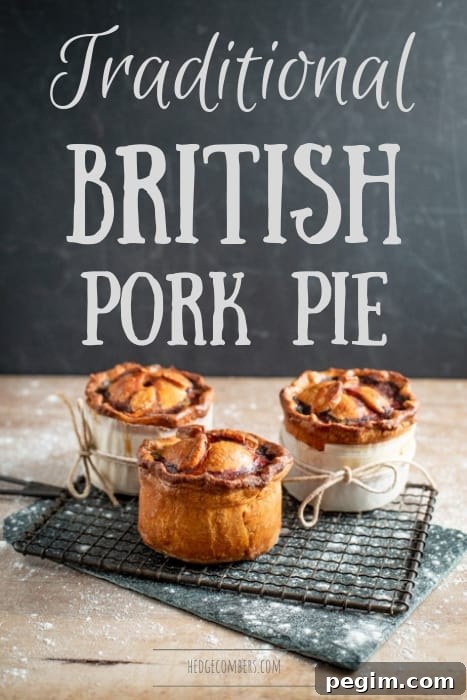
This traditional British pork pie recipe is a classic. Made with hot water crust pastry, it’s filled with seasoned chopped pork and finished with a rich stock that sets into a savoury jelly.
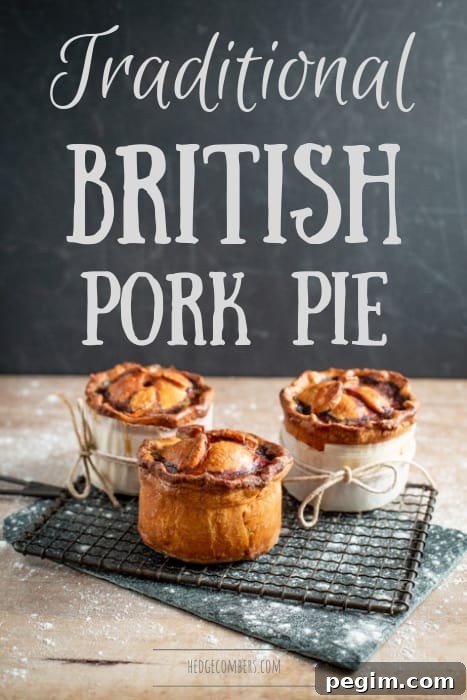
Happy British Pie Week! To celebrate, here is a traditional British pork pie recipe you can recreate at home.
Note: these pies are best made a day ahead so they can cool and the jelly can set overnight in the fridge.
A Traditional Pork Pie Recipe
The humble pork pie is a sturdy British classic. Once you use good-quality pork, its flavour and texture make all the difference compared with cheap processed alternatives.
Pork pies are traditionally served cold and travel well, making them perfect picnic or lunchbox food. In warm weather use an ice pack; in cooler months they keep fine at room temperature for short periods.
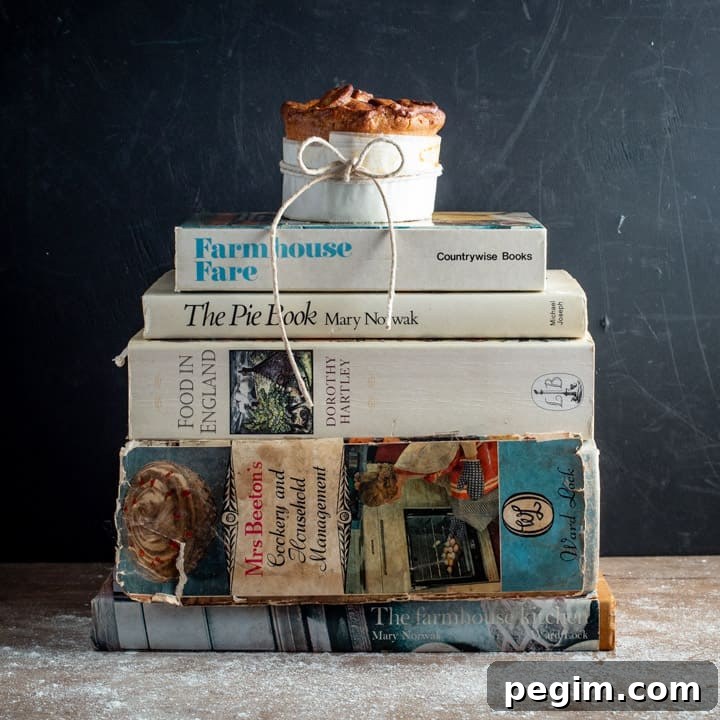
This was my first time making pork pies and I followed old-fashioned methods, including using pigs’ trotters for the jelly. I studied vintage cookbooks and developed the recipe below.
Three key components make a great pork pie:
- The pastry
- The meat
- The jelly
Below I explain each element and give a complete recipe so you can make your own hand-raised pork pies.
Hot Water Crust Pastry
Hot water crust pastry is less common in home kitchens today because it needs planning and some warmth while you work. It’s worth it: the pastry becomes dense, buttery and delicious.
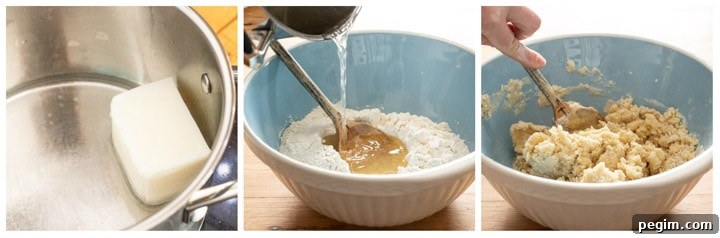
The dough is made by combining melted lard and hot water with flour. Keep the dough warm and pliable while shaping; I warmed my mixing bowl briefly in the oven to help on a cold morning, then kept the unused dough covered in a towel.
As the pastry bakes it caramelises to a deep golden brown, creating a slightly crisp base and a rich, savory crust.
British Pork Pie Filling
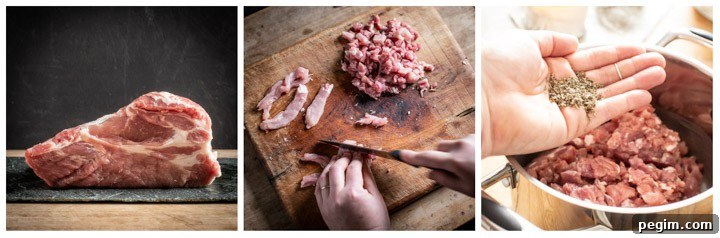
For the filling I recommend pork shoulder. Trim any excessively tough pieces, dice the meat small, then season with dried sage, salt and pepper. Mix thoroughly and handle the seasoned meat only when you are ready to assemble—salt draws out moisture over time and can affect texture.
Traditional Pork Pie Jelly
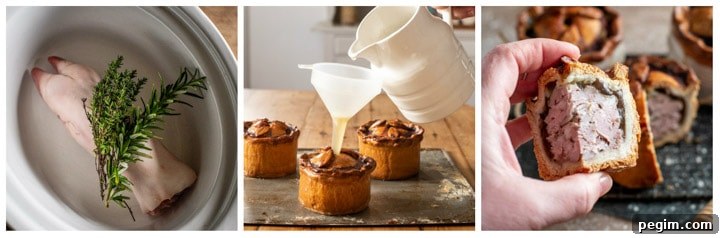
When a hand-raised pie bakes, the filling shrinks and leaves a gap between the meat and the pastry. Traditionally this gap was filled with a concentrated stock made from the animal’s bones. Pig trotters are ideal because they release plenty of gelatin, which sets the stock into a firm jelly when chilled.
The jelly is nutritious and flavorful, providing collagen and minerals. If you prefer, commercial gelatin sheets can substitute for trotters, but using trotters is the traditional method.
Where to Buy Pigs’ Trotters
Most good butchers will supply pigs’ trotters and often they are inexpensive or given away. They are usually pre-cleaned. A quick rinse under cold water is all that’s needed before using them to make stock.
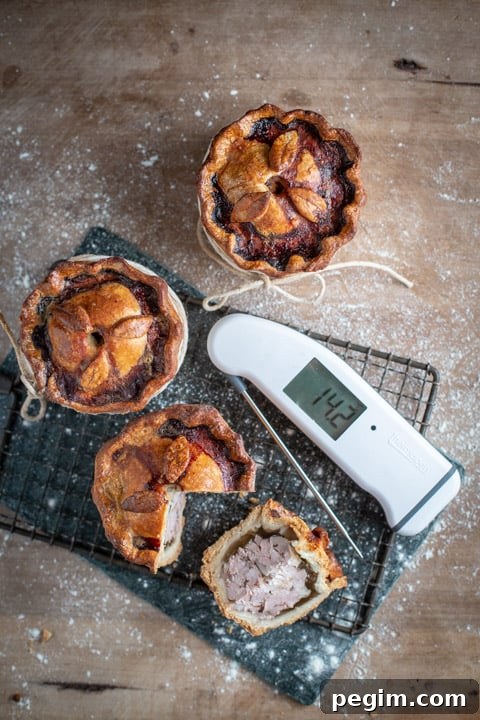
Can You Freeze Pork Pies?
Yes. Pork pies freeze well with little change to taste or texture. Wait until the pies and jelly are fully chilled, then wrap each pie tightly in cling film or foil, label with contents and date, and freeze. Defrost overnight in the fridge and consume within three months for best quality.
Now on to the recipe
Below is the full recipe, combining pastry, meat and jelly. Read through first to familiarise yourself with the steps.

Lunch
British
British pork pie, hand raised pie, pork pie
- 350 g plain flour – sieved
- 140 ml water
- 110 g lard
- 1 tsp salt
- 1 egg – beaten
- 500 g pork shoulder – diced
- 1 tsp dried sage
- 1 tsp salt
- 1 tsp pepper
- 1 pig trotter
- 1 litre water
- 1 onion – halved
- 1 tsp salt
- 1 tsp white pepper
- Preheat the oven to 180°C (350°F), Gas mark 4.
- Sieve the flour into a large ovenproof bowl and warm the bowl briefly in the oven. This keeps the dough pliable while you work.
- Put the water and lard in a saucepan. Gently bring to a boil. When the lard has melted, pour the hot mixture into the flour and salt.
- Stir with a wooden spoon until combined, then, when cool enough to handle, knead the dough quickly until smooth.
- Place the dough on a floured board and cut off one-third for lids. Return the remainder to the warm bowl, covered with a tea towel, to keep warm.
- Use the remaining dough to form the body of each pie. If making several small pies, divide the dough accordingly and work on one portion at a time while keeping the rest warm.
- Place the cleaned pig trotter, water, onion, salt and white pepper into a slow cooker. Cook on high for 4 hours or on low overnight to extract the gelatin.
- Split the trotter halfway through cooking if possible to release more gelatin. When done, strain and reserve the stock. Discard solids; any extra stock can be frozen for other dishes.
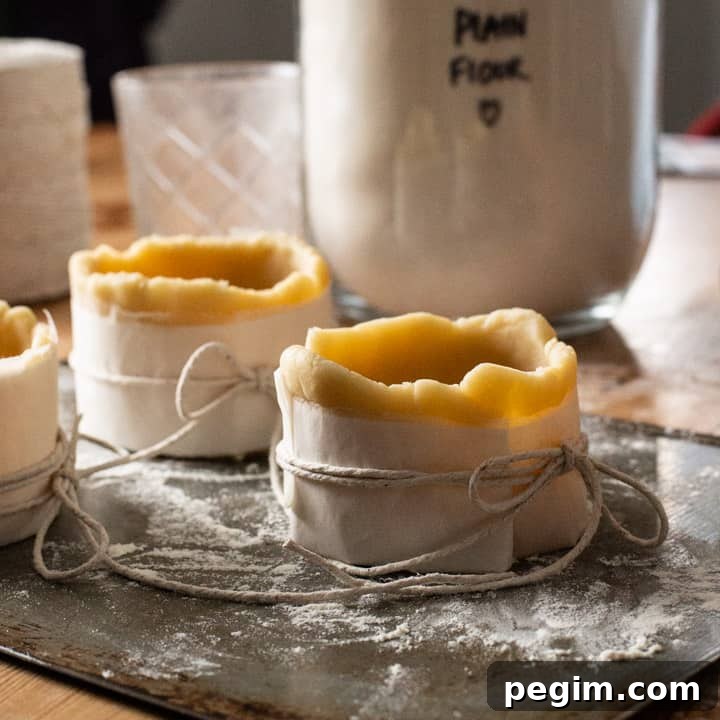
- Dust a pork pie dolly or an upturned glass with flour, then mould warm pastry around it to form an even shell with a small overhang for sealing.
- Remove the mould carefully and support each pie with a folded strip of baking paper if needed.
- Mix the diced pork with sage, salt and pepper. Fill each pastry case with roughly a third of the pork, pressing down and leaving a domed top.
- Roll out the reserved lid pastry and cut lids to fit. Brush the pastry overhang with beaten egg and place the lids on.
- Seal the edges by pressing firmly or crimping. Using a sharp knife, pierce and widen a hole in each lid large enough for a funnel to pour in stock later.
- Brush the pies all over with egg wash for a shiny finish.
- Bake at 180°C (350°F) for 20 minutes. Reduce the oven to 160°C and bake for a further 50 minutes.
- Halfway through, remove any paper supports, brush with more egg wash, then return to finish baking.
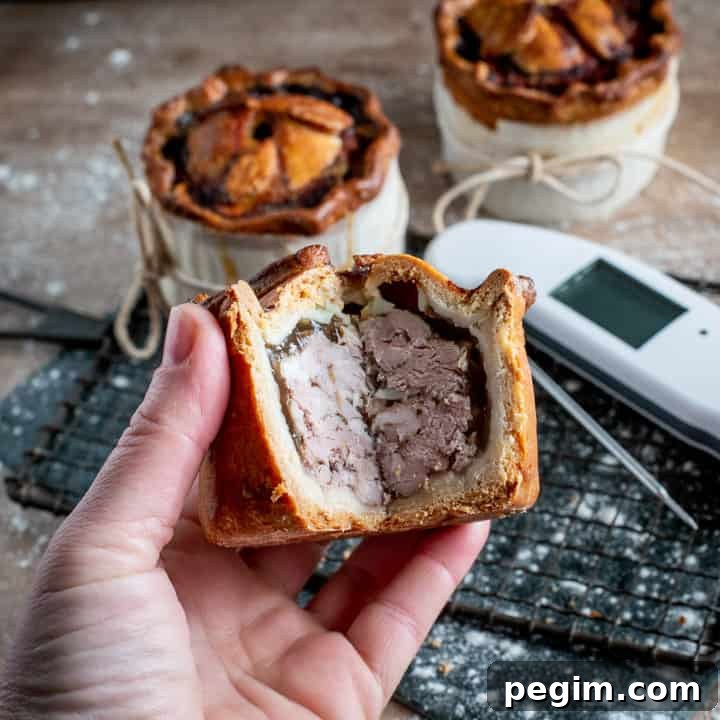
- Ensure the pork reaches a minimum internal temperature of 65°C (150°F). Use a thermometer to check the centre through the hole in the lid.
- Allow pies to cool at room temperature, then transfer to the fridge to cool completely before filling with jelly.
- Warm the strained stock. Insert the tip of a funnel into the hole in each lid and slowly pour the hot stock in, allowing it to settle into gaps without overflowing.
- Return the filled pies to the fridge and chill until the stock has fully set, preferably overnight. Do not slice until the jelly is firm.
- When set, slice into wedges and enjoy cold, with pickles or salad if you like.
Food safety note: because the process involves cooling a hot pie, adding warm stock and chilling again, it is essential that the pork is fully cooked. Use a digital thermometer inserted through the hole into the centre of the pie and ensure a minimum internal temperature of 65°C (150°F).
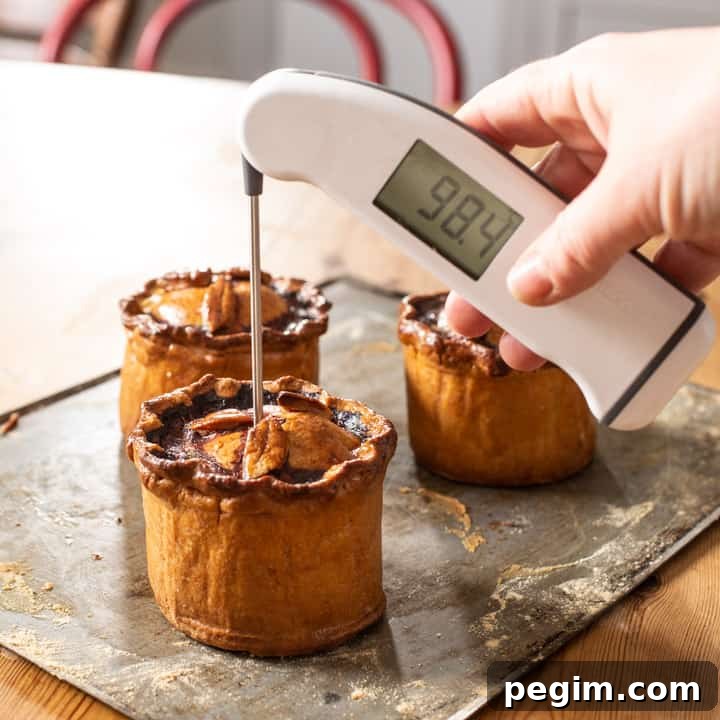
When the pastry is golden and juices are bubbling you may see probe readings in the high 90s; the meat will still be moist and tender inside the pastry.
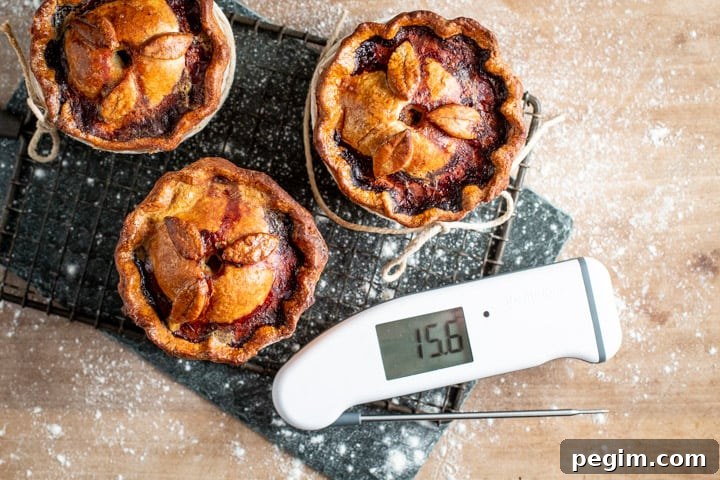
Huge thanks to Thermapen for inspiring this bake. All thoughts and leftovers are my own.
Jane x