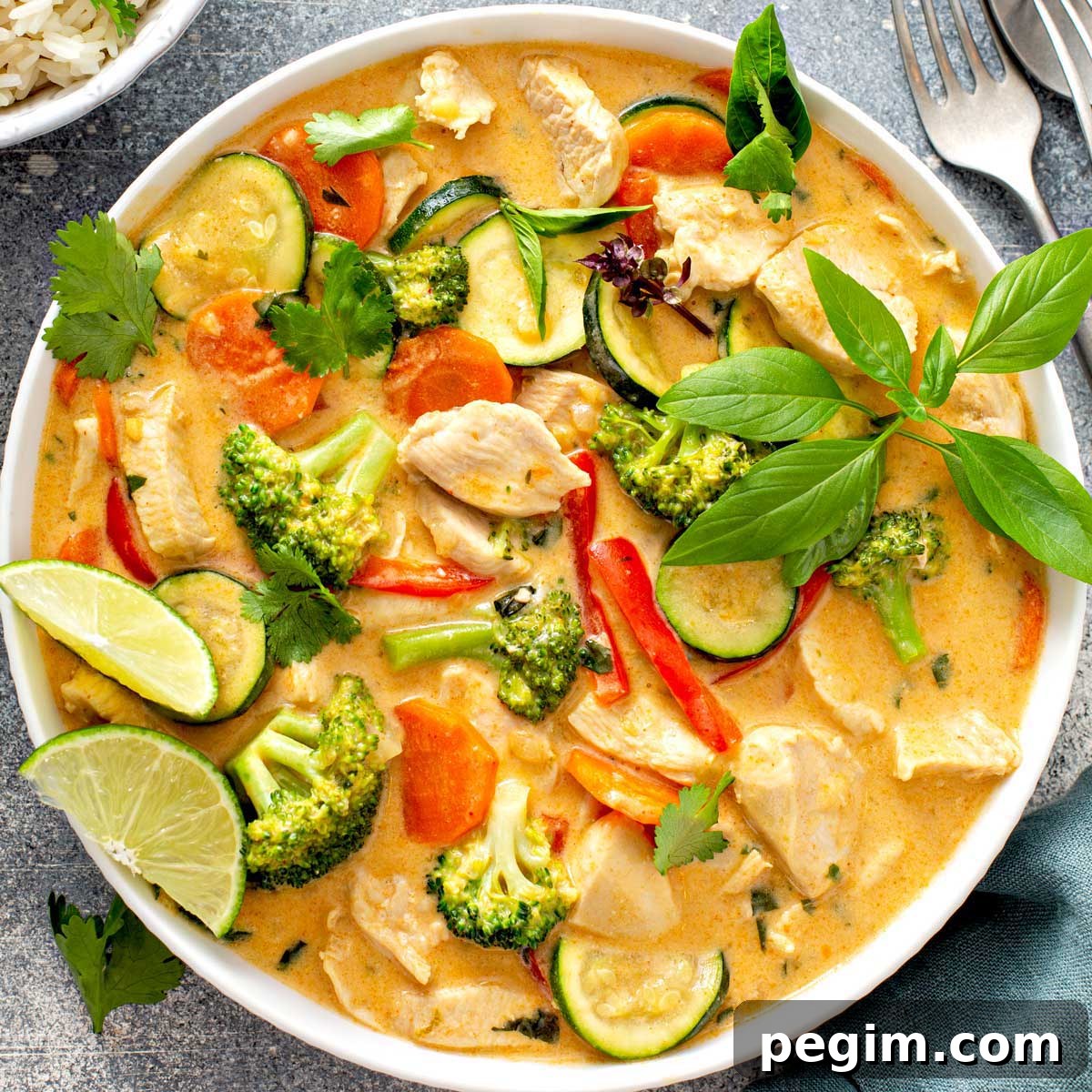
Thai Chicken Curry made with coconut milk and a medley of vegetables is a simple, one-pot meal that’s creamy, fragrant, and packed with wholesome ingredients. Thin slices of chicken simmer in Thai red curry paste with fresh aromatics, herbs, and seasonal vegetables that you can swap to suit your taste.
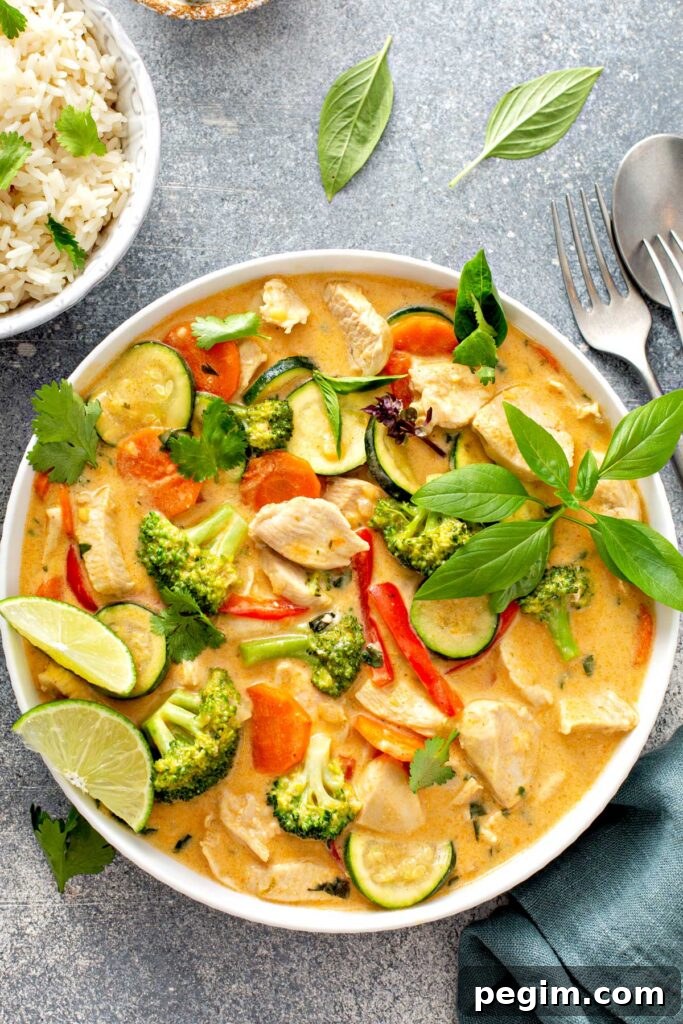
✔️ Thai Curry Chicken
This Thai coconut curry is a reliable weeknight dinner and also elegant enough for guests. It combines lean protein, crisp-tender vegetables, and rich coconut milk for a satisfying, balanced meal. The base of store-bought red curry paste simplifies the process while delivering authentic flavor. The dish comes together quickly and stores well, making it ideal for meal prep.
⭐️ Why This Recipe Works
- This recipe is highly customizable: pick your protein, vary the vegetables, and adjust the chili level to taste.
- Use boneless chicken breast or thighs; shrimp, fish, pork, turkey, or tofu also work well.
- Most ingredients are available in a regular supermarket; optional items can be substituted with common pantry staples.
- Using prepared Thai red curry paste saves time while providing authentic aromatics like galangal and kaffir lime leaf in one convenient jar.
- The curry reheats well and can be made ahead, which is useful for meal planning.
- It delivers restaurant-quality flavor at a fraction of the price.
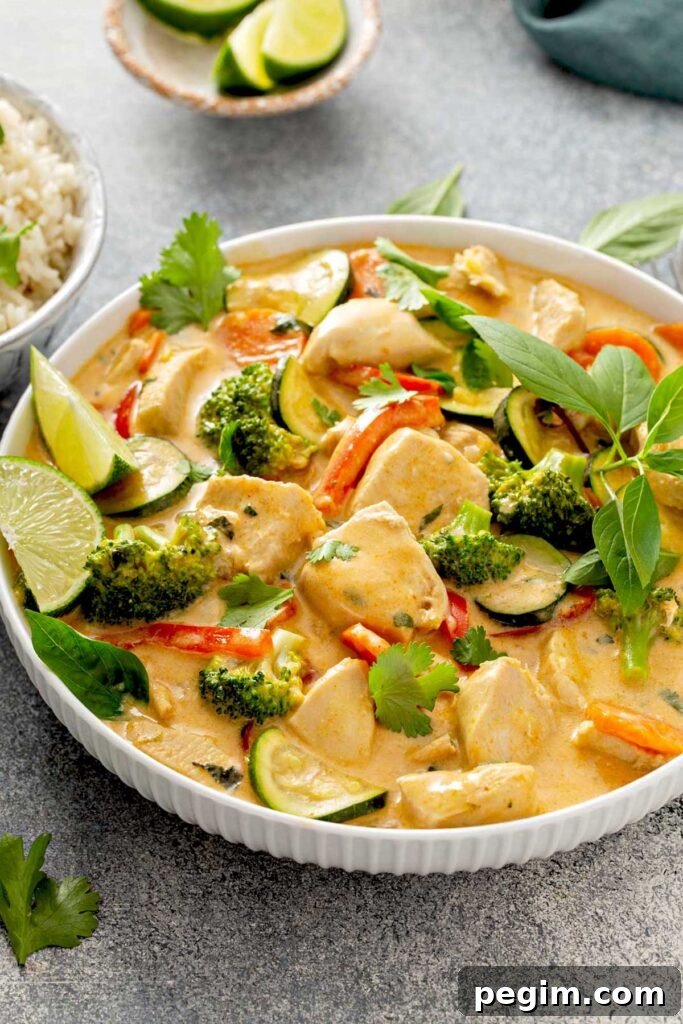
🔎 What Does Thai Red Curry Taste Like?
Thai red curry is savory, aromatic, and mildly spicy with a rich coconut creaminess. The curry paste brings complexity and umami, while lemongrass, garlic, and fresh herbs brighten each bite. The result is a balanced sauce that is both comforting and vibrant.
✔️ Red Curry Chicken Ingredients
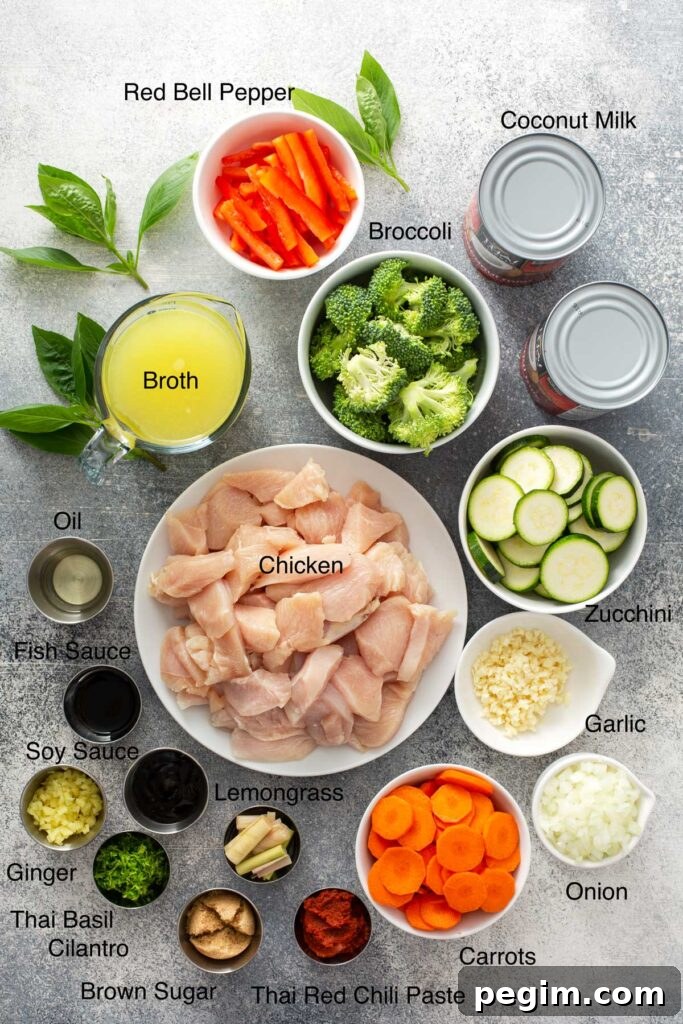
Below are the main ingredients used in this version. Exact amounts and the complete recipe are provided further down in the instructions section.
- Thai red curry paste – concentrated flavor and heat; adjust amount to control spice.
- Full-fat coconut milk – for a thick, silky sauce and rich mouthfeel.
- Chicken – boneless, skinless breasts or thighs sliced into bite-sized pieces.
- Vegetables – carrots, broccoli, red bell pepper, zucchini or any seasonal mix.
- Aromatics – garlic, ginger, onion or shallot, and lemongrass (or a suitable substitute).
- Herbs – Thai basil and cilantro for finishing; Italian basil works if Thai basil isn’t available.
- Seasonings – fish sauce and soy sauce (or tamari), plus a touch of brown sugar to balance flavors.
- Broth – chicken or vegetable broth to loosen the sauce if needed.
- Oil – a neutral oil for sautéing (vegetable, canola, or light olive oil).
🔎 How To Make Thai Chicken Curry (Super Easy)
Follow these straightforward steps to create a flavorful Thai red curry at home. Timing and ingredient order help keep vegetables vibrant and chicken tender.
- Sauté the aromatics: Heat oil in a Dutch oven or large pan over medium-low heat. Add minced garlic, grated ginger, chopped onion or shallot, and bruised lemongrass. Cook, stirring, until fragrant and the onion softens—about 2–3 minutes.
- Add red curry paste: Stir in the curry paste and cook for 1–2 minutes to bloom the spices.
- Build the sauce: Pour in coconut milk, add broth (if using), kaffir lime leaves or lime zest (optional), fish sauce, soy or tamari, and brown sugar. Stir to combine.
- Simmer: Bring to a gentle boil, then lower heat and simmer for about 8–10 minutes until the sauce thickens slightly and flavors meld.
- Add chicken and carrots: Add thinly sliced chicken and carrots first, cooking until the chicken is nearly done, about 5–6 minutes.
- Finish with quick-cooking vegetables: Add bell pepper and zucchini, cook a few minutes more, then add broccoli and fresh herbs—cover and simmer 1–2 minutes until broccoli is tender-crisp.
- Serve: Remove lemongrass and kaffir leaves before serving. Garnish with extra basil, cilantro, and lime wedges. Serve over jasmine rice, brown rice, quinoa, or cauliflower rice for a lower-carb option.
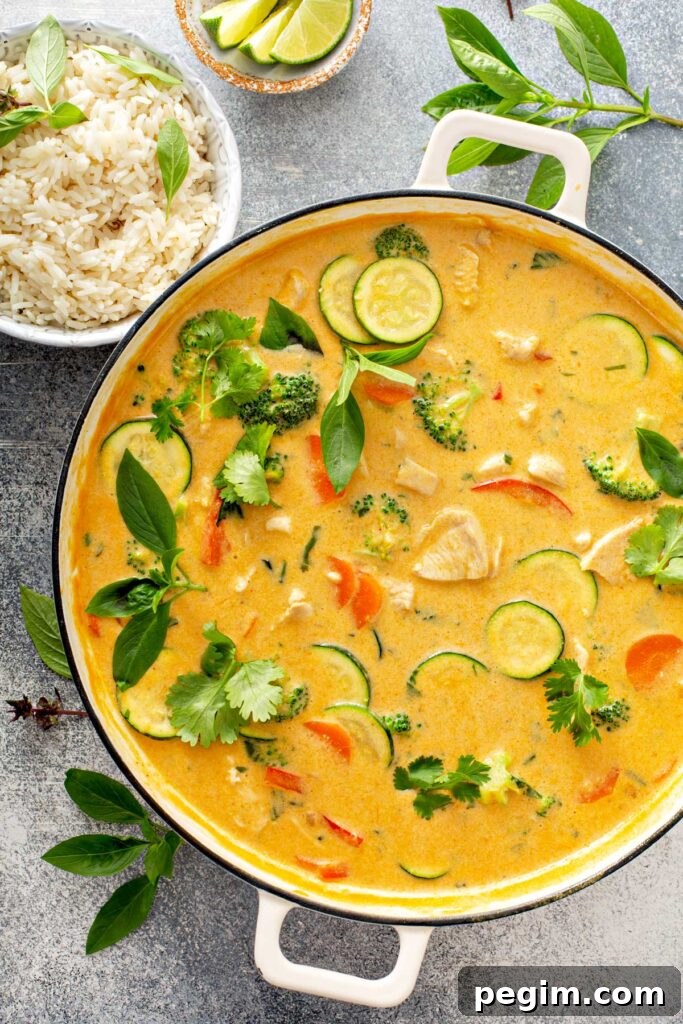
✔️ Prevent Overcooked Veggies
To avoid limp vegetables, add them in stages: start with the longest-cooking item (carrots), then add medium-cook vegetables (peppers, zucchini), and finish with quick-cooking broccoli and herbs just before serving.
🔎 Substitutions and Variations
- Swap chicken for shrimp, firm white fish, turkey, pork, or tofu.
- Try green, yellow, or panang curry paste for different flavor profiles.
- Make it vegetarian by omitting animal protein and swapping fish sauce for tamari, coconut aminos, or a vegan fish sauce.
- Add leafy greens such as spinach or kale at the end for extra nutrition.
- Include other vegetables like mushrooms, cauliflower, squash, or tomatoes as preferred.
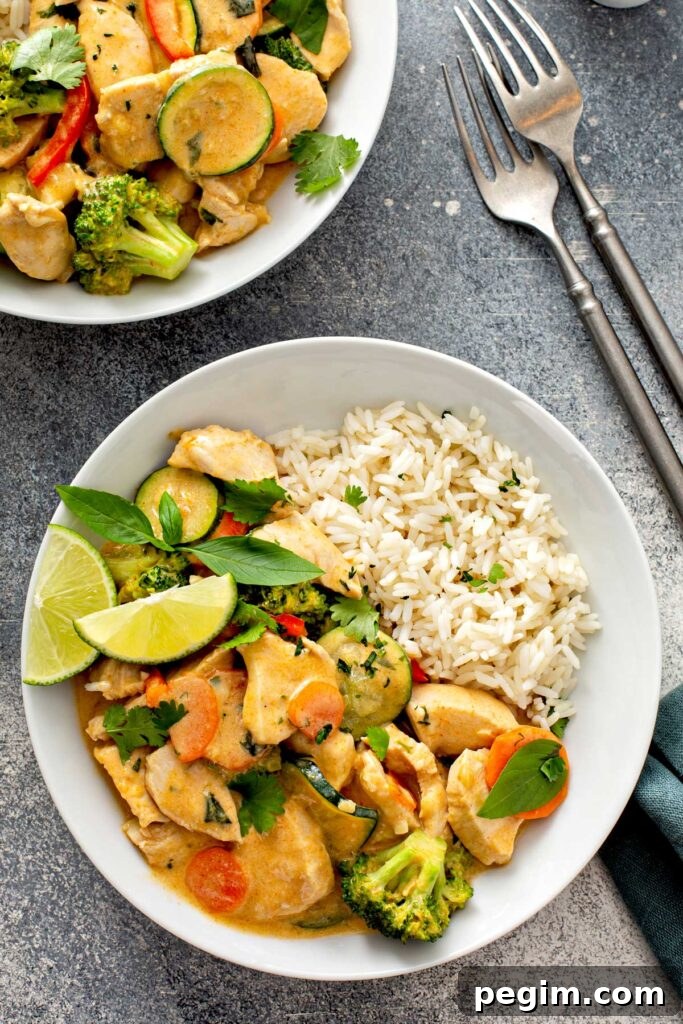
✔️ Storing and Reheating
Store cooled curry in an airtight container in the refrigerator for up to 4 days. Reheat gently on the stove over low heat or in short intervals in the microwave, stirring until heated through. Add a splash of broth if the sauce thickens too much when chilled.
🔎 A Few Notes on Flavor
Thai curries rely on fresh aromatics and chili pastes rather than Indian-style curry powders. Red curry typically sits between green and yellow in heat level—green curry is often spicier—so adjust paste quantities to match your preferred spice level. A little brown sugar balances the heat and saltiness from fish sauce, giving a harmonious finish.
Recipe Tips
- Slice carrots thinly so they cook quickly and evenly.
- Shake canned coconut milk before opening and stir to reincorporate separated cream and liquid.
- Use large lemongrass pieces and remove them before serving to avoid woody bites, or finely mince if you plan to eat them.
- Prep all aromatics, protein, and vegetables before you start—this recipe moves quickly once you begin.
- Start with a small amount of curry paste and add more to taste, since brands vary in heat and intensity.
Enjoy this versatile Thai chicken curry as written or use it as a template to build your own favorite version.