Sometimes a recipe becomes a family tradition because you make it so often. In our home, that recipe is a simple, rustic white loaf we call Rustic Spanish Bread. I’ve baked hundreds of these soft, fine-textured loaves to share with family, friends, and neighbors.
The recipe came to our family through my brother-in-law, who lived in Barcelona for a few years and learned it from a local baker. The bread’s tender crumb comes from a small amount of extra virgin olive oil—an ingredient typical of Spanish baking.
Baking bread can seem intimidating at first, and there are several ways to go wrong. But with a few reliable tips and clear steps, even a beginner can produce a beautiful loaf. The instructions below are designed to be easy to follow and to help you succeed.
Rustic Spanish Bread Step by Step
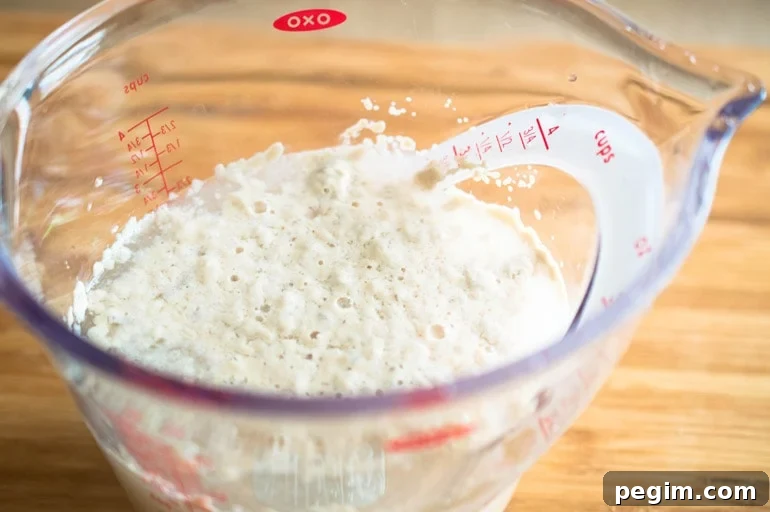
Active Yeast in a Measure Cup
1. Proof the yeast: Sprinkle active dry yeast over slightly warm water (about 95°F / body temperature). Stir lightly and let it sit for 10 minutes until bubbly. Proofing confirms the yeast is alive and active; if the water is too hot it will kill the yeast, producing a dense loaf.
2. Hydration: This recipe uses 2 3/4 cups (about 650 ml) water for 7 cups (900 g) bread flour—an appropriate hydration for high-protein bread flour. If using all-purpose flour (lower protein), reduce the water to 2 1/2 cups. The dough should feel medium-weight and springy, not overly wet or dry.
3. Flour and mixer: While the yeast proofs, measure 7 cups of bread flour into a mixing bowl. A powerful stand mixer with a dough hook makes kneading easier, but you can also mix and knead by hand.
4. Measuring flour: Fluff the flour before measuring, scoop into the measuring cup, and level with a knife for an accurate measure. Alternatively, weigh the flour—900 grams is a reliable standard for 7 cups of bread flour.
5. Salt and oil: Place the flour in the mixer bowl, add about 1 tablespoon salt (I use slightly less than the standard 1/2 teaspoon per cup), and start the mixer. While it runs, slowly drizzle in 1/4 cup (60 ml) extra virgin olive oil. If mixing by hand, incorporate oil with a whisk before adding liquids.
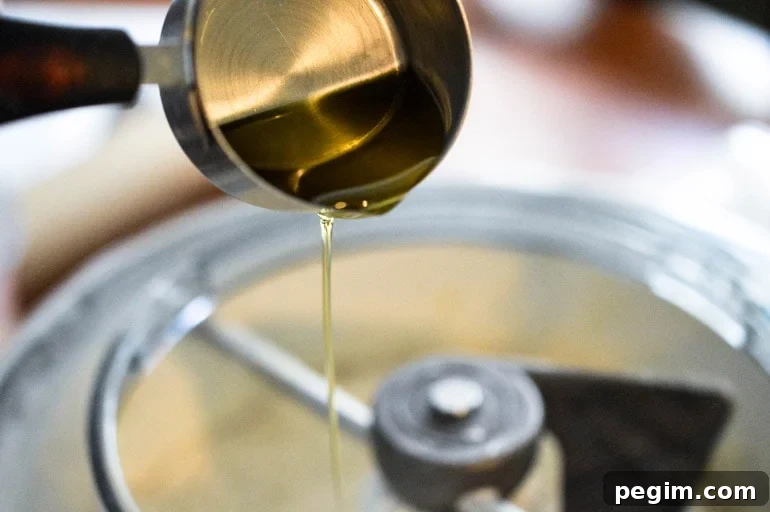
Olive Oil added to Spanish Bread Ingredient
6. Add yeast mixture: Add the proofed yeast and water to the bowl while the mixer runs. If working by hand, mix with a sturdy wooden spoon.
7. Knead: Machine-knead for about 4 minutes. If kneading by hand, work the dough on a floured surface for roughly 5 minutes. The goal is a smooth, elastic dough that springs back when pressed.
Note: Flour needs vary by brand. I use 7 cups with higher-protein brands; some flours require 7 1/2 cups. If the dough is sticky, add up to 1/2 cup additional flour. The finished dough should be springy, not stiff.
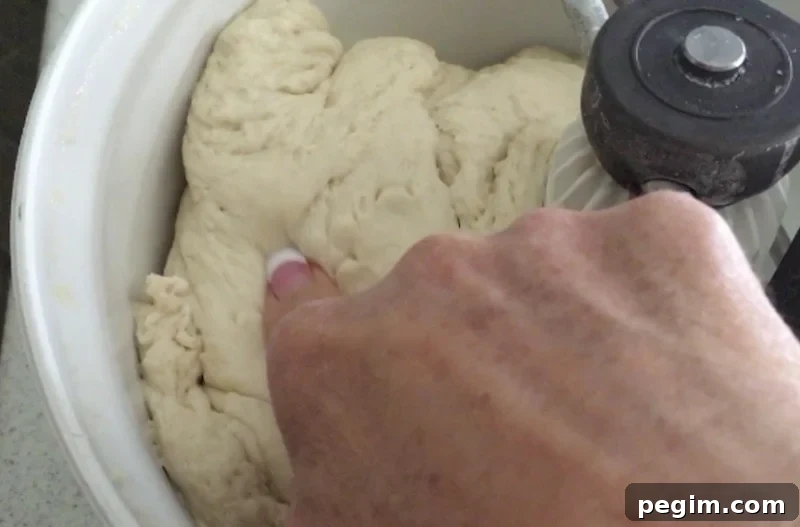
Spanish Bread Dough
8. First rise: Place the dough in a large bowl lightly sprayed with cooking spray. Cover with sprayed wax paper and a kitchen towel. Let rise in a warm spot (room temperature is fine) for about 1 hour, until doubled.
Spanish Bread Dough in a bowl
9. Shape loaves: Punch down or knead the risen dough briefly on a floured surface to release air. Divide into two equal pieces and shape into balls. Place them on a large baking sheet liberally sprinkled with cornmeal. A shallow “X” cut across each loaf helps the final appearance and oven expansion.
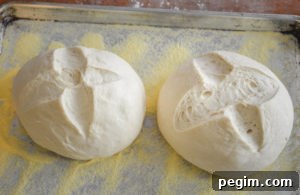
Spanish Bread in Baking Sheet
10. Second rise and bake: Cover again with sprayed wax paper and a towel and let rise 20–25 minutes. Preheat the oven to 425°F while the loaves proof. Bake for 23–25 minutes until golden brown; bake 5 minutes longer if you prefer a crisper crust.
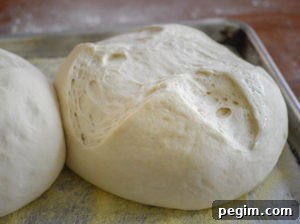
Spanish Bread in Baking Sheet
11. Timing: The hands-on work is only about 20 minutes. Including rising and baking, total time is roughly 2½ hours. Dusting the loaves lightly with flour before baking is optional and gives a rustic look.
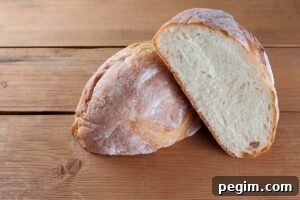
Spanish Bread
12. Serving and gifting: This bread is versatile and makes a thoughtful gift—perfect for the holidays, a recovering friend, or new parents. It pairs beautifully with butter, and my favorite way to enjoy it is with butter and homemade raspberry jam.
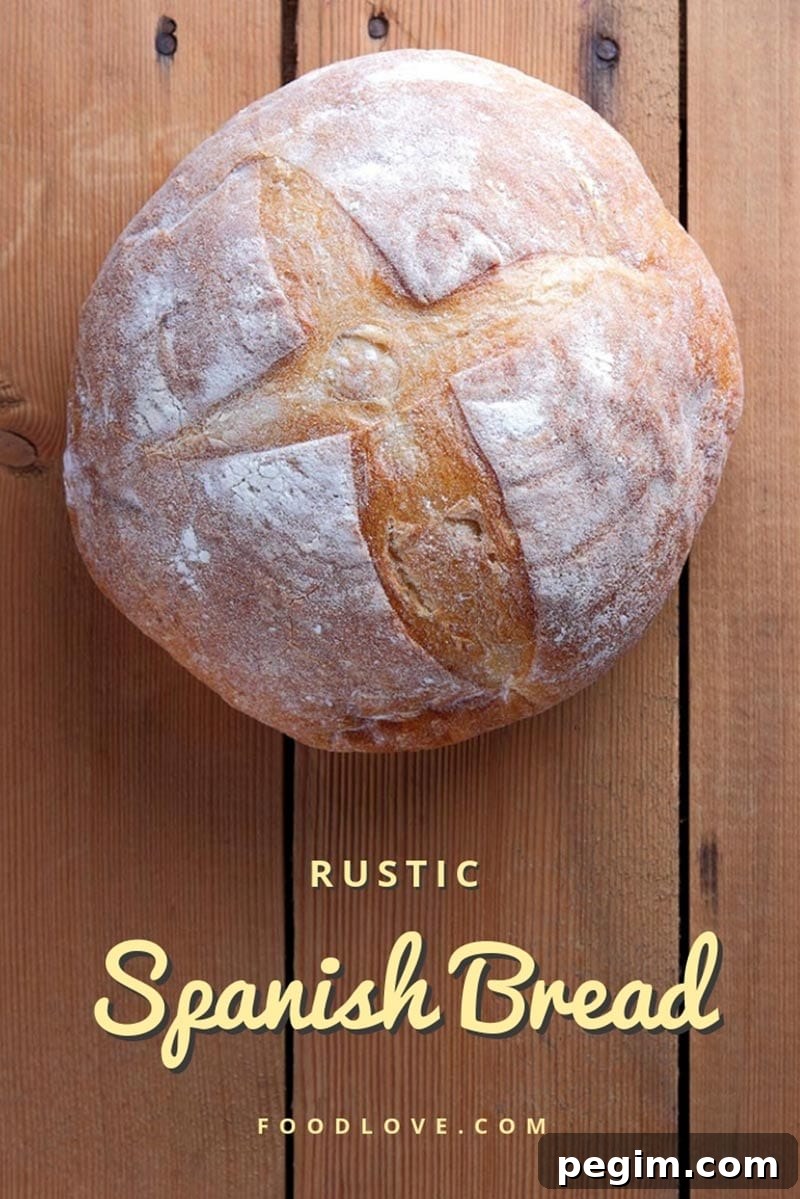
Spanish Bread
Rustic Spanish Bread
Author: Marsha Maxwell
This light, fine-textured white bread gets its softness from a small amount of extra virgin olive oil.
Ingredients
- 2 3/4 cups (650 ml) warm water (about 95°F)
- 5 teaspoons (or 2 packets, 14 g) active dry yeast
- 7 cups (900 g) bread flour (use 7 1/2 cups if your flour is lower-protein)
- 1 tablespoon (about 14 g) salt
- 1/4 cup (60 ml) extra virgin olive oil
- Cornmeal for sprinkling the baking sheet
Instructions
- Sprinkle yeast over the warm water, stir lightly, and let sit 10 minutes until bubbly.
- Measure the flour and place it in a mixing bowl (mixer with dough hook or a large bowl for hand mixing).
- Start the mixer, add salt, and slowly drizzle in the olive oil. If mixing by hand, whisk the oil into the flour.
- Slowly add the yeast-water mixture while the mixer runs. Knead by machine about 4 minutes or by hand 5 minutes.
- The dough should be smooth and springy. If sticky, add up to 1/2 cup more flour.
- Place dough in a sprayed bowl, cover with sprayed wax paper and a towel, and let rise 1 hour or until doubled.
- Punch down, knead briefly, divide into two equal balls, and place on a cornmeal-sprinkled baking sheet. Score a shallow “X” on each loaf.
- Cover and let rise 20–25 minutes while preheating the oven to 425°F.
- Bake 23–25 minutes until browned; bake 5 additional minutes for a crisper crust.
Notes
If you use all-purpose flour, reduce the water to 2 1/2 cups. Adjust flour amount slightly as needed depending on the brand to achieve a springy, non-sticky dough.
Nutrition (per 1 oz slice)
Calories: 125 kcal | Carbohydrates: 22 g | Protein: 4 g | Fat: 2 g | Sodium: 200 mg | Fiber: 1 g
Photos by Marsha Maxwell and Lazartivan/Shutterstock.com